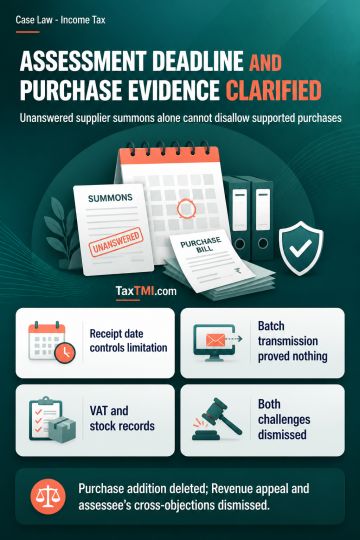
Limitation for consequential assessments runs from prescribed authority receipt, while verified purchases cannot be disallowed merely for unanswered s...
Higher depreciation for qualifying commercial vehicles, exempt-income disallowance, research deduction verification, and club-expense treatment clarif...
Charitable registration renewal cannot become an assessment of receipts, profitability or annual exemption compliance, requiring renewal and donation ...
AMP expenditure for own business is not an international transaction without an associated-enterprise arrangement, eliminating transfer pricing adjust...
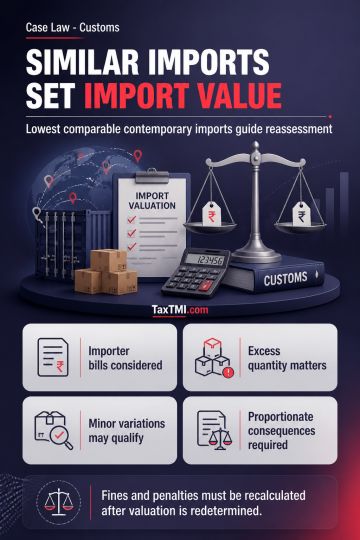
Customs valuation must use comparable contemporary imports, while confiscation fines and penalties require proportionate recalculation on reassessed v...
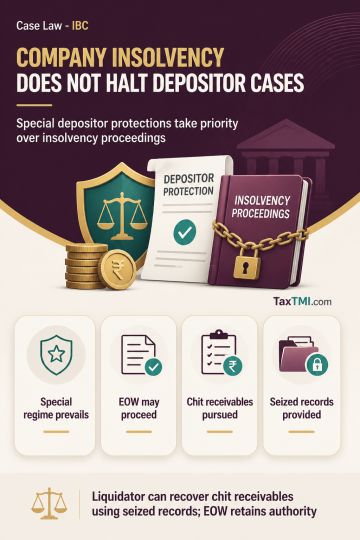
Depositor-protection proceedings prevail over corporate insolvency, while liquidators may recover chit receivables using copies of seized company reco...
Revision under section 263 was upheld because the reassessment order suffered from a complete lack of inquiry on the purchase-side taxability of the difference between immovable property consideration and stamp duty value. The Tribunal noted that the Assessing Officer examined the sale-side valuation issue but failed to consider the applicable provision for the purchase transaction, instead referring to section 56(2)(x), which was not relevant to the assessment year. This non-application of mind on a material issue made the order erroneous and prejudicial to the interests of the Revenue. As the Principal Commissioner only set aside the matter for fresh verification after granting the assessee an opportunity, the revisionary jurisdiction was valid.
Revision under section 263 was upheld because the reassessment order suffered from a complete lack of inquiry on the purchase-side taxability of the difference between immovable property consideration and stamp duty value. The Tribunal noted that the Assessing Officer examined the sale-side valuation issue but failed to consider the applicable provision for the purchase transaction, instead referring to section 56(2)(x), which was not relevant to the assessment year. This non-application of mind on a material issue made the order erroneous and prejudicial to the interests of the Revenue. As the Principal Commissioner only set aside the matter for fresh verification after granting the assessee an opportunity, the revisionary jurisdiction was valid.
Note: It is a system-generated summary and is for quick reference only.
 TaxTMI
  TaxTMI
 of 4811













 Join Channel