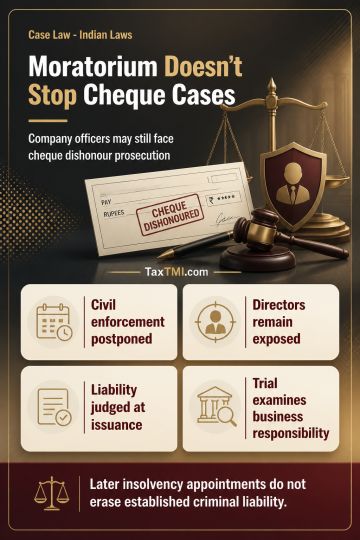
Insolvency moratorium does not shield company officers from cheque dishonour prosecution for liability arising before corporate insolvency proceedings...
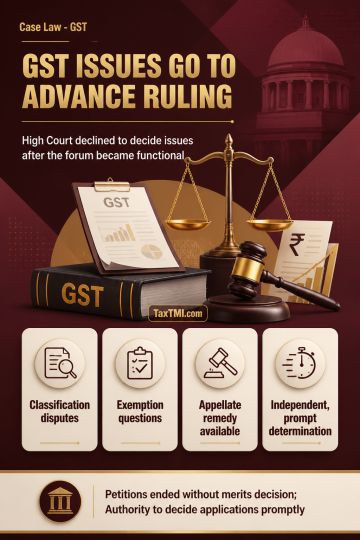
Advance-ruling mechanism governs pending GST classification, exemption and taxability disputes, limiting writ review once the specialised forum functi...
ITAT applied the real income theory to hold that alleged bonus or commission receivable could not be taxed on a due basis where there was no proof of receipt, no employer provisioning, and no document showing a legal right to receive the amount; the deletion of that addition was upheld. On the unexplained money issue, the Tribunal accepted third-party confirmations, agreements, revenue records and section 133(6) responses admitting cash handed over for proposed land transactions, and directed deletion of Rs. 85,00,000. For the remaining cash addition, it held that bare assertions of cash savings and business receipts were insufficient without corroboration, so the relief already granted by the first appellate authority was sustained and no further interference was warranted.
ITAT applied the real income theory to hold that alleged bonus or commission receivable could not be taxed on a due basis where there was no proof of receipt, no employer provisioning, and no document showing a legal right to receive the amount; the deletion of that addition was upheld. On the unexplained money issue, the Tribunal accepted third-party confirmations, agreements, revenue records and section 133(6) responses admitting cash handed over for proposed land transactions, and directed deletion of Rs. 85,00,000. For the remaining cash addition, it held that bare assertions of cash savings and business receipts were insufficient without corroboration, so the relief already granted by the first appellate authority was sustained and no further interference was warranted.
Note: It is a system-generated summary and is for quick reference only.
 TaxTMI
  TaxTMI
 of 4807






 Join Channel


