Commercial vehicle depreciation, scientifically determined warranty provisions and exempt-income disallowances were resolved in favour of the taxpayer...
Inherited property sale proceeds require capital-gains treatment where ownership is supported by evidence, not suspicion or unverified signature doubt...
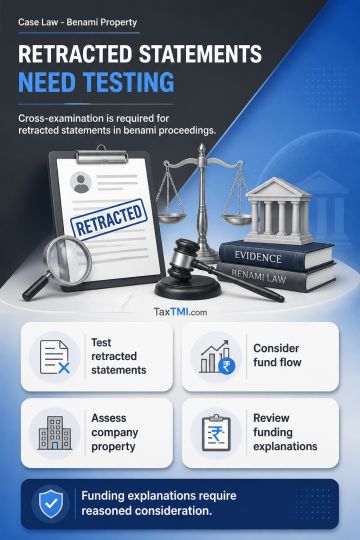
Cross-examination of retracted statements is essential where foundational evidence supports a benami allegation and documented funding explanations re...
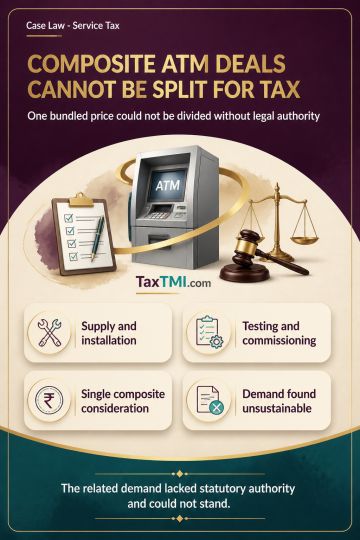
Capital-goods exemption covers plant-modernisation accessories, while the import restriction applies only to earlier capital-goods components and spar...
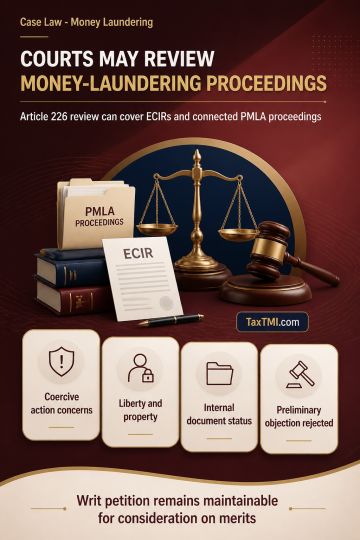
Constitutional judicial review permits challenges to ECIRs and connected money-laundering proceedings where coercive action affects fundamental intere...
ITAT applied the real income theory to hold that alleged bonus or commission receivable could not be taxed on a due basis where there was no proof of receipt, no employer provisioning, and no document showing a legal right to receive the amount; the deletion of that addition was upheld. On the unexplained money issue, the Tribunal accepted third-party confirmations, agreements, revenue records and section 133(6) responses admitting cash handed over for proposed land transactions, and directed deletion of Rs. 85,00,000. For the remaining cash addition, it held that bare assertions of cash savings and business receipts were insufficient without corroboration, so the relief already granted by the first appellate authority was sustained and no further interference was warranted.
ITAT applied the real income theory to hold that alleged bonus or commission receivable could not be taxed on a due basis where there was no proof of receipt, no employer provisioning, and no document showing a legal right to receive the amount; the deletion of that addition was upheld. On the unexplained money issue, the Tribunal accepted third-party confirmations, agreements, revenue records and section 133(6) responses admitting cash handed over for proposed land transactions, and directed deletion of Rs. 85,00,000. For the remaining cash addition, it held that bare assertions of cash savings and business receipts were insufficient without corroboration, so the relief already granted by the first appellate authority was sustained and no further interference was warranted.
Note: It is a system-generated summary and is for quick reference only.
 TaxTMI
  TaxTMI
 of 4809












 Join Channel


