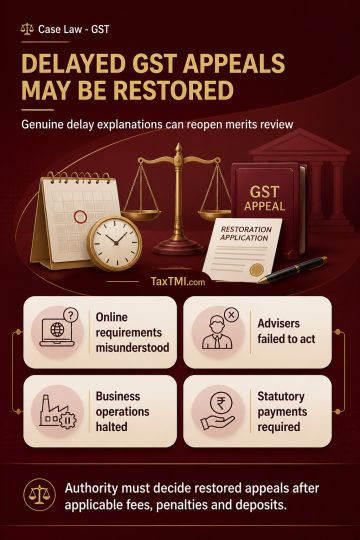
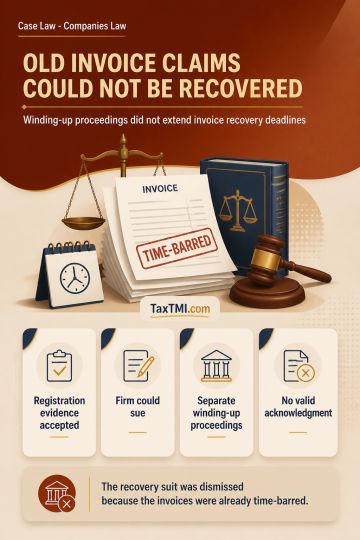
Invoice-based recovery claims remain time-barred despite separate winding-up proceedings, absent valid acknowledgment or part-payment of the disputed ...
Extended limitation fails without specific suppression allegations, while overseas employee secondment remains taxable as manpower supply within norma...
Time-share accommodation classification excludes Club or Association Service where purchasers receive contractual occupancy rights without genuine mem...
CENVAT credit for trading requires reversal, while taxable-service rental credit remains proportionately available and limitation issues await resolut...
Vicarious liability for dishonoured company cheques may extend to non-signatory directors where complaints contain foundational responsibility avermen...
ITAT applied the real income theory to hold that alleged bonus or commission receivable could not be taxed on a due basis where there was no proof of receipt, no employer provisioning, and no document showing a legal right to receive the amount; the deletion of that addition was upheld. On the unexplained money issue, the Tribunal accepted third-party confirmations, agreements, revenue records and section 133(6) responses admitting cash handed over for proposed land transactions, and directed deletion of Rs. 85,00,000. For the remaining cash addition, it held that bare assertions of cash savings and business receipts were insufficient without corroboration, so the relief already granted by the first appellate authority was sustained and no further interference was warranted.
ITAT applied the real income theory to hold that alleged bonus or commission receivable could not be taxed on a due basis where there was no proof of receipt, no employer provisioning, and no document showing a legal right to receive the amount; the deletion of that addition was upheld. On the unexplained money issue, the Tribunal accepted third-party confirmations, agreements, revenue records and section 133(6) responses admitting cash handed over for proposed land transactions, and directed deletion of Rs. 85,00,000. For the remaining cash addition, it held that bare assertions of cash savings and business receipts were insufficient without corroboration, so the relief already granted by the first appellate authority was sustained and no further interference was warranted.
Note: It is a system-generated summary and is for quick reference only.
 TaxTMI
  TaxTMI
 of 4811














 Join Channel