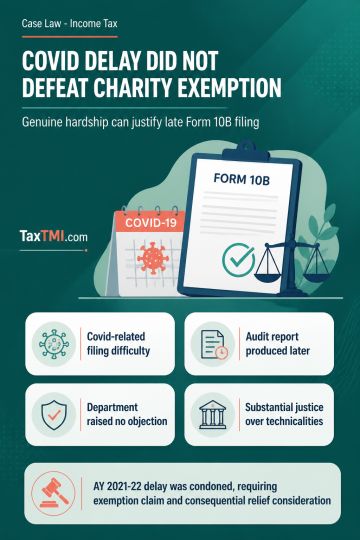
Belated Form 10B filing during Covid-19 cannot defeat charitable exemption where genuine hardship warrants condonation and substantial justice prevail...
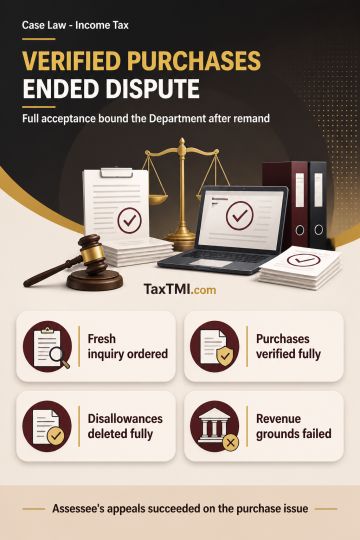
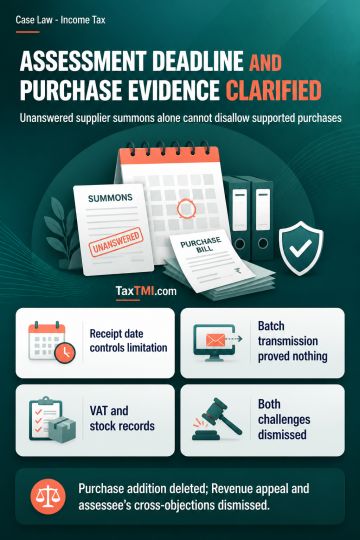
Limitation for consequential assessments runs from prescribed authority receipt, while verified purchases cannot be disallowed merely for unanswered s...
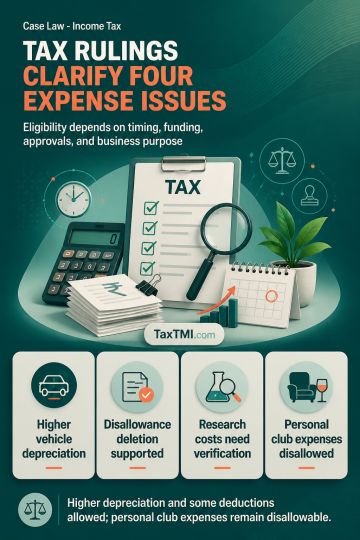
Higher depreciation for qualifying commercial vehicles, exempt-income disallowance, research deduction verification, and club-expense treatment clarif...
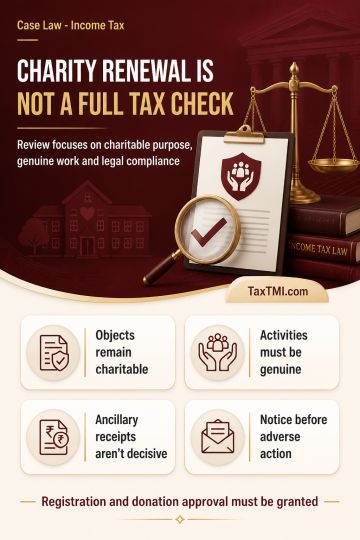
Charitable registration renewal cannot become an assessment of receipts, profitability or annual exemption compliance, requiring renewal and donation ...
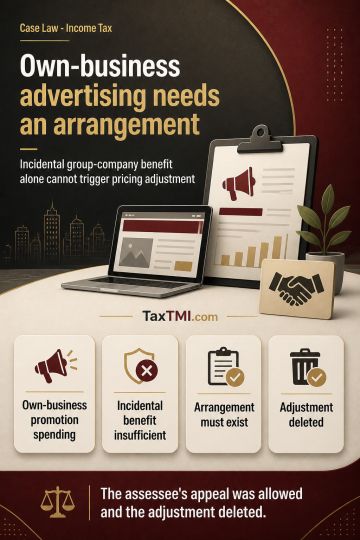
AMP expenditure for own business is not an international transaction without an associated-enterprise arrangement, eliminating transfer pricing adjust...
Page of 4809
Press 'Enter' after typing page number.
141 to 160 of 96177 Results
❮
❯
❯❯
0 / 200
Expand Note
Add to Folder
No Folders have been created
+
Are you sure you want to delete "My most important" ?
The Tribunal held that a 1991-92 letter of intent did not create enforceable rights in the immovable property because the area and identity of the premises were not finalised and the allotment crystallised only later. Enforceable rights arose only when the share and occupancy documents were issued and the lease deed was executed and registered in financial year 2010-11. The holding period was therefore reckoned from 2010-11, and since the property was sold on 02.04.2012, it was held for less than 36 months. The asset was correctly treated as a short-term capital asset, and the gain was taxable as short-term capital gain; contrary authorities were distinguished on the basis that they involved final or binding allotments.
The Tribunal held that a 1991-92 letter of intent did not create enforceable rights in the immovable property because the area and identity of the premises were not finalised and the allotment crystallised only later. Enforceable rights arose only when the share and occupancy documents were issued and the lease deed was executed and registered in financial year 2010-11. The holding period was therefore reckoned from 2010-11, and since the property was sold on 02.04.2012, it was held for less than 36 months. The asset was correctly treated as a short-term capital asset, and the gain was taxable as short-term capital gain; contrary authorities were distinguished on the basis that they involved final or binding allotments.
Note: It is a system-generated summary and is for quick reference only.
 TaxTMI
  TaxTMI
 of 4809




 Join Channel