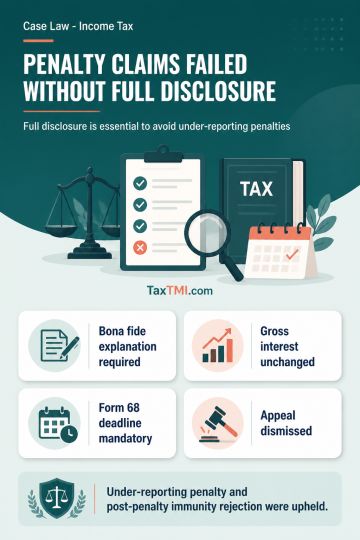
Bona fide disclosure requirements govern under-reporting penalties, and post-penalty immunity applications cannot secure available statutory protectio...
Certificate-of-origin verification procedure governs preferential customs benefits; denial without retroactive verification was set aside with consequ...
Disciplinary Committee jurisdiction and mandatory investigation requirements invalidated cancellation of an insolvency professional's registration and...
At the stage of charge, the test is grave suspicion, not proof of conviction; applying that standard, the court found belated embellishments, material improvements, and weak medical corroboration insufficient to sustain prosecution against the officers, so discharge was upheld. It also held that CCTV footage was inadmissible without a Section 65B certificate, and the copied recording could not be relied on because its integrity was not properly proved. Once excluded, the electronic material did not support the allegation of illegal apprehension, and the limited scope of revision justified no interference with the Sessions Court's order.
At the stage of charge, the test is grave suspicion, not proof of conviction; applying that standard, the court found belated embellishments, material improvements, and weak medical corroboration insufficient to sustain prosecution against the officers, so discharge was upheld. It also held that CCTV footage was inadmissible without a Section 65B certificate, and the copied recording could not be relied on because its integrity was not properly proved. Once excluded, the electronic material did not support the allegation of illegal apprehension, and the limited scope of revision justified no interference with the Sessions Court's order.
Note: It is a system-generated summary and is for quick reference only.
 TaxTMI
  TaxTMI
 of 4807















 Join Channel


