Defined public benefit can retain charitable character; registration renewal requires examining genuine activities and legal compliance, not surplus a...
Capital reduction is distinct from share buy-back, preventing buy-back tax; restructuring interest and related business deductions also survive scruti...
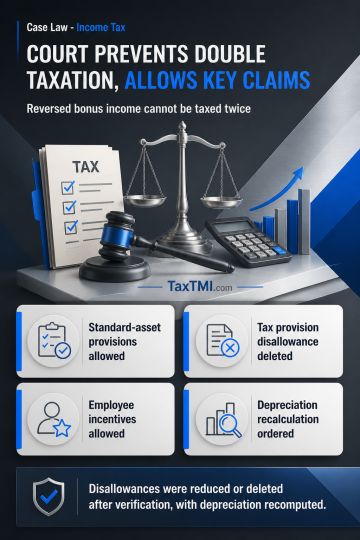
Transfer pricing and tax deductions upheld on established principles, while employee contributions and warranty provisions returned for fresh examinat...
Captive transfer pricing relies on industrial consumer tariffs, while genuine quotations can benchmark effluent treatment transfers under the Other Me...
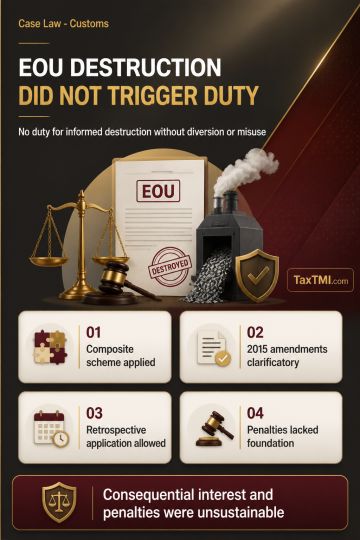
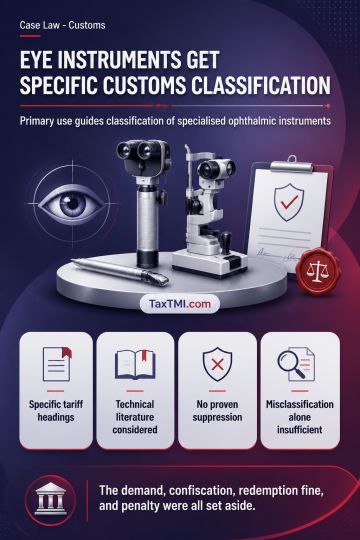
Specific tariff classification for ophthalmic instruments and extended limitation principles determine the treatment of duty demands, confiscation, an...
The Tribunal held that the enhancement of the stamp duty valuation tolerance band from 5% to 10% was a curative, beneficial amendment applicable to A.Y. 2018-19, because it only relaxed the rigour of a deeming provision and did not create a new charge or fresh burden. It further held that the deeming fiction under section 56(2)(x)(b)(B) could not be invoked where the difference between the purchase consideration and the stamp duty value was 7.44%, being within the 10% band. The addition was deleted.
The Tribunal held that the enhancement of the stamp duty valuation tolerance band from 5% to 10% was a curative, beneficial amendment applicable to A.Y. 2018-19, because it only relaxed the rigour of a deeming provision and did not create a new charge or fresh burden. It further held that the deeming fiction under section 56(2)(x)(b)(B) could not be invoked where the difference between the purchase consideration and the stamp duty value was 7.44%, being within the 10% band. The addition was deleted.
Note: It is a system-generated summary and is for quick reference only.
 TaxTMI
 of 4805
















 Join Channel


 TaxTMI