Specialized Investment Fund distribution now requires dedicated certification, while transitional recognition preserves existing qualified distributor...
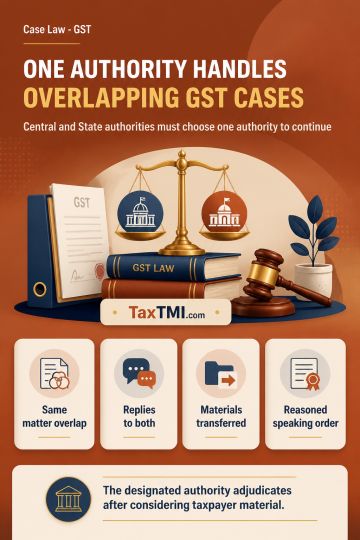
Overlapping GST proceedings require Central and State authorities to designate one competent authority for coordinated adjudication of the same matter...
Composite healthcare supplies retain exemption when patient care is the contract's essential character, despite payment through an implementing agency...
Receipt of immovable property requires actual possession or enjoyment; redevelopment allotments exchanged for tenancy rights fall outside deemed incom...
Page of 4807
Press 'Enter' after typing page number.
1061 to 1080 of 96136 Results
❮
❯
❯❯
0 / 200
Expand Note
Add to Folder
No Folders have been created
+
Are you sure you want to delete "My most important" ?
An ex parte ad interim injunction restraining a statutory director-removal process was held maintainable in appeal, but the injunction itself was unsustainable. The court held that director status under Section 2(34) is functional and does not depend on shareholding; once appointed and filed in office, the person remains subject to removal under Section 169. It further held that Section 430 barred civil court interference with internal corporate action, and lack of locus before the tribunal did not revive civil jurisdiction because a waiver route was available. The injunction also failed because the order gave no reasoned satisfaction on prima facie case, balance of convenience, and irreparable injury.
An ex parte ad interim injunction restraining a statutory director-removal process was held maintainable in appeal, but the injunction itself was unsustainable. The court held that director status under Section 2(34) is functional and does not depend on shareholding; once appointed and filed in office, the person remains subject to removal under Section 169. It further held that Section 430 barred civil court interference with internal corporate action, and lack of locus before the tribunal did not revive civil jurisdiction because a waiver route was available. The injunction also failed because the order gave no reasoned satisfaction on prima facie case, balance of convenience, and irreparable injury.
Note: It is a system-generated summary and is for quick reference only.
 TaxTMI
 of 4807










 Join Channel


 TaxTMI