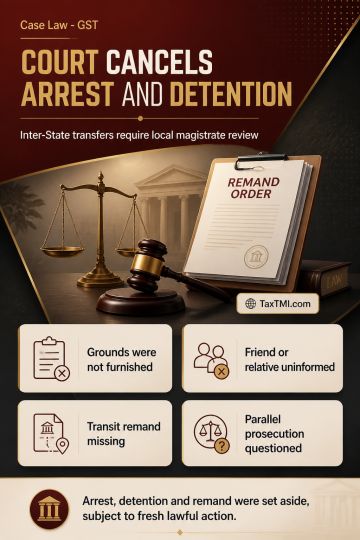
Arrest safeguards and transit remand requirements invalidated detention following inter-State transfer without communicated grounds or magistrate auth...
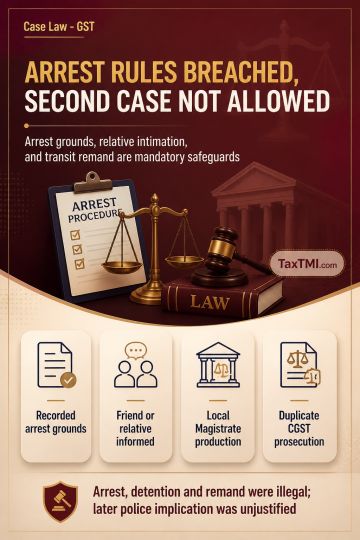
Arrest safeguards require disclosed grounds, relative intimation and transit remand, while duplicate prosecution under the CGST framework is unsustain...
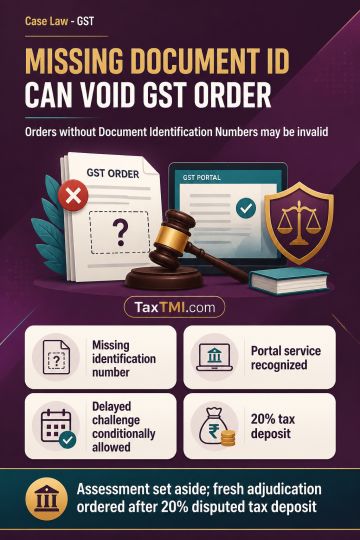
Document Identification Number defects can invalidate GST assessments, with delayed challenges entertained conditionally where patent irregularities e...
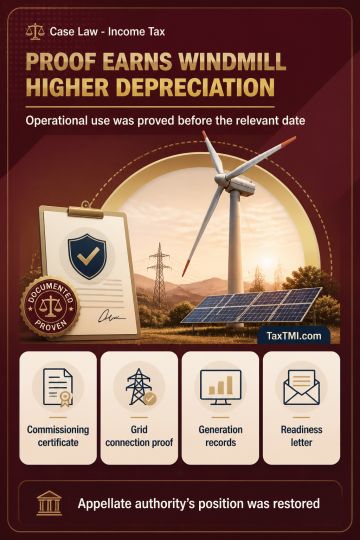
Windmill commissioning evidence supported higher depreciation where grid connection and electricity generation proved operational use before the relev...
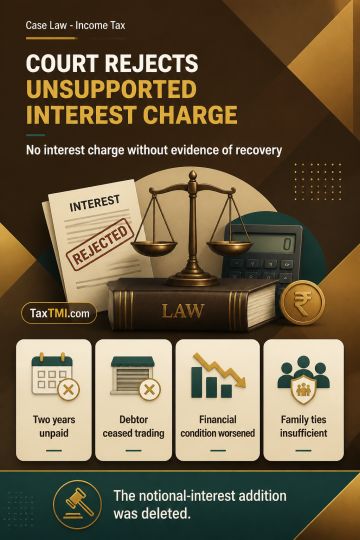
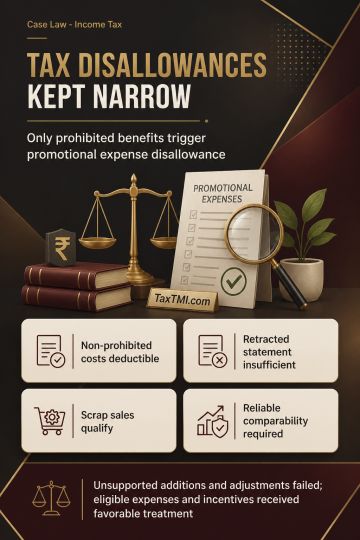
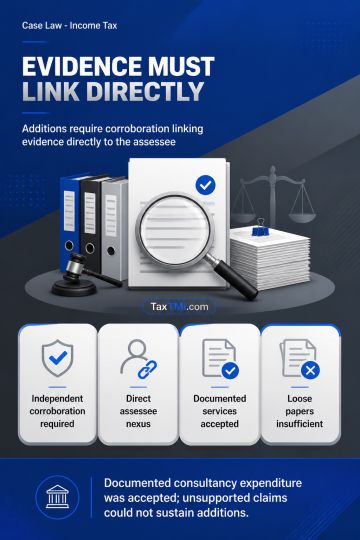
Pharmaceutical promotion and transfer-pricing comparability principles limited disallowances, while uncorroborated search allegations and unsupported ...
Business expenditure substantiation supports scrap credits, statutory payments and expense claims, while depreciation requires proof of actual busines...
An ex parte ad interim injunction restraining a statutory director-removal process was held maintainable in appeal, but the injunction itself was unsustainable. The court held that director status under Section 2(34) is functional and does not depend on shareholding; once appointed and filed in office, the person remains subject to removal under Section 169. It further held that Section 430 barred civil court interference with internal corporate action, and lack of locus before the tribunal did not revive civil jurisdiction because a waiver route was available. The injunction also failed because the order gave no reasoned satisfaction on prima facie case, balance of convenience, and irreparable injury.
An ex parte ad interim injunction restraining a statutory director-removal process was held maintainable in appeal, but the injunction itself was unsustainable. The court held that director status under Section 2(34) is functional and does not depend on shareholding; once appointed and filed in office, the person remains subject to removal under Section 169. It further held that Section 430 barred civil court interference with internal corporate action, and lack of locus before the tribunal did not revive civil jurisdiction because a waiver route was available. The injunction also failed because the order gave no reasoned satisfaction on prima facie case, balance of convenience, and irreparable injury.
Note: It is a system-generated summary and is for quick reference only.
 TaxTMI
  TaxTMI
 of 4809






 Join Channel


