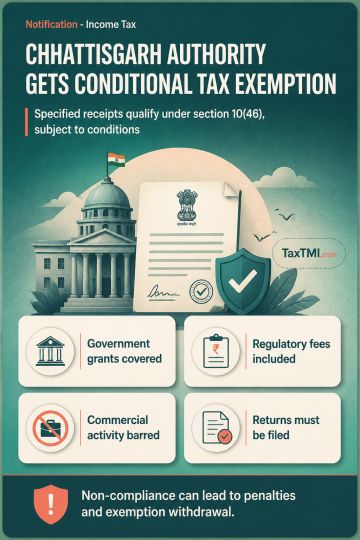
Specified regulatory authority income receives conditional tax exemption, subject to non-commercial activity, unchanged income character, and return f...
Tax exemption for regulatory authority income applies retrospectively, subject to non-commercial activity, unchanged income sources, and return-filing...
Input tax credit conditions remain constitutionally valid, with eligible recipient claims considered under GST circulars and retrospective filing dead...
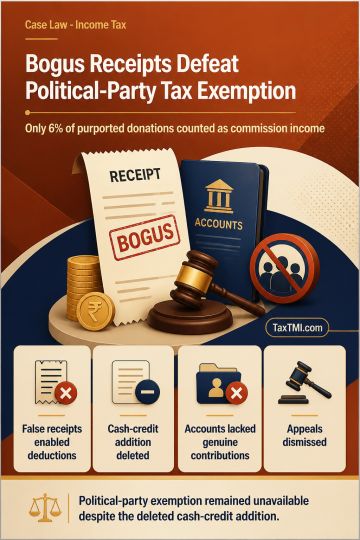
Bogus donation receipts justified commission income assessment and defeated political-party tax exemption for inaccurate accounts and reporting failur...
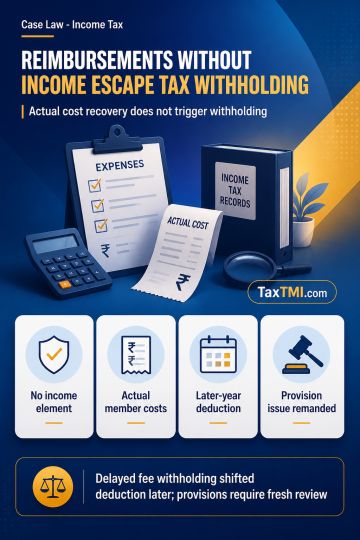
Pure reimbursement without income element escapes tax withholding, while delayed withholding and unsupported provisions face deferred or renewed scrut...
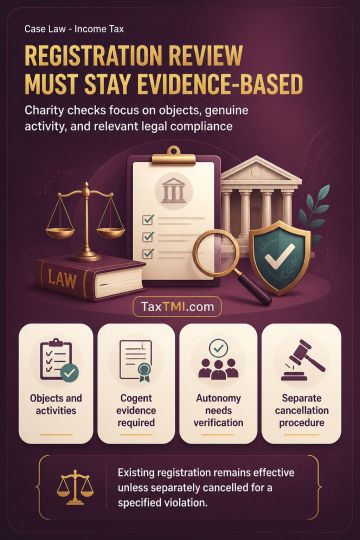
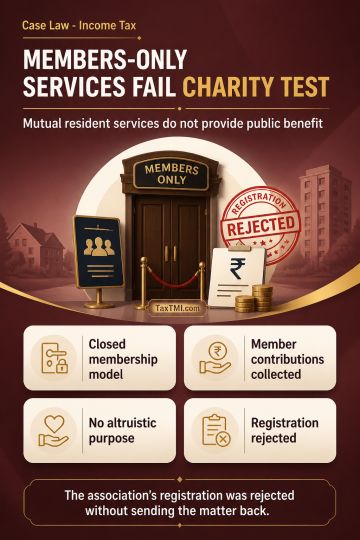
Public benefit requirement defeats charitable registration where residents' association services are reciprocal, member-only facilities governed by mu...
A High Court held that money-laundering under Section 3 of the PMLA is an independent offence, but prosecution still requires prima facie material showing proceeds of crime derived from a scheduled offence and the accused's involvement in a connected process or activity. Where the predicate investigation had already found that the petitioner was not a beneficiary and no independent material showed tainted funds, the PMLA case could not rest on assumption. The Court also held that a co-accused's Section 50 statement could not, by itself, found the prosecution, and that the warehouse-receipt transactions were not shown to be sham. Continuation of proceedings against the petitioner was quashed as abuse of process.
A High Court held that money-laundering under Section 3 of the PMLA is an independent offence, but prosecution still requires prima facie material showing proceeds of crime derived from a scheduled offence and the accused's involvement in a connected process or activity. Where the predicate investigation had already found that the petitioner was not a beneficiary and no independent material showed tainted funds, the PMLA case could not rest on assumption. The Court also held that a co-accused's Section 50 statement could not, by itself, found the prosecution, and that the warehouse-receipt transactions were not shown to be sham. Continuation of proceedings against the petitioner was quashed as abuse of process.
Note: It is a system-generated summary and is for quick reference only.
 TaxTMI
  TaxTMI
 of 4807







 Join Channel