Cross-examination rights and corroborated evidence limit customs penalties for misdeclaration in genuine import transactions involving documented clea...
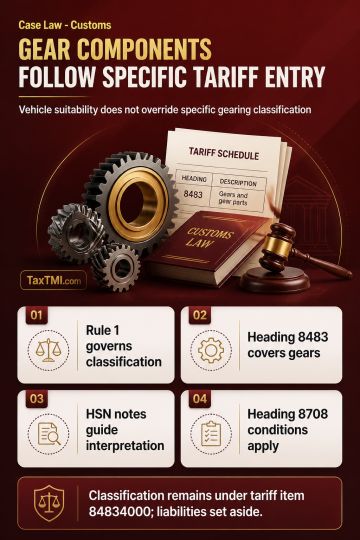
Tariff classification of vehicle gear components follows the specific gearing entry, displacing motor-vehicle parts classification and related liabili...
Necessary-party requirements limit impleadment of independent entities, while deferred consideration does not create an appealable adverse determinati...
Food supplement classification requires common parlance and authoritative tests, preventing treatment as proprietary Ayurvedic medicines without suppo...
Specified regulatory authority income receives conditional tax exemption, subject to non-commercial activity, unchanged income character, and return f...
Tax exemption for regulatory authority income applies retrospectively, subject to non-commercial activity, unchanged income sources, and return-filing...
Bail was granted in a GST prosecution for alleged fraudulent input tax credit because continued custody was found unwarranted on a cumulative assessment of bail factors. The Court relied on the petitioner's four months in custody, absence of criminal antecedents, the essentially documentary nature of the prosecution case, and the absence of material showing risk of tampering, witness influence, or non-cooperation. It also noted that the trial was unlikely to conclude soon and that the right to speedy trial is protected under Article 21. The Court held that economic offence allegations alone did not justify further incarceration and directed release on conditions to secure presence and protect the trial.
Bail was granted in a GST prosecution for alleged fraudulent input tax credit because continued custody was found unwarranted on a cumulative assessment of bail factors. The Court relied on the petitioner's four months in custody, absence of criminal antecedents, the essentially documentary nature of the prosecution case, and the absence of material showing risk of tampering, witness influence, or non-cooperation. It also noted that the trial was unlikely to conclude soon and that the right to speedy trial is protected under Article 21. The Court held that economic offence allegations alone did not justify further incarceration and directed release on conditions to secure presence and protect the trial.
Note: It is a system-generated summary and is for quick reference only.
 TaxTMI
  TaxTMI
 of 4809


















 Join Channel




