Transfer pricing requires evidence for AMP transactions, functionally reliable comparables, and appropriate aggregation or Berry Ratio benchmarking me...
Revisionary jurisdiction cannot reopen share capital assessments where adequate inquiry supports a permissible view and no independent error is establ...
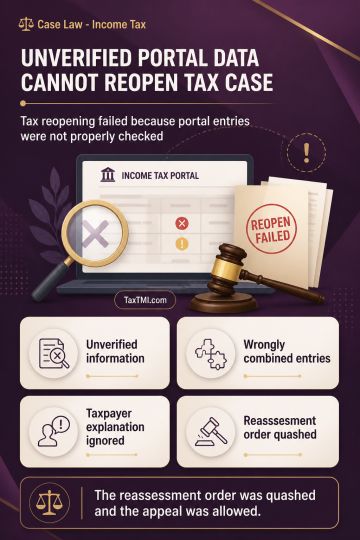
Reassessment jurisdiction fails where unverified portal information is aggregated without examining the taxpayer's explanation or relevance of entries...
Statutory sanction for delayed reassessment requires approval from the prescribed authority; approval by an inferior authority invalidates jurisdictio...
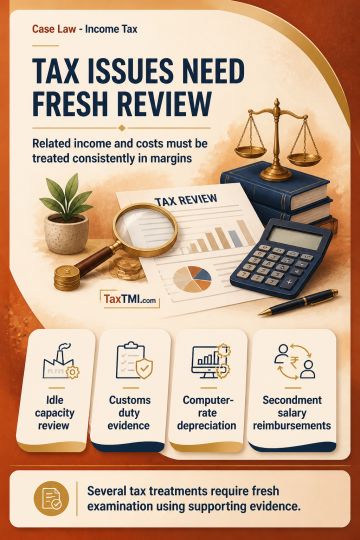
Transfer pricing margin adjustments require matching treatment of non-operating income and related costs, with comparability issues reconsidered on ev...
Preliminary-expense amortisation and MAT exempt-income adjustments prevailed, while trademark costs and managerial remuneration require fresh verifica...
Export valuation requires contemporaneous evidence; unrelated invoices cannot prove overvaluation, and dual penalties on firm and partner are impermis...
Bail was granted in a GST prosecution for alleged fraudulent input tax credit because continued custody was found unwarranted on a cumulative assessment of bail factors. The Court relied on the petitioner's four months in custody, absence of criminal antecedents, the essentially documentary nature of the prosecution case, and the absence of material showing risk of tampering, witness influence, or non-cooperation. It also noted that the trial was unlikely to conclude soon and that the right to speedy trial is protected under Article 21. The Court held that economic offence allegations alone did not justify further incarceration and directed release on conditions to secure presence and protect the trial.
Bail was granted in a GST prosecution for alleged fraudulent input tax credit because continued custody was found unwarranted on a cumulative assessment of bail factors. The Court relied on the petitioner's four months in custody, absence of criminal antecedents, the essentially documentary nature of the prosecution case, and the absence of material showing risk of tampering, witness influence, or non-cooperation. It also noted that the trial was unlikely to conclude soon and that the right to speedy trial is protected under Article 21. The Court held that economic offence allegations alone did not justify further incarceration and directed release on conditions to secure presence and protect the trial.
Note: It is a system-generated summary and is for quick reference only.
 TaxTMI
  TaxTMI
 of 4814




















 Join Channel