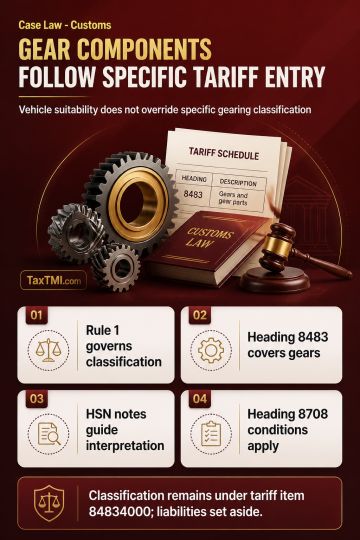
Tariff classification of vehicle gear components follows the specific gearing entry, displacing motor-vehicle parts classification and related liabili...
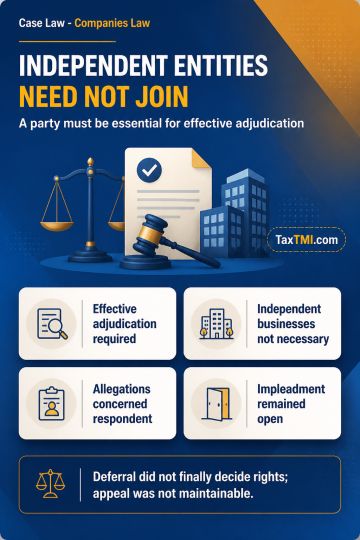
Necessary-party requirements limit impleadment of independent entities, while deferred consideration does not create an appealable adverse determinati...
Food supplement classification requires common parlance and authoritative tests, preventing treatment as proprietary Ayurvedic medicines without suppo...
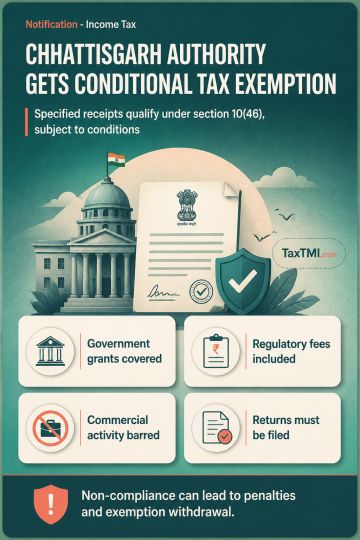
Specified regulatory authority income receives conditional tax exemption, subject to non-commercial activity, unchanged income character, and return f...
Tax exemption for regulatory authority income applies retrospectively, subject to non-commercial activity, unchanged income sources, and return-filing...
Convertible debentures were held to be entirely equity in nature, since the contractual terms and accounting treatment showed no unilateral obligation to deliver cash and the stray note describing a compound financial instrument could not override substance. Accordingly, no transition amount arose under section 115JB(2C), and the deletion of the MAT adjustment was upheld. The Tribunal also held that the year of convergence governed the character of the instrument for later years, so the earlier coordinate bench ruling in the assessee's own case had to be followed on judicial discipline. For section 14A, the Assessing Officer failed to record the required dissatisfaction with the assessee's suo motu disallowance, making Rule 8D invocation unsustainable; the deletion was upheld.
Convertible debentures were held to be entirely equity in nature, since the contractual terms and accounting treatment showed no unilateral obligation to deliver cash and the stray note describing a compound financial instrument could not override substance. Accordingly, no transition amount arose under section 115JB(2C), and the deletion of the MAT adjustment was upheld. The Tribunal also held that the year of convergence governed the character of the instrument for later years, so the earlier coordinate bench ruling in the assessee's own case had to be followed on judicial discipline. For section 14A, the Assessing Officer failed to record the required dissatisfaction with the assessee's suo motu disallowance, making Rule 8D invocation unsustainable; the deletion was upheld.
Note: It is a system-generated summary and is for quick reference only.
 TaxTMI
  TaxTMI
 of 4809
















 Join Channel


