Charitable registration renewal cannot become an assessment of receipts, profitability or annual exemption compliance, requiring renewal and donation ...
AMP expenditure for own business is not an international transaction without an associated-enterprise arrangement, eliminating transfer pricing adjust...
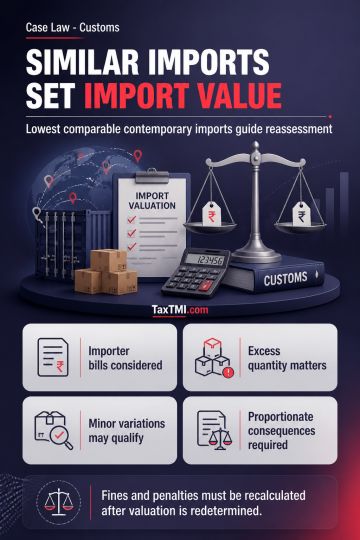
Customs valuation must use comparable contemporary imports, while confiscation fines and penalties require proportionate recalculation on reassessed v...
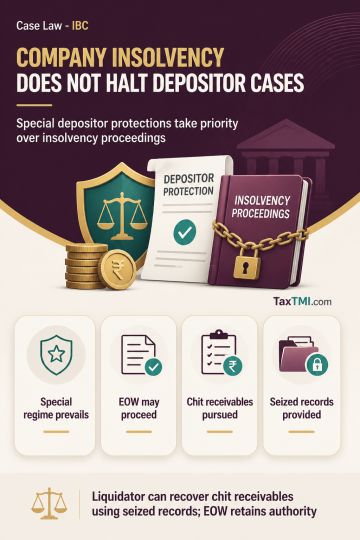
Depositor-protection proceedings prevail over corporate insolvency, while liquidators may recover chit receivables using copies of seized company reco...
Intermediary service classification fails where overseas admission facilitation is supplied independently, preserving export treatment and small-provi...
Satellite transponder bandwidth is telecommunication, not Business Support Service; foreign non-telegraph providers triggered no service tax liability...
Convertible debentures were held to be entirely equity in nature, since the contractual terms and accounting treatment showed no unilateral obligation to deliver cash and the stray note describing a compound financial instrument could not override substance. Accordingly, no transition amount arose under section 115JB(2C), and the deletion of the MAT adjustment was upheld. The Tribunal also held that the year of convergence governed the character of the instrument for later years, so the earlier coordinate bench ruling in the assessee's own case had to be followed on judicial discipline. For section 14A, the Assessing Officer failed to record the required dissatisfaction with the assessee's suo motu disallowance, making Rule 8D invocation unsustainable; the deletion was upheld.
Convertible debentures were held to be entirely equity in nature, since the contractual terms and accounting treatment showed no unilateral obligation to deliver cash and the stray note describing a compound financial instrument could not override substance. Accordingly, no transition amount arose under section 115JB(2C), and the deletion of the MAT adjustment was upheld. The Tribunal also held that the year of convergence governed the character of the instrument for later years, so the earlier coordinate bench ruling in the assessee's own case had to be followed on judicial discipline. For section 14A, the Assessing Officer failed to record the required dissatisfaction with the assessee's suo motu disallowance, making Rule 8D invocation unsustainable; the deletion was upheld.
Note: It is a system-generated summary and is for quick reference only.
 TaxTMI
  TaxTMI
 of 4816



















 Join Channel


