Donor-directed corpus contributions retain capital character despite exemption claims under section 10(23C)(vi), preventing their treatment as taxable...
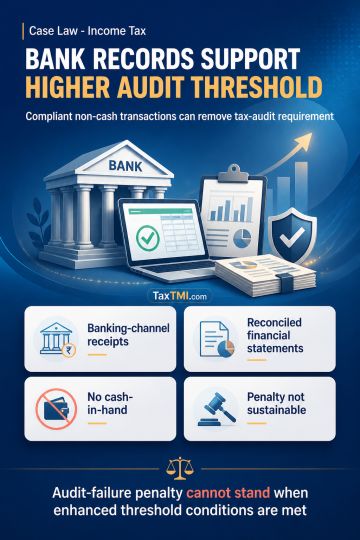
Enhanced tax-audit threshold applies where banking records establish compliant non-cash receipts and payments, eliminating penalty exposure for audit ...
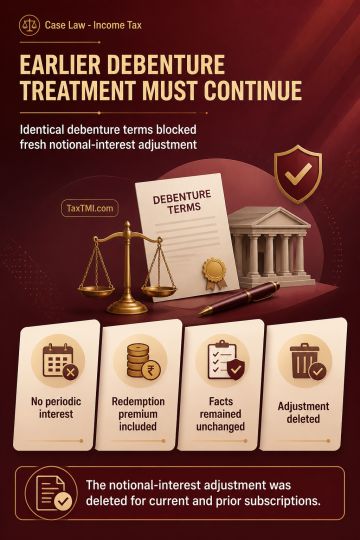
Transfer pricing consistency protects identical non-interest-bearing debenture terms from a later notional-interest adjustment without valid statutory...
Rectification of debatable deduction claims cannot reverse scrutiny-approved co-operative society interest income deductions as apparent record errors...
Cash-method accounting bars presumptive interest taxation, while unsupported securities and share-trading additions require reliable material and veri...
Convertible debentures were held to be entirely equity in nature, since the contractual terms and accounting treatment showed no unilateral obligation to deliver cash and the stray note describing a compound financial instrument could not override substance. Accordingly, no transition amount arose under section 115JB(2C), and the deletion of the MAT adjustment was upheld. The Tribunal also held that the year of convergence governed the character of the instrument for later years, so the earlier coordinate bench ruling in the assessee's own case had to be followed on judicial discipline. For section 14A, the Assessing Officer failed to record the required dissatisfaction with the assessee's suo motu disallowance, making Rule 8D invocation unsustainable; the deletion was upheld.
Convertible debentures were held to be entirely equity in nature, since the contractual terms and accounting treatment showed no unilateral obligation to deliver cash and the stray note describing a compound financial instrument could not override substance. Accordingly, no transition amount arose under section 115JB(2C), and the deletion of the MAT adjustment was upheld. The Tribunal also held that the year of convergence governed the character of the instrument for later years, so the earlier coordinate bench ruling in the assessee's own case had to be followed on judicial discipline. For section 14A, the Assessing Officer failed to record the required dissatisfaction with the assessee's suo motu disallowance, making Rule 8D invocation unsustainable; the deletion was upheld.
Note: It is a system-generated summary and is for quick reference only.
 TaxTMI
  TaxTMI
 of 4816















 Join Channel


