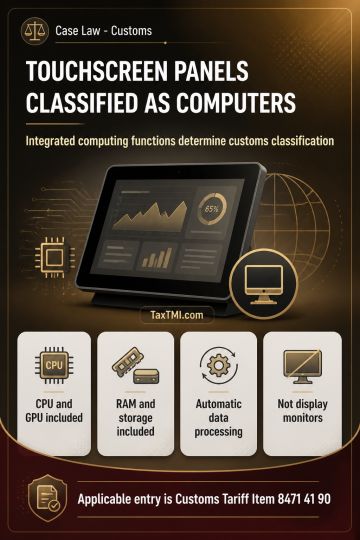
Interactive touchscreen panels with integrated computing functions fall under automatic data-processing machines rather than display monitors for cust...
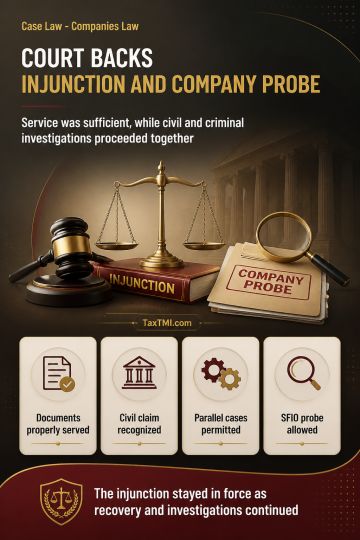
Ex parte injunction service requirements were substantially met, while civil recovery and SFIO investigation into provident fund defalcation continued...
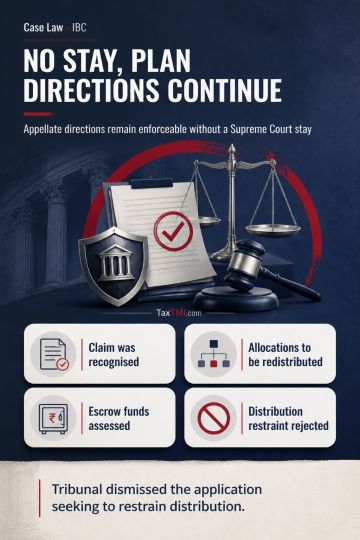
Enforcement of resolution-plan directions continues without a Supreme Court stay, preventing suspension of redistribution and escrowed-fund distributi...
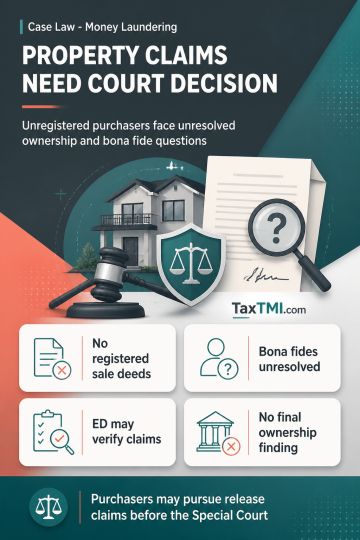
Third-party ownership claims over attached property require Special Court adjudication where purchasers lack registered sale deeds and bona fides rema...
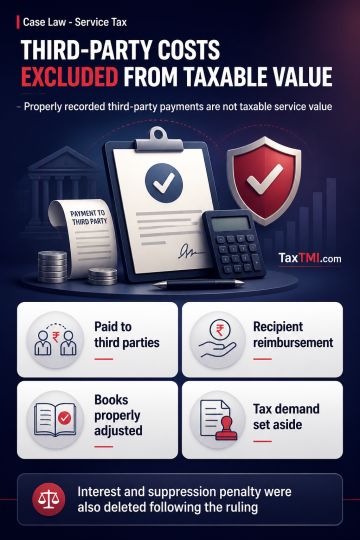
Pure-agent reimbursements in clearing and forwarding services are excluded from taxable value when qualifying third-party payments are properly record...
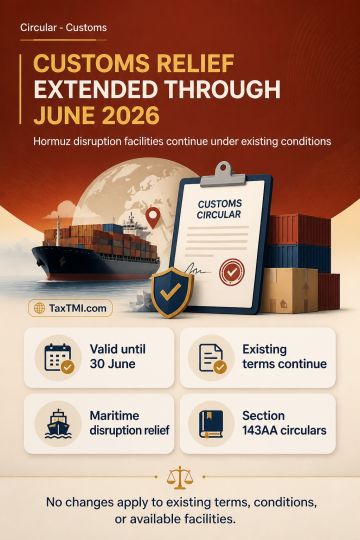
Customs relief for Strait of Hormuz maritime disruptions remains available, with existing conditions continuing unchanged through the extended validit...
At the Section 26 prima facie stage, the Commission may close an information where the informant does not place complete and substantiating material. The Tribunal noted that general assertions on unilateral pricing, unfair tender terms, discounts, losses, price distortion and market harm were unsupported by actual data on cost sheets, margins, losses, market exit, price effects or share erosion, so the allegations did not cross the evidentiary threshold for investigation. It also accepted that, in a regulated alcohol market, pricing was linked to taxes, levies and State policy, and that alleged preferential treatment in tendering was not shown by comparative market data to have distorted competition. The closure under Section 26(2) was upheld.
At the Section 26 prima facie stage, the Commission may close an information where the informant does not place complete and substantiating material. The Tribunal noted that general assertions on unilateral pricing, unfair tender terms, discounts, losses, price distortion and market harm were unsupported by actual data on cost sheets, margins, losses, market exit, price effects or share erosion, so the allegations did not cross the evidentiary threshold for investigation. It also accepted that, in a regulated alcohol market, pricing was linked to taxes, levies and State policy, and that alleged preferential treatment in tendering was not shown by comparative market data to have distorted competition. The closure under Section 26(2) was upheld.
Note: It is a system-generated summary and is for quick reference only.
 TaxTMI
  TaxTMI
 of 4811






 Join Channel