Donor-directed corpus contributions retain capital character despite exemption claims under section 10(23C)(vi), preventing their treatment as taxable...
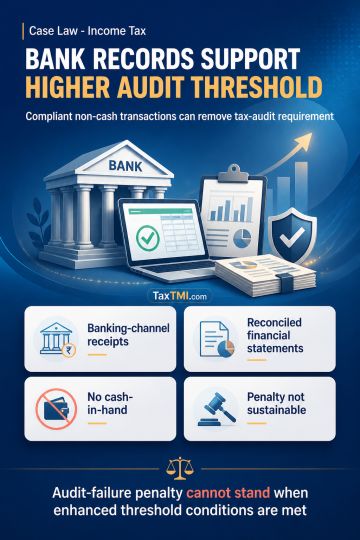
Enhanced tax-audit threshold applies where banking records establish compliant non-cash receipts and payments, eliminating penalty exposure for audit ...
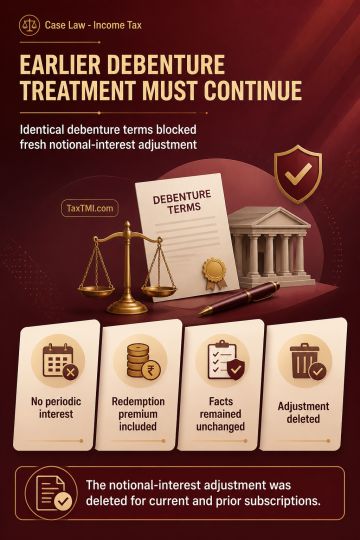
Transfer pricing consistency protects identical non-interest-bearing debenture terms from a later notional-interest adjustment without valid statutory...
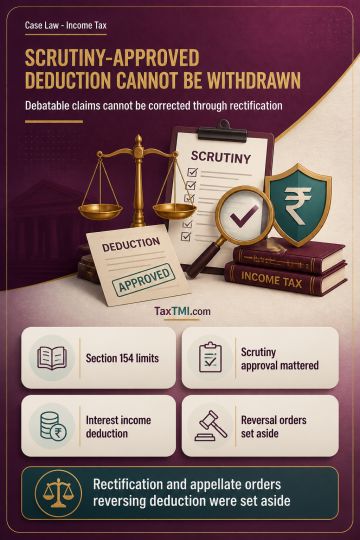
Rectification of debatable deduction claims cannot reverse scrutiny-approved co-operative society interest income deductions as apparent record errors...
Cash-method accounting bars presumptive interest taxation, while unsupported securities and share-trading additions require reliable material and veri...
Page of 4814
Press 'Enter' after typing page number.
181 to 200 of 96262 Results
❮
❯
❯❯
0 / 200
Expand Note
Add to Folder
No Folders have been created
+
Are you sure you want to delete "My most important" ?
For GST first appeals, limitation runs from the actual communication of the adjudication order to the assessee. Where the assessee states that date, a presumption arises in its favour and the Revenue must rebut it with cogent material; failure to do so makes dismissal of the appeal as time-barred unsustainable. The Court also held that writ jurisdiction could be invoked despite an alternate statutory remedy because the appellate authority had ignored binding precedent and failed to record an independent finding on limitation. The impugned appellate orders were quashed and the matters remitted for fresh decision in accordance with the governing law on effective communication and limitation.
For GST first appeals, limitation runs from the actual communication of the adjudication order to the assessee. Where the assessee states that date, a presumption arises in its favour and the Revenue must rebut it with cogent material; failure to do so makes dismissal of the appeal as time-barred unsustainable. The Court also held that writ jurisdiction could be invoked despite an alternate statutory remedy because the appellate authority had ignored binding precedent and failed to record an independent finding on limitation. The impugned appellate orders were quashed and the matters remitted for fresh decision in accordance with the governing law on effective communication and limitation.
Note: It is a system-generated summary and is for quick reference only.
 TaxTMI
  TaxTMI
 of 4814










 Join Channel