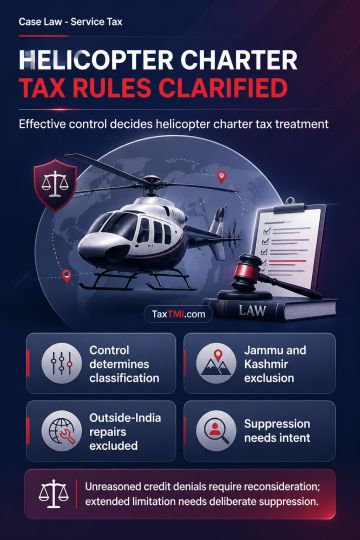
Helicopter charter classification requires effective control analysis, while territorial performance, reasoned credit orders and wilful suppression de...
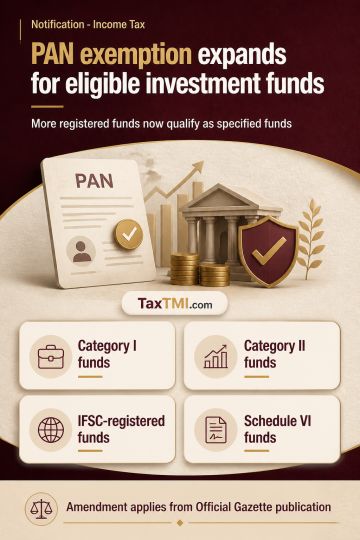
Specified fund definition expands PAN exemption eligibility for registered alternative investment funds and qualifying International Financial Service...
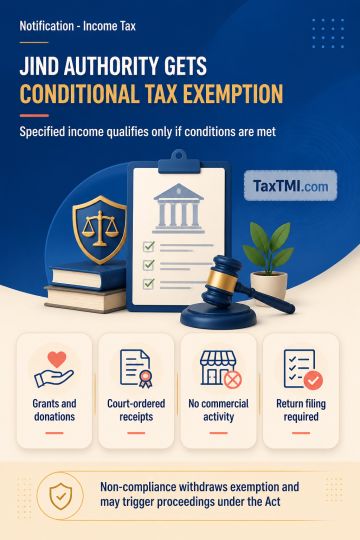
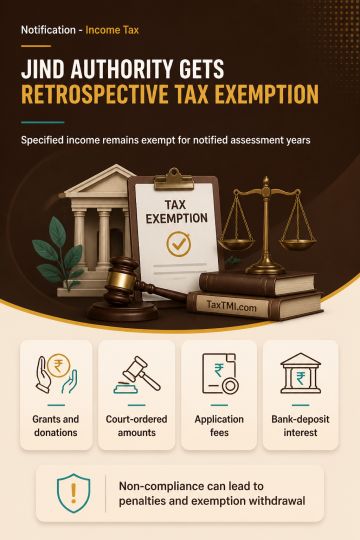
Tax exemption for specified legal-services authority income applies retrospectively, subject to non-commercial activity, unchanged income sources, and...
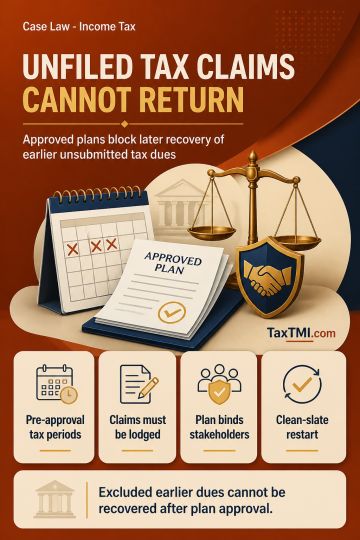
Approved resolution plans extinguish unsubmitted pre-approval tax claims, preventing later recovery outside the insolvency process and preserving a cl...
A constituent of joint ventures and consortiums formed to bid for government infrastructure contracts was treated as eligible for deduction under section 80IA(4) because the arrangements were pass-through vehicles, with execution, risk, and profit sharing resting on the members in their agreed proportions. The absence of a direct contract in the assessee's own name did not defeat eligibility where its participation was substantively through the consortium contract. The Tribunal also held that the Explanation to section 80IA(13) excludes only pure works contracts; the assessee, having undertaken design, procurement, construction, commissioning, and operation and maintenance obligations while bearing entrepreneurial and investment risk, was a developer and not a works contractor. Deduction was therefore allowed for both assessment years.
A constituent of joint ventures and consortiums formed to bid for government infrastructure contracts was treated as eligible for deduction under section 80IA(4) because the arrangements were pass-through vehicles, with execution, risk, and profit sharing resting on the members in their agreed proportions. The absence of a direct contract in the assessee's own name did not defeat eligibility where its participation was substantively through the consortium contract. The Tribunal also held that the Explanation to section 80IA(13) excludes only pure works contracts; the assessee, having undertaken design, procurement, construction, commissioning, and operation and maintenance obligations while bearing entrepreneurial and investment risk, was a developer and not a works contractor. Deduction was therefore allowed for both assessment years.
Note: It is a system-generated summary and is for quick reference only.
 TaxTMI
 of 4805



 Join Channel


 TaxTMI
