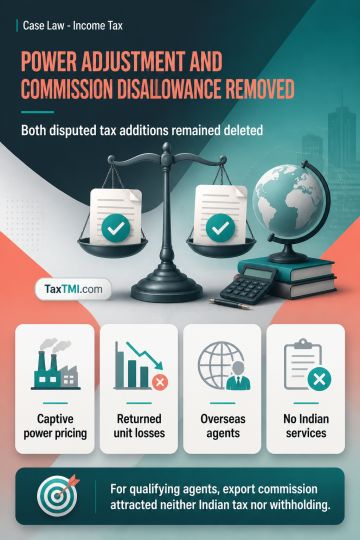
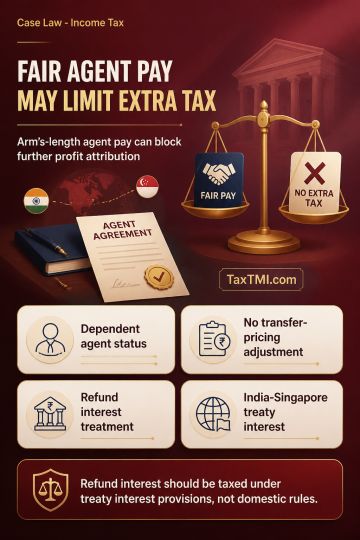
Captive power transfer pricing and non-resident export commission rules support deletion of adjustments and withholding disallowance in discussed proc...
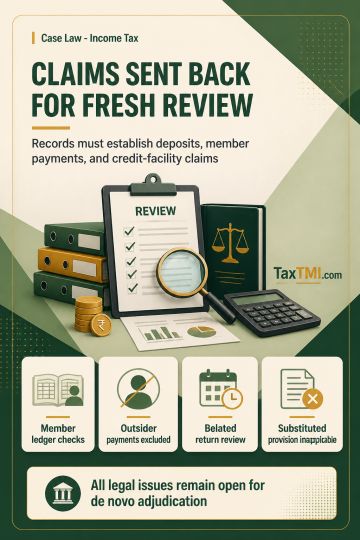
Cooperative society deposits, member-interest TDS exemption and credit-facility deduction claims require verification through records and supporting e...
Customs jurisdiction over EPCG condition breaches survives export-obligation discharge certificates, requiring alleged fraud and misdeclaration to be ...
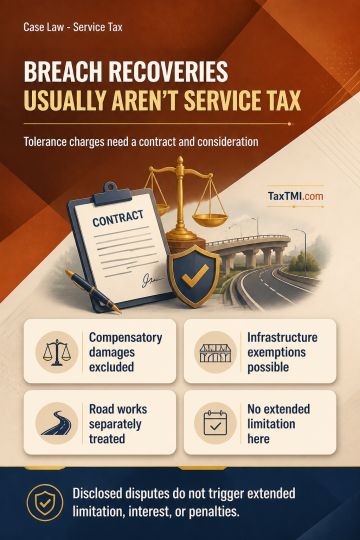
Contractual tolerance requires consideration; breach recoveries, qualifying public infrastructure services and road works escape service tax liability...
A constituent of joint ventures and consortiums formed to bid for government infrastructure contracts was treated as eligible for deduction under section 80IA(4) because the arrangements were pass-through vehicles, with execution, risk, and profit sharing resting on the members in their agreed proportions. The absence of a direct contract in the assessee's own name did not defeat eligibility where its participation was substantively through the consortium contract. The Tribunal also held that the Explanation to section 80IA(13) excludes only pure works contracts; the assessee, having undertaken design, procurement, construction, commissioning, and operation and maintenance obligations while bearing entrepreneurial and investment risk, was a developer and not a works contractor. Deduction was therefore allowed for both assessment years.
A constituent of joint ventures and consortiums formed to bid for government infrastructure contracts was treated as eligible for deduction under section 80IA(4) because the arrangements were pass-through vehicles, with execution, risk, and profit sharing resting on the members in their agreed proportions. The absence of a direct contract in the assessee's own name did not defeat eligibility where its participation was substantively through the consortium contract. The Tribunal also held that the Explanation to section 80IA(13) excludes only pure works contracts; the assessee, having undertaken design, procurement, construction, commissioning, and operation and maintenance obligations while bearing entrepreneurial and investment risk, was a developer and not a works contractor. Deduction was therefore allowed for both assessment years.
Note: It is a system-generated summary and is for quick reference only.
 TaxTMI
 of 4805






 Join Channel


 TaxTMI
