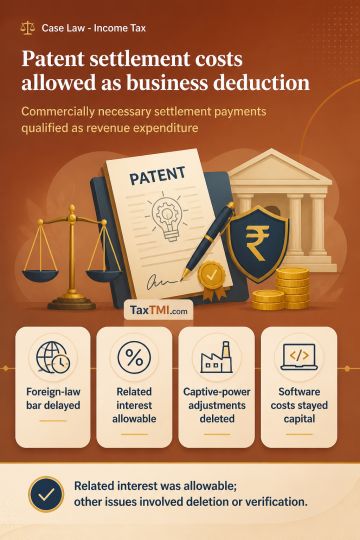
Patent-settlement expenditure treated as commercially expedient revenue outlay, with foreign-law restrictions inapplicable before the prospective amen...
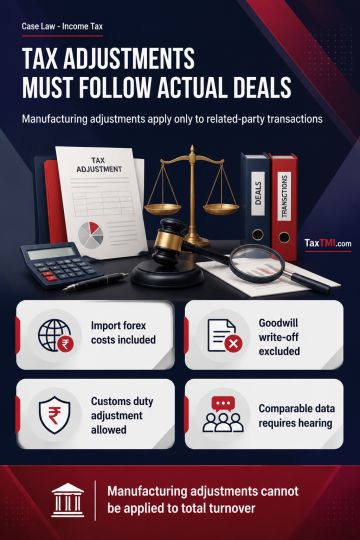
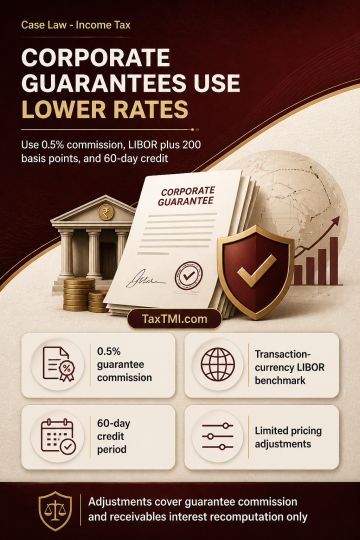
International transaction benchmarking restricts transfer pricing adjustments to associated-enterprise dealings, while functional comparability govern...
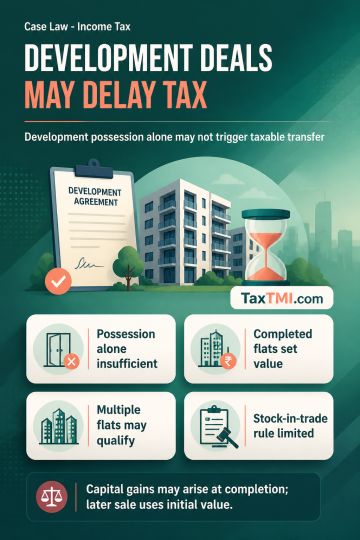
Joint development agreements defer taxable transfer where possession lacks part performance, while completed flats determine consideration and exempti...
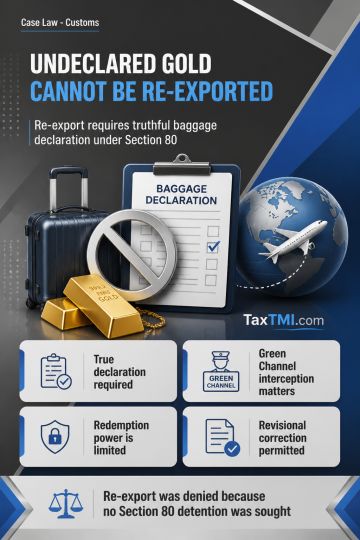
Passenger baggage re-export requires true declaration and cannot be granted indirectly through discretionary redemption of undeclared prohibited goods...
A constituent of joint ventures and consortiums formed to bid for government infrastructure contracts was treated as eligible for deduction under section 80IA(4) because the arrangements were pass-through vehicles, with execution, risk, and profit sharing resting on the members in their agreed proportions. The absence of a direct contract in the assessee's own name did not defeat eligibility where its participation was substantively through the consortium contract. The Tribunal also held that the Explanation to section 80IA(13) excludes only pure works contracts; the assessee, having undertaken design, procurement, construction, commissioning, and operation and maintenance obligations while bearing entrepreneurial and investment risk, was a developer and not a works contractor. Deduction was therefore allowed for both assessment years.
A constituent of joint ventures and consortiums formed to bid for government infrastructure contracts was treated as eligible for deduction under section 80IA(4) because the arrangements were pass-through vehicles, with execution, risk, and profit sharing resting on the members in their agreed proportions. The absence of a direct contract in the assessee's own name did not defeat eligibility where its participation was substantively through the consortium contract. The Tribunal also held that the Explanation to section 80IA(13) excludes only pure works contracts; the assessee, having undertaken design, procurement, construction, commissioning, and operation and maintenance obligations while bearing entrepreneurial and investment risk, was a developer and not a works contractor. Deduction was therefore allowed for both assessment years.
Note: It is a system-generated summary and is for quick reference only.
 TaxTMI
  TaxTMI
 of 4807



 Join Channel


