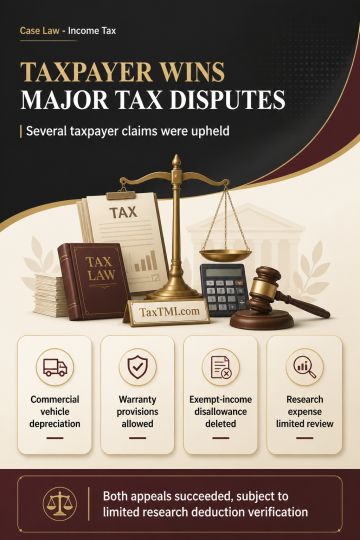
Commercial vehicle depreciation, scientifically determined warranty provisions and exempt-income disallowances were resolved in favour of the taxpayer...
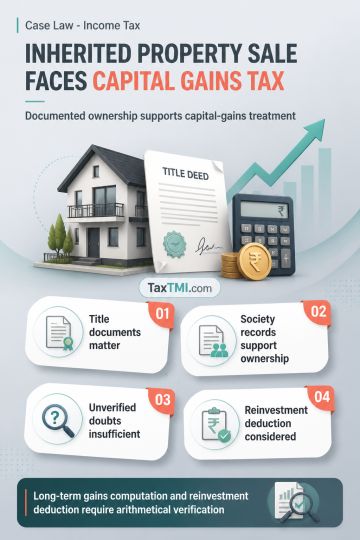
Inherited property sale proceeds require capital-gains treatment where ownership is supported by evidence, not suspicion or unverified signature doubt...
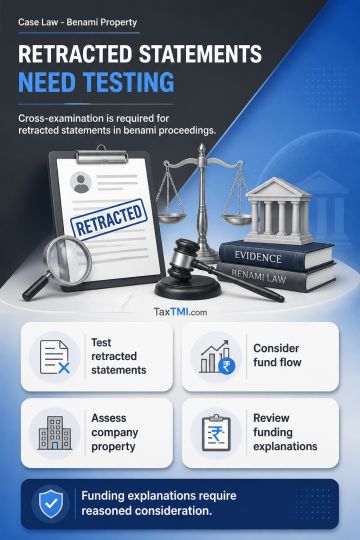
Cross-examination of retracted statements is essential where foundational evidence supports a benami allegation and documented funding explanations re...
Capital-goods exemption covers plant-modernisation accessories, while the import restriction applies only to earlier capital-goods components and spar...
A constituent of joint ventures and consortiums formed to bid for government infrastructure contracts was treated as eligible for deduction under section 80IA(4) because the arrangements were pass-through vehicles, with execution, risk, and profit sharing resting on the members in their agreed proportions. The absence of a direct contract in the assessee's own name did not defeat eligibility where its participation was substantively through the consortium contract. The Tribunal also held that the Explanation to section 80IA(13) excludes only pure works contracts; the assessee, having undertaken design, procurement, construction, commissioning, and operation and maintenance obligations while bearing entrepreneurial and investment risk, was a developer and not a works contractor. Deduction was therefore allowed for both assessment years.
A constituent of joint ventures and consortiums formed to bid for government infrastructure contracts was treated as eligible for deduction under section 80IA(4) because the arrangements were pass-through vehicles, with execution, risk, and profit sharing resting on the members in their agreed proportions. The absence of a direct contract in the assessee's own name did not defeat eligibility where its participation was substantively through the consortium contract. The Tribunal also held that the Explanation to section 80IA(13) excludes only pure works contracts; the assessee, having undertaken design, procurement, construction, commissioning, and operation and maintenance obligations while bearing entrepreneurial and investment risk, was a developer and not a works contractor. Deduction was therefore allowed for both assessment years.
Note: It is a system-generated summary and is for quick reference only.
 TaxTMI
  TaxTMI
 of 4807






 Join Channel