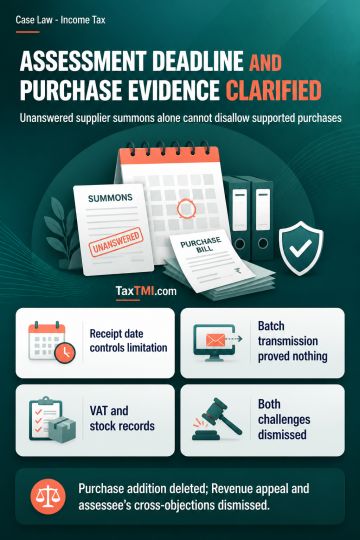
Limitation for consequential assessments runs from prescribed authority receipt, while verified purchases cannot be disallowed merely for unanswered s...
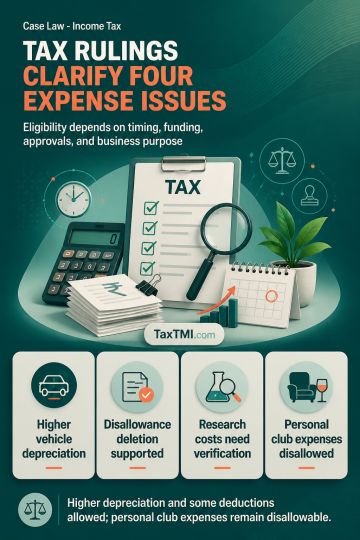
Higher depreciation for qualifying commercial vehicles, exempt-income disallowance, research deduction verification, and club-expense treatment clarif...
Charitable registration renewal cannot become an assessment of receipts, profitability or annual exemption compliance, requiring renewal and donation ...
AMP expenditure for own business is not an international transaction without an associated-enterprise arrangement, eliminating transfer pricing adjust...
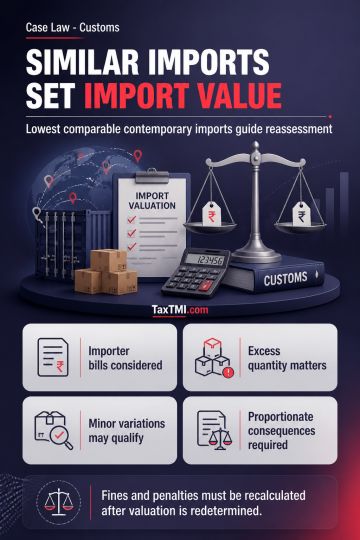
Customs valuation must use comparable contemporary imports, while confiscation fines and penalties require proportionate recalculation on reassessed v...
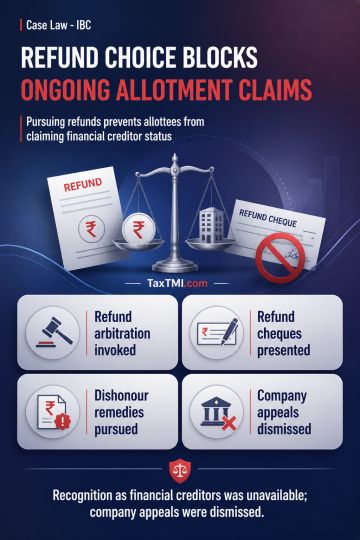
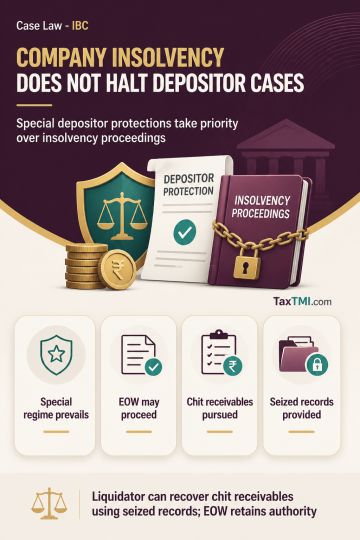
Depositor-protection proceedings prevail over corporate insolvency, while liquidators may recover chit receivables using copies of seized company reco...
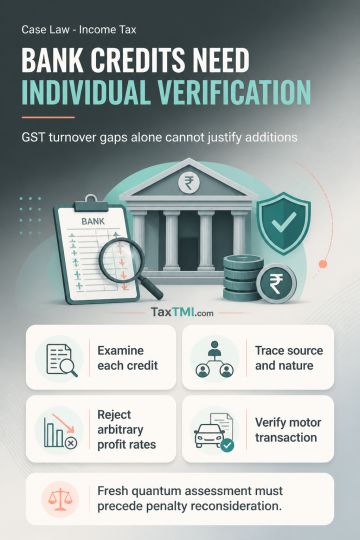
The Tribunal held that the statutory one-month timeline under section 148A(d) remains mandatory and is not extended by the broader surviving-period principle under section 148; the orders for AYs 2013-14 and 2014-15 were therefore time-barred and the consequential reassessment notices and orders were quashed. It further held that where action was founded solely on third-party search material, sections 153A/153C constituted the special route and general reassessment or assessment provisions could not be invoked without the required satisfaction note; the proceedings for AYs 2013-14, 2014-15 and 2020-21 were quashed on that ground. On merits, additions for accommodation entries, bank credits and duplicate loan credits were deleted because the sales and receipts were supported by records, bank statements are not books of account, and no objective inquiry or cash trail was shown.
The Tribunal held that the statutory one-month timeline under section 148A(d) remains mandatory and is not extended by the broader surviving-period principle under section 148; the orders for AYs 2013-14 and 2014-15 were therefore time-barred and the consequential reassessment notices and orders were quashed. It further held that where action was founded solely on third-party search material, sections 153A/153C constituted the special route and general reassessment or assessment provisions could not be invoked without the required satisfaction note; the proceedings for AYs 2013-14, 2014-15 and 2020-21 were quashed on that ground. On merits, additions for accommodation entries, bank credits and duplicate loan credits were deleted because the sales and receipts were supported by records, bank statements are not books of account, and no objective inquiry or cash trail was shown.
Note: It is a system-generated summary and is for quick reference only.
 TaxTMI
  TaxTMI
 of 4811










 Join Channel