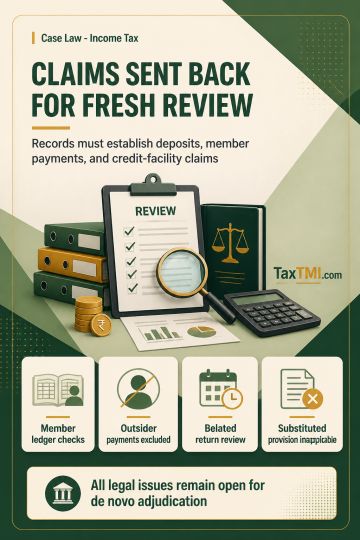
Cooperative society deposits, member-interest TDS exemption and credit-facility deduction claims require verification through records and supporting e...
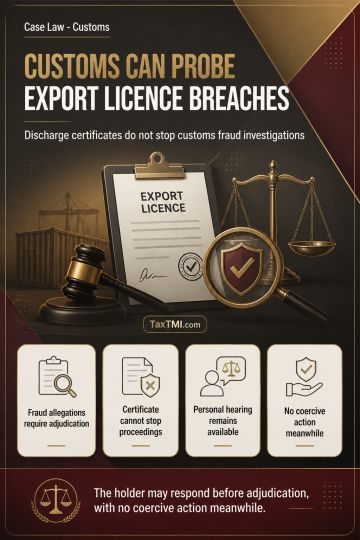
Customs jurisdiction over EPCG condition breaches survives export-obligation discharge certificates, requiring alleged fraud and misdeclaration to be ...
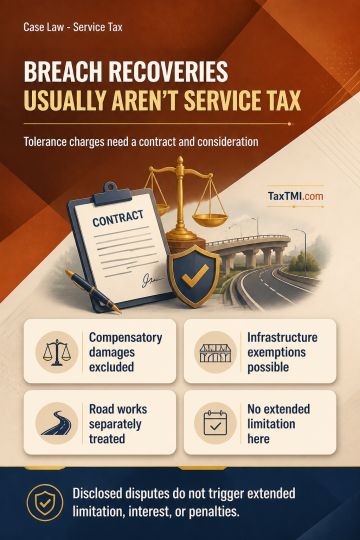
Contractual tolerance requires consideration; breach recoveries, qualifying public infrastructure services and road works escape service tax liability...
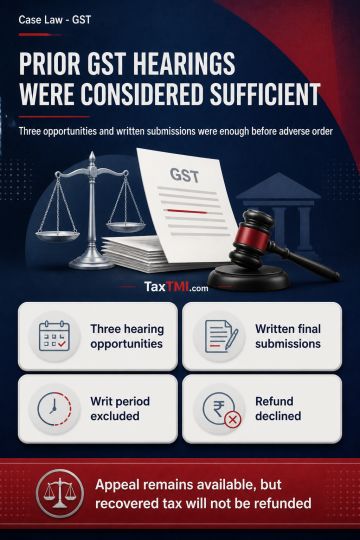
Personal hearing requirements in GST adjudication were satisfied by prior opportunities and written submissions; appellate limitation received writ-pe...
Page of 4809
Press 'Enter' after typing page number.
961 to 980 of 96174 Results
❮
❯
❯❯
0 / 200
Expand Note
Add to Folder
No Folders have been created
+
Are you sure you want to delete "My most important" ?
A director's personal penalty liability was sustained where his conscious participation in undervaluation and use of dual invoices culminated in import clearance in India, giving the offence a direct territorial nexus with India. The Tribunal held that customs penal provisions could apply notwithstanding that some acts originated outside India, because the fraudulent importation was completed in India and his liability was independent of any separate action against the foreign company. Penalty under section 112(a) was upheld on evidence of deliberate involvement in the undervaluation mechanism, and penalty under section 114AA was also sustained because false invoices were knowingly prepared and used for customs transactions.
A director's personal penalty liability was sustained where his conscious participation in undervaluation and use of dual invoices culminated in import clearance in India, giving the offence a direct territorial nexus with India. The Tribunal held that customs penal provisions could apply notwithstanding that some acts originated outside India, because the fraudulent importation was completed in India and his liability was independent of any separate action against the foreign company. Penalty under section 112(a) was upheld on evidence of deliberate involvement in the undervaluation mechanism, and penalty under section 114AA was also sustained because false invoices were knowingly prepared and used for customs transactions.
Note: It is a system-generated summary and is for quick reference only.
 TaxTMI
  TaxTMI
 of 4809



 Join Channel