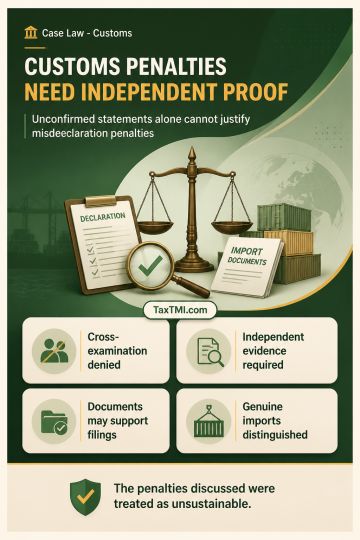
Cross-examination rights and corroborated evidence limit customs penalties for misdeclaration in genuine import transactions involving documented clea...
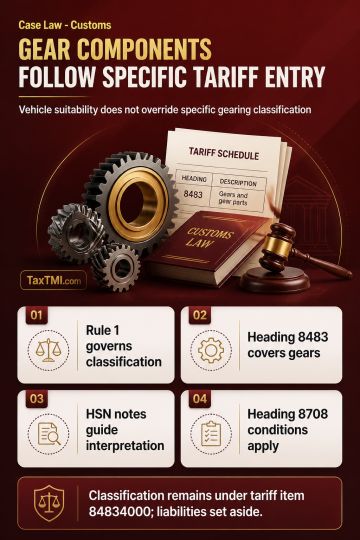
Tariff classification of vehicle gear components follows the specific gearing entry, displacing motor-vehicle parts classification and related liabili...
Necessary-party requirements limit impleadment of independent entities, while deferred consideration does not create an appealable adverse determinati...
Food supplement classification requires common parlance and authoritative tests, preventing treatment as proprietary Ayurvedic medicines without suppo...
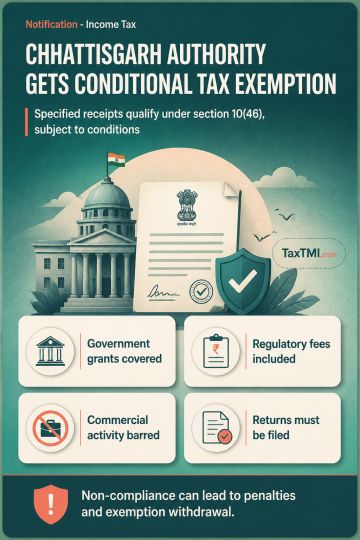
Specified regulatory authority income receives conditional tax exemption, subject to non-commercial activity, unchanged income character, and return f...
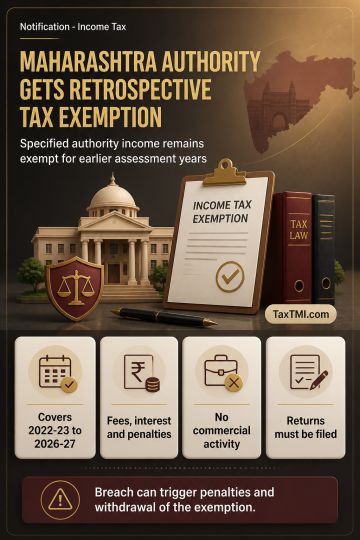
Tax exemption for regulatory authority income applies retrospectively, subject to non-commercial activity, unchanged income sources, and return-filing...
A director's personal penalty liability was sustained where his conscious participation in undervaluation and use of dual invoices culminated in import clearance in India, giving the offence a direct territorial nexus with India. The Tribunal held that customs penal provisions could apply notwithstanding that some acts originated outside India, because the fraudulent importation was completed in India and his liability was independent of any separate action against the foreign company. Penalty under section 112(a) was upheld on evidence of deliberate involvement in the undervaluation mechanism, and penalty under section 114AA was also sustained because false invoices were knowingly prepared and used for customs transactions.
A director's personal penalty liability was sustained where his conscious participation in undervaluation and use of dual invoices culminated in import clearance in India, giving the offence a direct territorial nexus with India. The Tribunal held that customs penal provisions could apply notwithstanding that some acts originated outside India, because the fraudulent importation was completed in India and his liability was independent of any separate action against the foreign company. Penalty under section 112(a) was upheld on evidence of deliberate involvement in the undervaluation mechanism, and penalty under section 114AA was also sustained because false invoices were knowingly prepared and used for customs transactions.
Note: It is a system-generated summary and is for quick reference only.
 TaxTMI
  TaxTMI
 of 4809











 Join Channel