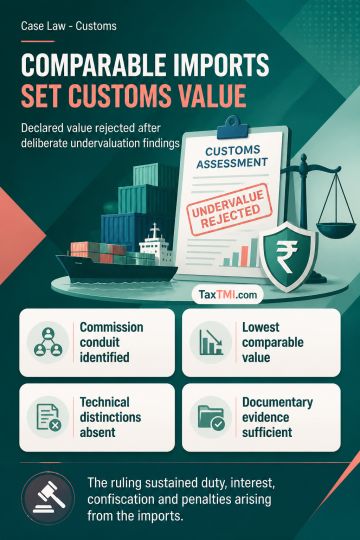
Transaction value rejection requires reliable corroboration; refundable VAT is excluded and temporary registration does not defeat new-vehicle exempti...
Appellate jurisdiction remains available where a wrist-worn gold ornament cannot conclusively be characterised as imported baggage at the preliminary ...
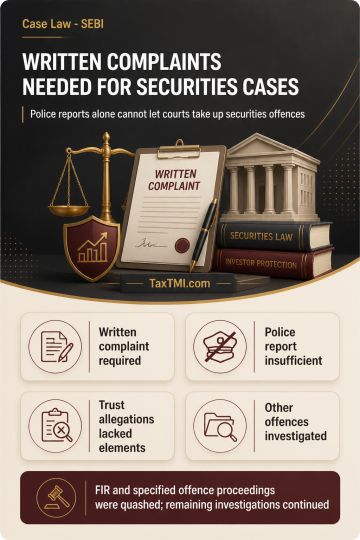
Written complaint requirement bars cognizance on police reports for securities offences, while unsupported breach of trust and cheating allegations fa...
Risk-based postal import clearance standardises electronic assessment, document requests, duty realisation and delivery controls at Foreign Post Offic...
Customs Cargo Service Provider appointment extends custodianship to additional terminal land, subject to cargo-control, security and licence condition...
Page of 4809
Press 'Enter' after typing page number.
521 to 540 of 96174 Results
❮
❯
❯❯
0 / 200
Expand Note
Add to Folder
No Folders have been created
+
Are you sure you want to delete "My most important" ?
The Appellate Tribunal upheld the finding of fraudulent conduct where the suspended directors continued to show a subsidiary investment in the corporate debtor's financial statements despite alleging an earlier sale, disclosed the transaction only during CIRP, and failed to substantiate the alleged diversion or external payment of sale consideration. It held that section 66(1) and section 66(2) operate independently, and that once the resolution professional produces sufficient material, the burden shifts to the directors to explain the impugned transactions. The direction to contribute to the assets of the corporate debtor was sustained. However, the direction for SFIO investigation was set aside because the power to order such investigation vests in the Central Government, and the matter was instead referred for investigation through Inspector or Inspectors.
The Appellate Tribunal upheld the finding of fraudulent conduct where the suspended directors continued to show a subsidiary investment in the corporate debtor's financial statements despite alleging an earlier sale, disclosed the transaction only during CIRP, and failed to substantiate the alleged diversion or external payment of sale consideration. It held that section 66(1) and section 66(2) operate independently, and that once the resolution professional produces sufficient material, the burden shifts to the directors to explain the impugned transactions. The direction to contribute to the assets of the corporate debtor was sustained. However, the direction for SFIO investigation was set aside because the power to order such investigation vests in the Central Government, and the matter was instead referred for investigation through Inspector or Inspectors.
Note: It is a system-generated summary and is for quick reference only.
 TaxTMI
  TaxTMI
 of 4809














 Join Channel