
Just a moment...

Top
Help
×

By creating an account you can:

Logo TaxTMI
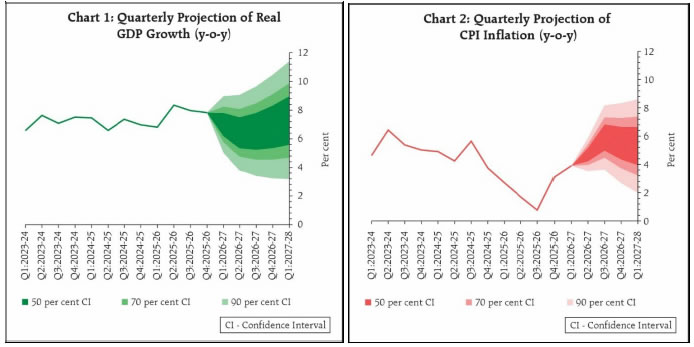
>
Call Us / Help / Feedback

Contact Us At :

E-mail: [email protected]

Call / WhatsApp at: +91 99117 96707

For more information, Check Contact Us

FAQs :

To know Frequently Asked Questions, Check FAQs

Most Asked Video Tutorials :

For more tutorials, Check Video Tutorials

Submit Feedback/Suggestion :

Email :
Please provide your email address so we can follow up on your feedback.
Category :
Description :
Min 15 characters0/2000
Add to...
You have not created any category. Kindly create one to bookmark this item!
Create New Category
Hide
Title :
Description :
❮❮ Hide
Default View
Expand ❯❯
Close ✕
🔎 News - Adv. Search
TEXT SEARCH:

Press 'Enter' to add multiple search terms. Rules for Better Search

Search In:
Main Text + AI Text
  • Main Text
  • Main Text + AI Text
  • AI Text
Category: ?
Categorized by AI
---- All Categories ----
  • ---- All Categories ----
  • Income Tax
  • GST
  • Customs, DGFT & SEZ
  • FEMA & RBI
  • Corp. Laws, SEBI & IBC
  • PMLA, Black Money & ED
  • Budget
  • News and Press Release
  • PTI News
Month:
---- All Months ----
  • ---- All Months ----
  • January
  • February
  • March
  • April
  • May
  • June
  • July
  • August
  • September
  • October
  • November
  • December
Year:
---- All Years ----
  • ---- All Years ----
  • 2026
  • 2025
  • 2024
  • 2023
  • 2022
  • 2021
  • 2020
  • 2019
  • 2018
  • 2017
  • 2016
  • 2015
  • 2014
  • 2013
  • 2012
  • 2011
Sort By: ?
In Sort By 'Default', exact matches for text search are shown at the top, followed by the remaining results in their regular order.
RelevanceDefaultDate
    Customs seizes 8 kg gold worth over Rs 11 cr at Kerala airports in one week
    Drill, Baby, Drill: India to fund Rs 650 cr per well for 60 deepsea wells to break its oil import habit
    Punjab GST revenue rises 20 pc to Rs 10,447 crore in April-July: Cheema
    India-China trade through Shipli La resumes after six years
    Odisha's export can reach USD 50 billion by FY 2029-30: Study
    Andhra records 21 per cent growth in net GST collections till July
    J&K crime branch chargesheets accused in separate bank, insurance fraud cases
    MCD-facilitated PM Vishwakarma Scheme enrols over 41,000 artisans in Delhi
    Gross GST mop-up grows 15.4 pc to over Rs 2.11 lakh cr in July on higher imports, sales
    Gross and Net GST revenue collections for the month of July, 2026
    India and Rwanda Hold First Joint Trade Committee Meeting to Deepen Bilateral Trade and Investment Cooperation
    West Bengal GST collection rises 2 pc in July to Rs 5,564 crore
    Gross GST collection kitty swells 15.4 pc to over Rs 2.11 lakh cr in July
    RBI says USD 40.82 bn mobilised under forex swap facility till Jul 31
    Sebi bars ZEEL for 2 months, Subhash Chandra, Punit Goenka for 1 year in Hyderabad land pledge case
    Department of Commerce Holds Workshop on Trade and Sustainable Development Policy Landscape
    GeM Launches 10-Day Celebrations Ahead of 10th Foundation Day, Unveils Commemorative Logo
    All Indian exports of dual-use items comply with international obligations: MEA
    PM Modi to inaugurate Bhogapuram Airport in Andhra on Aug 1
    HIGHLIGHTS
❯❯
MaximizeMaximizeMaximize
0 / 200
Expand Note
Add to Folder

No Folders have been created

    +

    Are you sure you want to delete "My most important" ?

    NOTE:

    News
    Showing Results for :
    Reset Filters
    Results Found:
    Show All SummariesHide All Summaries
    August 2, 2026
    Show AI Summary
    Gold smuggling detection targets sophisticated concealment methods through strengthened passenger profiling, intelligence gathering and coordinated investigations into organised networks.
    Gold smuggling detection at Kerala airports led to multiple seizures, registration of cases and arrests in alleged smuggling attempts. Organised networks reportedly use gold in paste or compound forms concealed in clothing, body cavities, aircraft seats and other unconventional locations. Enforcement measures include strengthened passenger profiling, intelligence gathering and inter-agency coordination, while investigations continue to identify associated syndicates and financiers.
    August 2, 2026
    Show AI Summary
    Offshore exploration funding supports deepwater drilling, shared infrastructure and seismic data to strengthen domestic hydrocarbon production potential.
    The Samudra Manthan National Offshore Exploration Scheme provides direct budgetary support for high-risk deepwater and ultra-deepwater exploratory drilling, subject to cost-sharing and per-well limits. Support is available to eligible operators holding or securing exploration acreage. The scheme also funds offshore data acquisition and shared subsea, receipt and processing infrastructure through a Common Hub Infrastructure model. It is intended to promote risk exploration, improve commercialisation of offshore discoveries and strengthen domestic hydrocarbon production potential within the existing exploration and licensing framework.
    August 1, 2026
    Show AI Summary
    GST compliance enforcement combines taxpayer refunds, analytics-based fraud detection, cancellation of fake registrations, and recovery of outstanding VAT arrears.
    Punjab attributed increased GST collections to voluntary compliance, intelligence-based enforcement and technology-driven tax administration, while facilitating compliant taxpayers through timely GST refunds. Data analytics, risk profiling and field verification were used to identify tax evasion, bogus billing, fake input tax credit networks and misuse of the GST registration framework. Measures included penalties, cancellation of fraudulent registrations and recovery of long-pending VAT arrears through attachment and auction of defaulters' properties.
    August 1, 2026
    Show AI Summary
    Cross-border barter trade resumes through Shipki La, subject to permitted goods, time limits, and import-export compliance requirements.
    Cross-border barter trade through Shipki La between India and Tibet resumed after a six-year interruption. Traders may exchange specified goods under a barter arrangement and must return within 72 hours. Traders are required to comply strictly with import-export regulations prescribed by the Union Ministry of Commerce, emphasising transparency and regulatory compliance. Expansion of permitted goods may be pursued through prescribed governmental and external-affairs channels.
    August 1, 2026
    Show AI Summary
    Export growth projections outline pathways for Odisha to expand merchandise trade through export diversification, MSME support and financing initiatives.
    Export growth projections for Odisha set out base, optimistic and ambitious scenarios through FY 2029-30, based respectively on historical growth, envisaged national export growth, and a larger share of national exports. Odisha's export basket remains concentrated in metals and minerals, led by aluminium products, with China as the principal export destination. Odisha Vision 2047 identifies exports, including MSME contributions, as an economic transformation driver, while export-financing and risk-mitigation initiatives aim to address financing gaps for exporters and MSMEs.
    August 1, 2026
    Show AI Summary
    GST compliance enforcement through AI analytics supported sustained net GST collection growth despite rate rationalisation reforms and reduced compliance costs.
    GST revenue mobilisation in Andhra Pradesh showed year-on-year growth in net GST and total commercial tax collections through July 2026, despite rate-rationalisation reforms. Revenue growth was attributed to AI-based scrutiny and analytics, machine-learning risk scoring, AI-driven IGST reversals, UPI-based enforcement analytics, data sharing, predictive analytics, registration verification, and Aadhaar-integrated expansion of the professional-tax base. These measures were stated to strengthen compliance, curb wrongful input tax credit claims, broaden taxpayer coverage, and improve revenue mobilisation.
    August 1, 2026
    Show AI Summary
    Economic-offences fraud chargesheets address alleged fictitious loans, forged insurance surrender papers, and diversion of bank and policy funds.
    Economic-offences chargesheets were filed in separate alleged bank and insurance fraud matters. The bank investigation alleged fictitious loan sanctions and overdrafts beyond delegated authority, involving cheating, forgery, use of forged documents and criminal conspiracy. The insurance investigation alleged that duplicate policy records and forged surrender documents were used to open a fraudulent account in a policyholder's name and divert policy proceeds. Records, witness statements, documentary evidence and forensic examination were cited in support of the allegations.
    August 1, 2026
    Show AI Summary
    PM Vishwakarma Scheme implementation expands artisan enrolment, skills, credit, e-commerce access and export facilitation while addressing documentation barriers.
    PM Vishwakarma Scheme implementation in Delhi facilitated artisan enrolment, application processing, skill training, toolkit distribution, loan access, e-commerce onboarding and export-related support. Awareness workshops and tele-calling campaigns were used to promote participation and follow up on benefits. Key implementation challenges concerned outreach to informal clusters, digital literacy, delays in Aadhaar and IEC documentation, and additional support for Divyang artisans. Planned action includes expanding workshops, scaling e-commerce onboarding, strengthening export facilitation and coordination with implementing agencies.
    August 1, 2026
    Show AI Summary
    Goods and Services Tax collections rise on domestic consumption and imports, while elevated import revenue prompts assessment of underlying drivers.
    Goods and Services Tax collections for July increased over the corresponding prior-year period, supported by domestic sales and imports. Gross receipts included Central GST, State GST and Integrated GST, with net GST revenue calculated after adjusting refunds. For the April-July period, gross and net collections also increased. Commentary linked domestic GST growth to consumption, formalisation and industrial activity, while identifying elevated import GST collections as an area requiring assessment of import composition, currency effects and volumes.
    August 1, 2026
    Show AI Summary
    GST revenue collections show provisional gross, refund and net revenue trends, with State-wise settlement and domestic collection data.
    GST revenue collections for July 2026 are reported provisionally through gross domestic and import revenue, domestic and export-related refunds, and net GST revenue after refunds. The data also sets out SGST collections and the SGST share of IGST settled to States and Union Territories, both monthly and cumulatively. State-wise domestic GST growth excludes GST on imported goods, while jurisdiction-wise data allocates collections between central and State formations and identifies CGST, SGST and IGST components.
    August 1, 2026
    Show AI Summary
    Bilateral trade cooperation expands through a Joint Trade Committee covering investment, critical minerals, healthcare, digital technologies and market access.
    Bilateral trade and investment cooperation between India and Rwanda is to be advanced through a structured Joint Trade Committee mechanism for reviewing commerce, diversifying trade, promoting investment, facilitating business engagement and addressing market-access and logistical issues. Priority cooperation includes critical minerals, pharmaceuticals and healthcare, agriculture and agro-processing, standards harmonisation, digital public infrastructure, fintech, cybersecurity, green mobility and renewable energy. Investment focal points will support engagement, while capacity-building assistance and close monitoring of the Agreed Minutes are intended to support time-bound implementation.
    August 1, 2026
    Show AI Summary
    GST collection growth in West Bengal continued year-on-year in July but remained below the national growth trend.
    West Bengal's July GST collection increased year-on-year and over the preceding month, marking a second consecutive month of annual growth. Official data also indicated that the State's annual growth rate was below the national trend, while gross domestic GST revenue excluding imports and overall gross GST collections including import-related taxes rose nationally during July.
    August 1, 2026
    Show AI Summary
    GST collection growth reflects higher revenue mobilisation from domestic transactions and imports, with refunds adjusted in net revenue.
    Goods and Services Tax collections increased in July, driven by higher revenue from domestic transactions and imports. The gross collection comprised Central GST, State GST and Integrated GST components. Refunds also increased during the month, and net GST revenue was determined after adjustment of refund outflows from gross tax receipts.
    August 1, 2026
    Show AI Summary
    Concessional foreign-exchange swaps encourage bank deposits and foreign borrowings to strengthen balance-of-payments resilience and foreign-exchange liquidity.
    The Reserve Bank of India introduced a concessional foreign-exchange swap facility to encourage foreign-currency inflows, strengthen the balance of payments and support foreign-exchange liquidity. The facility applies to fresh Foreign Currency Non-Resident (Bank) deposits, Overseas Foreign Currency Borrowings and External Commercial Borrowings. Foreign Currency Non-Resident (Bank) deposits constitute the principal source of inflows mobilised under the arrangement. The facility is available for specified time-bound periods, with a later availability period for Overseas Foreign Currency Borrowings and External Commercial Borrowings.
    August 1, 2026
    Show AI Summary
    Unauthorised pledge of listed-company land triggered securities-market bars for disclosure failures and misuse of management authority.
    Unauthorised pledge of ZEEL's Hyderabad land as security for loans obtained by promoter-linked entities was treated as a related-party transaction lacking prior audit committee approval. ZEEL failed to disclose the land's deployment in its financial statements. Its Chairman Emeritus was stated to have transferred title deeds by falsely representing management approval and to have concealed the transaction's nature. Securities-market prohibitions and monetary penalties were imposed with immediate effect.
    August 1, 2026
    Show AI Summary
    Trade and sustainable development policy integrates carbon regulation, sustainability standards and domestic frameworks to strengthen trade competitiveness and preparedness.
    Trade and Sustainable Development policy was examined in relation to international trade disciplines, sustainability regulation and India's trade strategy. Discussions considered carbon markets, carbon pricing, carbon border adjustment measures, sustainability standards and regulatory cooperation, and their implications for trade and industrial competitiveness. Domestic mechanisms, including the Carbon Credit Trading Scheme, Indian Carbon Market, Extended Producer Responsibility framework, and accreditation and conformity assessment systems, were considered for strengthening preparedness for emerging sustainability-related trade disciplines.
    August 1, 2026
    Show AI Summary
    Digital public procurement engagement begins with stakeholder events promoting transparent, efficient and inclusive marketplace governance.
    Government e-Marketplace launched ten-day celebrations preceding its tenth Foundation Day, including a commemorative logo, stakeholder events and recognition of employees, buyers and sellers. The programme begins a year-long nationwide outreach initiative bringing together buyers, sellers, policymakers, industry representatives and ecosystem partners through events, dialogues and collaborative platforms. Its stated focus is technology-enabled, transparent, efficient and inclusive public procurement.
    July 31, 2026
    Show AI Summary
    Strategic trade controls require dual-use exports to comply with national law and international obligations amid arms-transfer allegations.
    Strategic trade controls governing dual-use exports require Indian exports of dual-use items and technologies to comply with national law and India's international obligations. The stated framework applies to exports to various countries. In response to allegations concerning supplies to Israel, the position notes calls for an arms embargo covering direct or indirect transfers of arms and military material, including weapons, ammunition, parts and components, without determining the underlying allegations.
    July 31, 2026
    Show AI Summary
    Greenfield airport development under a public-private partnership advances licensed international passenger, cargo, logistics, and sustainable infrastructure.
    A greenfield international airport is being developed under a Public-Private Partnership and Design, Build, Finance, Operate and Transfer framework, with airport, aviation-hub, education and supporting infrastructure components. The airport has obtained an aerodrome licence and required safety, fire and environmental clearances. Passenger, airfield and terminal systems are designed for domestic and international operations. A cargo terminal with cold-chain facilities and integration with port, industrial-corridor and logistics networks are intended to strengthen exports and air-cargo logistics. Recycled-water use and LEED Platinum development standards form part of its environmental measures.
    July 31, 2026
    Show AI Summary
    Regulatory and legal developments cover trade measures, legislative action, offshore exploration support, court directions and platform algorithm scrutiny.
    The compilation reports proposed United States tariff measures concerning purchasers of Russian oil and gas, India-United Kingdom trade engagement, extension of farmer-support measures, and approval of offshore exploration support. It also covers passage of the Registration of Births and Deaths (Amendment) Bill, 2026, a privilege-motion notice, a criminal sentencing, and directions to appoint a nodal officer for families affected by the Russia-Ukraine war. Regulatory items include industrial credit data and examination of social-media algorithms, bias and public-order implications.

    News

    Back

    All News

    Showing Results for :
    Reset Filters
      No Records Found

      News

      Back

      All News

      whatsappJoin Channel
      Showing Results for : Reset Filters

      Monetary Policy Statement, 2026-27 Resolution of the Monetary Policy Committee August 3 to 5, 2026

      August 6, 2026

      Contents
      Summary
      Note

      Note

      -

      Bookmark

      Print

      Print

      Monetary Policy Decisions

      The Monetary Policy Committee (MPC) held its 62nd meeting from August 3 to 5, 2026, under the chairmanship of Shri Sanjay Malhotra, Governor, Reserve Bank of India. The MPC members Dr. Nagesh Kumar, Shri Saugata Bhattacharya, Prof. Ram Singh, Dr. Poonam Gupta and Shri Indranil Bhattacharyya attended the meeting.

      2. After a detailed assessment of the evolving macroeconomic and financial developments and the outlook, the MPC voted unanimously to keep the policy repo rate under the liquidity adjustment facility (LAF) unchanged at 5.25 per cent. Consequently, the standing deposit facility (SDF) rate remains at 5.00 per cent and the marginal standing facility (MSF) rate and the Bank Rate remain at 5.50 per cent. The MPC also decided to continue with the neutral stance.

      Growth and Inflation Outlook

      Global Outlook

      3. The global economic outlook in 2026 so far has been characterised by sharp and frequent market swings, persisting inflation concerns and shifting policy expectations. Relief from the temporary ceasefire in West Asia has quickly dissipated amidst resumption of conflict in July. Persistent inflation has prompted several central banks to raise rates while others remain vigilant. The US dollar appreciated, supported by elevated yields, a hawkish Federal Reserve tone, and a relatively buoyant US economy riding on AI driven productivity gains. The global equity market remained volatile as investors repriced their exposure to AI-related stocks. Conflict in West Asia, volatile oil prices, sticky inflation expectations, and fragile public finances in systemic economies pose significant downside risks to the outlook.

      Domestic Outlook

      4. The Indian economy has remained resilient amidst persisting global headwinds. High frequency indicators available so far point towards steady domestic demand in Q1:2026-27. Private consumption remained robust. Investment continues to be resilient, as suggested by various indicators related to construction, capital goods and bank credit. External demand also sustained, as healthy expansion in services exports was complemented by a rebound in merchandise exports.

      5. Looking ahead, the turbulent global economic environment is likely to have some bearing on domestic economic activity. Energy prices and supply chain pressures remain elevated and uncertain. The adverse impact is being contained with various supply side measures. Even though the situation is still evolving, deficient and uneven south-west monsoon amidst El Niño conditions poses some risks to agriculture sector’s outlook and rural demand. Nevertheless, government’s initiatives pertaining to crop diversification including short duration as well as climate-resilient crops, and water harvesting and conservation, among others, are expected to mitigate the impact. Furthermore, sustained momentum in services, continuing impact of GST rationalisation, and broadly stable employment conditions should continue to support urban demand. Strong capacity utilisation, robust credit flow and the government’s continued thrust on infrastructure are expected to sustain investment activity. While services exports are expected to sustain, merchandise exports will be supported by the recent trade agreements and thrust on diversification.

      6. Taking all these factors into consideration, real GDP growth for 2026-27 is projected at 6.7 per cent, with Q1 at 7.0 per cent; Q2 at 6.4 per cent; Q3 at 6.5 per cent; and Q4 at 6.8 per cent. Real GDP growth for Q1:2027-28 is projected at 7.3 per cent (Chart 1). The risks are evenly balanced.

      7. While CPI inflation increased to 4.4 per cent in June 2026 after remaining below the target for 16 consecutive months, it turned out to be lower by 30 basis points (bps) than what was earlier projected for Q1:2026-27. The increase in June was primarily due to higher food and fuel inflation. The increase in food inflation was broad-based with most constituents witnessing price pressures during May-June. Fuel inflation also rose, driven by revision in retail prices, following the sharp spike in international energy prices. It also led to higher inflation in select categories such as restaurant charges. Despite the pressure from higher input costs, core (CPI excluding food and fuel) inflation remained unchanged at 3.9 per cent during May-June. Excluding precious metals, core inflation remained even lower at 2.3-2.5 per cent during this period.

      8. Going forward, El Niño’s impact on temporal and spatial rainfall distribution continues to remain a risk, although proactive supply management and adequate stocks of foodgrains could provide buffers. Global oil prices have remained volatile with sharp two-way movements triggered by geopolitical developments, blurring the near-term outlook. Although generalised inflation pressures continue to remain modest so far, the risks of higher food, fuel and other input prices translating into a broad-based increase in inflation persist.

      9. Considering all these factors, CPI inflation for 2026-27 is projected to be 5.0 per cent with Q2 at 4.7 per cent; Q3 at 5.9 per cent; and Q4 at 5.5 per cent. Inflation for Q1:2027-28 is projected at 5.3 per cent with risks being evenly balanced (Chart 2). Core inflation is projected at 4.3 per cent for 2026-27. Core inflation, excluding precious metals, is expected to be lower in the near term, suggesting that demand pressures remain contained.
      Rationale for Monetary Policy Decisions

      10. Headline CPI inflation edged up above the target, as expected. The realised inflation for Q1, however, remained marginally lower than projections reflecting limited pass-through of cost pressures. The higher inflation is mostly on account of fuel and food with little signs of generalisation of price pressures so far. Core inflation excluding precious metals continues to be benign. As projected earlier, headline inflation is expected to rise further in the near term and peak in Q3:2026-27, primarily due to food and fuel, before moderating thereafter. The underlying inflation, reflected by core inflation excluding precious metals, which has been benign for some time, is likely to align with core inflation towards the end of the financial year.

      11. Growth continues to be supported by resilient domestic demand, sustained expansion in manufacturing and services activity, and robust exports, reaffirming India’s position as the world's fastest-growing major economy.

      12. To sum up, even though headline inflation is projected to increase, it is primarily on account of supply side pressures caused by food and fuel; it is not getting broad-based; core inflation remains moderate and is expected to decline after peaking in Q3. Growth, albeit resilient, is expected to be lower in 2026-27. The outlook, however, is hazy because of the uncertainties regarding south-west monsoon, El Niño, geopolitics and global trade policy. There is a need for greater clarity to emerge, especially regarding inflation, its path and composition before taking any policy action. Any such action would also have to consider the need for recalibration of policy rates in line with the evolving growth-inflation dynamics, especially the normalisation of the underlying inflation from its benign levels seen hitherto.

      13. Considering all these factors, the MPC voted to keep the policy rate unchanged. The MPC also decided to retain the neutral stance to respond appropriately to macroeconomic developments. The MPC underscored that it will maintain a close vigil and remain resolute in its commitment to align inflation with the target.

      14. The minutes of the MPC’s meeting will be published on August 19, 2026.

      15. The next meeting of the MPC is scheduled for October 5 to 7, 2026.

      (Brij Raj)           
      Chief General Manager

      Topics

      ActsIncome Tax
