

Loading...

Top
Help
×

By creating an account you can:

Logo TaxTMI
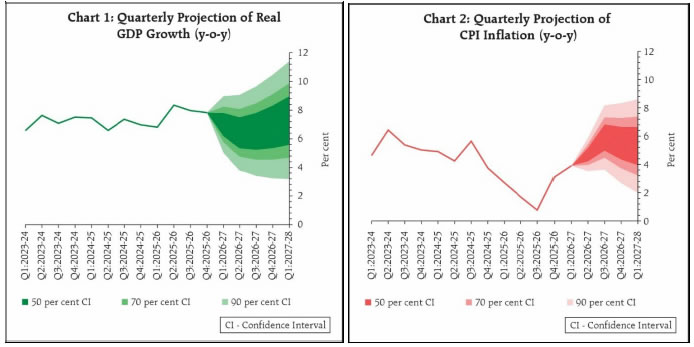
Call Us / Help / Feedback

Contact Us At :

E-mail: [email protected]

Call / WhatsApp at: +91 99117 96707

For more information, Check Contact Us

FAQs :

To know Frequently Asked Questions, Check FAQs

Most Asked Video Tutorials :

For more tutorials, Check Video Tutorials

Submit Feedback/Suggestion :

Email :
Please provide your email address so we can follow up on your feedback.
Category :
Description :
Min 15 characters 0/2000
Make Most of Text Search
  1. Checkout this video tutorial: How to search effectively on TaxTMI.
  2. Put words in double quotes for exact word search, eg: "income tax"
  3. Avoid noise words such as : 'and, of, the, a'
  4. Sort by Relevance to get the most relevant document.
  5. Press Enter to add multiple terms/multiple phrases, and then click on Search to Search.
  6. Text Search
  7. The system will try to fetch results that contains ALL your words.
  8. Once you add keywords, you'll see a new 'Search In' filter that makes your results even more precise.
  9. Text Search
Add to...
You have not created any category. Kindly create one to bookmark this item!
Create New Category
Hide
Title :
Description :
❮❮ Hide
Default View
Expand ❯❯
Close ✕
🔎 News - Adv. Search
TEXT SEARCH:

Press 'Enter' to add multiple search terms. Rules for Better Search

Search In:
Main Text + AI Text
  • Main Text
  • Main Text + AI Text
  • AI Text
Category: ?
Categorized by AI
---- All Categories ----
  • ---- All Categories ----
  • Income Tax
  • GST
  • Customs, DGFT & SEZ
  • FEMA & RBI
  • Corp. Laws, SEBI & IBC
  • PMLA, Black Money & ED
  • Budget
  • News and Press Release
  • PTI News
Month:
---- All Months ----
  • ---- All Months ----
  • January
  • February
  • March
  • April
  • May
  • June
  • July
  • August
  • September
  • October
  • November
  • December
Year:
---- All Years ----
  • ---- All Years ----
  • 2026
  • 2025
  • 2024
  • 2023
  • 2022
  • 2021
  • 2020
  • 2019
  • 2018
  • 2017
  • 2016
  • 2015
  • 2014
  • 2013
  • 2012
  • 2011
Sort By: ?
In Sort By 'Default', exact matches for text search are shown at the top, followed by the remaining results in their regular order.
Relevance Default Date
    RBI clasifies Tata Sons, 16 others as large NBFCs
    Sensex climbs 374 points on buying in Reliance, ICICI Bank; Nifty ends flat
    Insurance Division, DFS Secures 3rd Rank in Group A Category of Grievance Redressal Assessment & Index (GRAI) for June 2026
    VKDL Group’s NPA Bazaar Strengthens India’s Distressed Asset Resolution Ecosystem Under the Leadership of V K Dubey
    Lok Sabha passes bill to authorise govt to permit banks to levy charges on UPI transactions
    Monetary Policy Statement, 2026-27 Resolution of the Monetary Policy Committee August 3 to 5, 2026
    Stock markets edged higher in early trade amid lower crude oil prices, buying in Reliance Industries
    Monthly review of accounts of Government of India upto June 2026 (FY 2026-27)
    DRI busts illegal drug manufacturing unit in Satara district in Maharashtra; two arrested
    CCI approves proposed combination inter alia involving share acquisition(s) and merger of certain entities e.g. AAPC India, Triguna, Caddie, SMPL, Tec...
    Rupee gains 20 paise to close at 95.08 against US dollar post-RBI policy decision
    TN Budget: Revenue deficit at Rs 55,775 crore, fiscal deficit estimated at Rs 1,21,819 crore
    Tatkare slams ‘gungi gudiya’ jibe against Sunetra; Cong says row being exploited for political gains
    RBI invites public comments on Draft Guidelines for ‘on tap’ Licensing of Urban Co-operative Banks
    Pakistan-origin dry dates, routed through UAE, seized at Kandla port
    RBI keeps rates unchanged, retains neutral stance; outlook uncertain on El Nino, geopolitical risks
    Government Notifies Inventory-based Cross-border E-Commerce Export Framework under Foreign Trade Policy 2023
    Customs official among 5 held for smuggling gold of Rs 1.44 crore at Indore airport
    Lok Sabha passes Bankers' Books Evidence Bill to replace colonial-era law
    Sensex gains 152 pts in volatile session as RBI keeps policy rates unchanged
❯❯
Maximize Maximize Maximize
0 / 200
Expand Note
Add to Folder

No Folders have been created

+

Are you sure you want to delete "My most important" ?

NOTE:

News
Showing Results for :
Reset Filters
Results Found:
Show All Summaries Hide All Summaries
August 6, 2026
Show AI Summary
NBFC Upper Layer classification imposes enhanced regulation and listing obligations, while de-registration applications remain under examination.
NBFC Upper Layer classification subjects identified large non-banking financial companies to enhanced regulatory requirements for at least five years and requires stock-exchange listing within three years of identification. The framework divides NBFCs into Base, Middle, Upper and Top Layers. Seventeen large NBFCs were included in the Upper Layer list, while Tata Sons' classification remains subject to the pending examination of its de-registration application.
August 6, 2026
Show AI Summary
Closing auction price discovery may affect benchmark levels differently based on constituent liquidity and concentrated institutional order flow.
The Closing Auction Session in the equity cash segment uses an auction-based method to determine closing prices of eligible shares with futures and options contracts, aiming to strengthen transparent and robust price discovery. Its effect on benchmark closing levels may differ according to constituent liquidity and institutional order flow. The Reserve Bank of India retained the policy repo rate and neutral stance, indicating that future policy decisions will be data-dependent and influenced by assessment of energy-cost effects on inflation.
August 6, 2026
Show AI Summary
Public grievance redressal strengthens through monitoring, senior review, workshops, stakeholder coordination, and customer-centric service delivery improvements.
Public grievance redressal is assessed through the Grievance Redressal Assessment and Index, which analyses grievance categories and disposal. The Department of Financial Services' Insurance and Banking Divisions received third and sixth ranks respectively in the June 2026 assessment. Its framework includes disposal of grievances, random reviews by senior officials, and workshops on effective grievance redressal, supporting best practices, stakeholder coordination, technology use, customer-centric service, and accountable public service delivery.
August 6, 2026
Show AI Summary
Distressed asset resolution integrates restructuring, insolvency advisory, funding facilitation and digital marketplaces for transparent financial recovery transactions.
The platform provides integrated advisory, management and transaction-facilitation services for Non-Performing Assets, stressed assets and distressed assets. Its services include NPA resolution, debt restructuring, One-Time Settlements, funding assistance, insolvency and bankruptcy advisory, asset reconstruction, financial restructuring and capital raising. Digital and offline marketplaces facilitate transactions involving distressed assets, receivables and related movable or immovable properties, supported by collaborations with banks, Non-Banking Financial Companies, Asset Reconstruction Companies, corporates and investors.
August 6, 2026
Show AI Summary
Merchant discount rate framework may permit charges on notified UPI and digital payments through a government notification mechanism.
The proposed amendment to Section 10A of the Payment and Settlement Systems Act, 2007 replaces the existing income-tax-linked reference with a Central Government notification-based mechanism for electronic payment modes. It removes the current statutory restriction preventing banks and payment service providers from charging Merchant Discount Rate on notified modes, enabling the Government to permit charges for UPI and other digital payments. The policy rationale is to support funding for payment infrastructure and a sustainable revenue model for service providers.
August 6, 2026
Show AI Summary
Neutral monetary policy stance continues as resilient growth and food-fuel inflation risks require close macroeconomic monitoring.
The Monetary Policy Committee retained the policy repo rate and continued the neutral monetary policy stance, citing the need to assess evolving growth-inflation conditions. Domestic activity was assessed as resilient, supported by consumption, investment, credit, manufacturing, services and exports, although global uncertainty, energy prices, supply-chain pressures, geopolitical developments and monsoon conditions remain risks. CPI inflation increased mainly because of food and fuel pressures, while underlying inflation remained moderate. The Committee considered that price pressures were not yet generalised and reaffirmed its commitment to align inflation with the target.
August 6, 2026
Show AI Summary
Closing auction price discovery and a neutral monetary policy stance shaped equity market conditions amid lower crude prices.
The Closing Auction Session in the equity cash segment introduced an auction-based mechanism for determining closing prices of eligible shares with futures and options contracts, intended to make price discovery more transparent and robust. The Reserve Bank of India retained its neutral stance and left the benchmark policy rate unchanged, pending greater clarity on the inflationary effects of higher energy costs. Future policy decisions were stated to be data dependent.
August 6, 2026
Show AI Summary
Monthly public accounts review records receipts, expenditure, tax devolution, interest payments, subsidies, and capital spending through June.
Consolidated monthly accounts up to June 2026 report total receipts of Rs.10,49,243 crore, comprising net tax revenue, non-tax revenue and non-debt capital receipts. Tax devolution transfers to State Governments total Rs.2,63,336 crore. Total expenditure is Rs.13,57,076 crore, including revenue expenditure of Rs.10,16,818 crore and capital expenditure of Rs.3,40,258 crore. Revenue expenditure includes interest payments and major subsidies.
August 6, 2026
Show AI Summary
Illicit psychotropic drug manufacture triggered seizure, apprehensions, and investigation into planned trafficking under narcotics control law.
Illicit manufacture and trafficking of Alprazolam and Diazepam, psychotropic substances regulated under the Narcotic Drugs and Psychotropic Substances Act, 1985, were detected at a clandestine facility. Searches recovered finished and intermediary substances, together with raw materials and reaction mixtures used in manufacture, and the goods were seized under the Act. The manufacturer and an intended buyer were apprehended, with material indicating a proposed transaction for further illicit trafficking. Preliminary investigation indicated prior involvement in illegal drug production and trafficking.
August 6, 2026
Show AI Summary
Competition approval for hotel-sector consolidation covers share acquisitions and merger of Accor-branded hotel entities into InterGlobe Hotels.
Competition approval was granted for related share acquisitions and the merger of AAPC India, Caddie, Triguna, Srilanand Mansions, Techpark and Accent into InterGlobe Hotels. The combination involves entities jointly controlled by the Bhatia Family Group and the Accor Group, including hotel-owning and developing entities, hotel management and franchising operations, leasing activities, and captive consultancy and support services relating to Accor-branded hotels in India.
August 5, 2026
Show AI Summary
Rupee appreciation followed unchanged monetary policy, lower crude prices, weaker dollar and expectations of orderly exchange-rate management.
The rupee strengthened after the central bank maintained its policy rate and neutral monetary-policy stance. Lower crude oil prices, a weaker US dollar and declining US Treasury yields supported investor sentiment. Earlier measures to attract capital inflows remained part of the framework supporting the rupee, while the central bank stressed its endeavour to preserve an orderly currency trajectory. Future movement was linked to geopolitical de-escalation, global risk sentiment and US economic data.
August 5, 2026
Show AI Summary
Fiscal consolidation through revenue mobilisation and leakage control aims to reduce deficits while expanding capital expenditure capacity.
Tamil Nadu's Revised Budget Estimates for 2026-27 project a revenue deficit and fiscal deficit, with outstanding liabilities comprising public debt and public-account liabilities. Revenue mobilisation is proposed through improved tax administration, collection efficiency, closure of leakages, liquor-manufacturer privilege fees, and eligible Union grants. The strategy projects gradual deficit reduction to create room for capital expenditure, supported by expenditure reforms aimed at eliminating leakages, optimising expenditure, and improving service delivery.
August 5, 2026
Show AI Summary
Political criticism of public office-holders raises debate over media accountability, personal remarks, and acceptable public discourse.
Political criticism followed a social-media post describing Maharashtra Deputy Chief Minister Sunetra Pawar as "gungi gudiya" in connection with a press interaction on law-and-order issues in Beed district. Congress representatives stated that the post was not a personal insult, had been deleted after adverse reactions, and was followed by an expression of regret. NCP representatives termed the expression inappropriate and stressed that the principal dignitary should conduct media interactions. Shiv Sena (UBT) representatives described the phrase as not unparliamentary and linked it to criticism of a guardian minister's public responsibilities.
August 5, 2026
Show AI Summary
On-tap licensing for Urban Co-operative Banks enters public consultation through draft guidelines inviting stakeholder feedback.
Draft guidelines for 'on tap' licensing of Urban Co-operative Banks have been issued for public and stakeholder consultation. Comments and feedback may be submitted until September 05, 2026, through the designated online consultation facility or by written or email submission to the specified regulatory department.
August 5, 2026
Show AI Summary
Prohibition on indirect Pakistan-origin imports targets alleged origin misdeclaration and UAE routing used to circumvent trade restrictions.
Import prohibition on goods originating in Pakistan applies to direct and indirect imports under the Foreign Trade Policy, 2023. Pakistan-origin dry dates routed through the UAE were allegedly declared as UAE-origin goods for import, and were intercepted under the Customs Act, 1962. Investigation indicated that the goods were first sent from Pakistan to Dubai, re-containerised, and then exported to India. A separate interception involved Pakistan-origin guggul resin allegedly declared as Somali natural resin and routed through Dubai.
August 5, 2026
Show AI Summary
Neutral monetary policy stance keeps benchmark rates unchanged while inflation risks, liquidity management and consumer-protection reforms remain under review.
Monetary policy maintains the benchmark policy rate unchanged and retains a neutral stance, with future decisions guided by incoming data. The central bank remains committed to aligning headline inflation with its medium-term target while monitoring food, fuel and other input-cost risks. Surplus liquidity will be managed through two-way operations, and the regulatory framework for interest rates on advances is proposed to be harmonised and standardised across regulated entities to improve transparency and consumer protection.
August 5, 2026
Show AI Summary
Export-only e-commerce inventory framework enables seller exports through registered exporters while requiring traceability, timely payments and domestic-diversion controls.
The export-only inventory framework permits eligible e-commerce entities to export through a registered Exporter-on-Record, which procures goods from Indian Sellers-on-Record against confirmed overseas orders and assumes export and destination-country compliance responsibilities. Inventory must be segregated, digitally traceable and cannot be diverted to domestic sale. The framework requires timely seller payments, visibility of overseas sales and shipment information, proportional pass-through of export rebates and refunds, annual compliance certification and digital records.
August 5, 2026
Show AI Summary
Gold smuggling enforcement targets concealed foreign-origin gold, airport control evasion, and illicit railway transport under customs law.
Gold smuggling enforcement operations under the Customs Act, 1962 involved alleged concealment and unlawful movement of foreign-origin gold. At an international airport, an alleged syndicate used an airline employee to transfer gold received from arriving passengers outside Customs and immigration controls, with gold disguised as silver-coloured bracelets. A separate railway operation concerned gold concealed in a specially made cloth waist belt and intended for delivery to a jeweller. The actions addressed concealment, evasion of Customs controls, and illicit transport of foreign-origin gold.
August 5, 2026
Show AI Summary
Digital bank-record evidence gains a technology-neutral framework through expanded admissibility, certified authentication, and regulated production of bankers' books.
The Bankers' Books Evidence Bill, 2026, modernises the evidentiary treatment of banking records by extending "bankers' books" to physical, electronic, digital, virtual and cloud-based records. It recognises electronic bank records as admissible evidence, allows production in physical or electronic form, and provides for standardised certificates authenticated by manual, digital or electronic signatures. The Bill also defines "special cause" for compelling bank officers to produce records or testify where the bank is not a party, and permits extension to specified financial-sector entities subject to conditions.
August 5, 2026
Show AI Summary
Closing auction price discovery and unchanged policy rates shaped volatile equity trading amid inflation and geopolitical uncertainty.
The Monetary Policy Committee retained the policy repo rate and neutral policy stance while seeking greater clarity on inflation risks from higher energy costs. Stock exchanges introduced the Closing Auction Session for eligible futures and options shares in the equity cash segment to determine closing prices through a more transparent and robust auction-based price-discovery mechanism. Equity markets showed volatile, limited gains amid geopolitical uncertainty, energy-price concerns, profit booking and the new mechanism's introduction.

News

Back

All News

Showing Results for :
Reset Filters
No Records Found

News

Showing Results for : Reset Filters

Monetary Policy Statement, 2026-27 Resolution of the Monetary Policy Committee August 3 to 5, 2026

August 6, 2026

Contents
Summary
Note

Note

-

Bookmark

Print

Print

Monetary Policy Decisions

The Monetary Policy Committee (MPC) held its 62nd meeting from August 3 to 5, 2026, under the chairmanship of Shri Sanjay Malhotra, Governor, Reserve Bank of India. The MPC members Dr. Nagesh Kumar, Shri Saugata Bhattacharya, Prof. Ram Singh, Dr. Poonam Gupta and Shri Indranil Bhattacharyya attended the meeting.

2. After a detailed assessment of the evolving macroeconomic and financial developments and the outlook, the MPC voted unanimously to keep the policy repo rate under the liquidity adjustment facility (LAF) unchanged at 5.25 per cent. Consequently, the standing deposit facility (SDF) rate remains at 5.00 per cent and the marginal standing facility (MSF) rate and the Bank Rate remain at 5.50 per cent. The MPC also decided to continue with the neutral stance.

Growth and Inflation Outlook

Global Outlook

3. The global economic outlook in 2026 so far has been characterised by sharp and frequent market swings, persisting inflation concerns and shifting policy expectations. Relief from the temporary ceasefire in West Asia has quickly dissipated amidst resumption of conflict in July. Persistent inflation has prompted several central banks to raise rates while others remain vigilant. The US dollar appreciated, supported by elevated yields, a hawkish Federal Reserve tone, and a relatively buoyant US economy riding on AI driven productivity gains. The global equity market remained volatile as investors repriced their exposure to AI-related stocks. Conflict in West Asia, volatile oil prices, sticky inflation expectations, and fragile public finances in systemic economies pose significant downside risks to the outlook.

Domestic Outlook

4. The Indian economy has remained resilient amidst persisting global headwinds. High frequency indicators available so far point towards steady domestic demand in Q1:2026-27. Private consumption remained robust. Investment continues to be resilient, as suggested by various indicators related to construction, capital goods and bank credit. External demand also sustained, as healthy expansion in services exports was complemented by a rebound in merchandise exports.

5. Looking ahead, the turbulent global economic environment is likely to have some bearing on domestic economic activity. Energy prices and supply chain pressures remain elevated and uncertain. The adverse impact is being contained with various supply side measures. Even though the situation is still evolving, deficient and uneven south-west monsoon amidst El Niño conditions poses some risks to agriculture sector’s outlook and rural demand. Nevertheless, government’s initiatives pertaining to crop diversification including short duration as well as climate-resilient crops, and water harvesting and conservation, among others, are expected to mitigate the impact. Furthermore, sustained momentum in services, continuing impact of GST rationalisation, and broadly stable employment conditions should continue to support urban demand. Strong capacity utilisation, robust credit flow and the government’s continued thrust on infrastructure are expected to sustain investment activity. While services exports are expected to sustain, merchandise exports will be supported by the recent trade agreements and thrust on diversification.

6. Taking all these factors into consideration, real GDP growth for 2026-27 is projected at 6.7 per cent, with Q1 at 7.0 per cent; Q2 at 6.4 per cent; Q3 at 6.5 per cent; and Q4 at 6.8 per cent. Real GDP growth for Q1:2027-28 is projected at 7.3 per cent (Chart 1). The risks are evenly balanced.

7. While CPI inflation increased to 4.4 per cent in June 2026 after remaining below the target for 16 consecutive months, it turned out to be lower by 30 basis points (bps) than what was earlier projected for Q1:2026-27. The increase in June was primarily due to higher food and fuel inflation. The increase in food inflation was broad-based with most constituents witnessing price pressures during May-June. Fuel inflation also rose, driven by revision in retail prices, following the sharp spike in international energy prices. It also led to higher inflation in select categories such as restaurant charges. Despite the pressure from higher input costs, core (CPI excluding food and fuel) inflation remained unchanged at 3.9 per cent during May-June. Excluding precious metals, core inflation remained even lower at 2.3-2.5 per cent during this period.

8. Going forward, El Niño’s impact on temporal and spatial rainfall distribution continues to remain a risk, although proactive supply management and adequate stocks of foodgrains could provide buffers. Global oil prices have remained volatile with sharp two-way movements triggered by geopolitical developments, blurring the near-term outlook. Although generalised inflation pressures continue to remain modest so far, the risks of higher food, fuel and other input prices translating into a broad-based increase in inflation persist.

9. Considering all these factors, CPI inflation for 2026-27 is projected to be 5.0 per cent with Q2 at 4.7 per cent; Q3 at 5.9 per cent; and Q4 at 5.5 per cent. Inflation for Q1:2027-28 is projected at 5.3 per cent with risks being evenly balanced (Chart 2). Core inflation is projected at 4.3 per cent for 2026-27. Core inflation, excluding precious metals, is expected to be lower in the near term, suggesting that demand pressures remain contained.
Rationale for Monetary Policy Decisions

10. Headline CPI inflation edged up above the target, as expected. The realised inflation for Q1, however, remained marginally lower than projections reflecting limited pass-through of cost pressures. The higher inflation is mostly on account of fuel and food with little signs of generalisation of price pressures so far. Core inflation excluding precious metals continues to be benign. As projected earlier, headline inflation is expected to rise further in the near term and peak in Q3:2026-27, primarily due to food and fuel, before moderating thereafter. The underlying inflation, reflected by core inflation excluding precious metals, which has been benign for some time, is likely to align with core inflation towards the end of the financial year.

11. Growth continues to be supported by resilient domestic demand, sustained expansion in manufacturing and services activity, and robust exports, reaffirming India’s position as the world's fastest-growing major economy.

12. To sum up, even though headline inflation is projected to increase, it is primarily on account of supply side pressures caused by food and fuel; it is not getting broad-based; core inflation remains moderate and is expected to decline after peaking in Q3. Growth, albeit resilient, is expected to be lower in 2026-27. The outlook, however, is hazy because of the uncertainties regarding south-west monsoon, El Niño, geopolitics and global trade policy. There is a need for greater clarity to emerge, especially regarding inflation, its path and composition before taking any policy action. Any such action would also have to consider the need for recalibration of policy rates in line with the evolving growth-inflation dynamics, especially the normalisation of the underlying inflation from its benign levels seen hitherto.

13. Considering all these factors, the MPC voted to keep the policy rate unchanged. The MPC also decided to retain the neutral stance to respond appropriately to macroeconomic developments. The MPC underscored that it will maintain a close vigil and remain resolute in its commitment to align inflation with the target.

14. The minutes of the MPC’s meeting will be published on August 19, 2026.

15. The next meeting of the MPC is scheduled for October 5 to 7, 2026.

(Brij Raj)           
Chief General Manager

Topics

Acts Income Tax
