
Just a moment...

Top
Help
×

By creating an account you can:

Logo TaxTMI
>
Call Us / Help / Feedback

Contact Us At :

E-mail: [email protected]

Call / WhatsApp at: +91 99117 96707

For more information, Check Contact Us

FAQs :

To know Frequently Asked Questions, Check FAQs

Most Asked Video Tutorials :

For more tutorials, Check Video Tutorials

Submit Feedback/Suggestion :

Email :
Please provide your email address so we can follow up on your feedback.
Category :
Description :
Min 15 characters0/2000
Add to...
You have not created any category. Kindly create one to bookmark this item!
Create New Category
Hide
Title :
Description :
❮❮ Hide
Default View
Expand ❯❯
Close ✕
🔎 News - Adv. Search
TEXT SEARCH:

Press 'Enter' to add multiple search terms. Rules for Better Search

Search In:
Main Text + AI Text
  • Main Text
  • Main Text + AI Text
  • AI Text
Category: ?
Categorized by AI
---- All Categories ----
  • ---- All Categories ----
  • Income Tax
  • GST
  • Customs, DGFT & SEZ
  • FEMA & RBI
  • Corp. Laws, SEBI & IBC
  • PMLA, Black Money & ED
  • Budget
  • News and Press Release
  • PTI News
Month:
---- All Months ----
  • ---- All Months ----
  • January
  • February
  • March
  • April
  • May
  • June
  • July
  • August
  • September
  • October
  • November
  • December
Year:
---- All Years ----
  • ---- All Years ----
  • 2026
  • 2025
  • 2024
  • 2023
  • 2022
  • 2021
  • 2020
  • 2019
  • 2018
  • 2017
  • 2016
  • 2015
  • 2014
  • 2013
  • 2012
  • 2011
Sort By: ?
In Sort By 'Default', exact matches for text search are shown at the top, followed by the remaining results in their regular order.
RelevanceDefaultDate
    DRI seizes quantities of gold; drugs, e-cigarettes and other contraband in pan-India Ops; 20 persons, including 5 foreign nationals, arrested
    Union Government releases tax devolution of ₹1,09,019 crore to State Governments, as one advance instalment to accelerate their capital and deve...
    Raymond Lifestyle Limited Delivered a stable Q1 FY27 Performance
    Rupee rises 31 paise to 95.12 against US dollar in early trade
    Customs seizes 8 kg gold worth over Rs 11 cr at Kerala airports in one week
    Drill, Baby, Drill: India to fund Rs 650 cr per well for 60 deepsea wells to break its oil import habit
    Punjab GST revenue rises 20 pc to Rs 10,447 crore in April-July: Cheema
    India-China trade through Shipli La resumes after six years
    Odisha's export can reach USD 50 billion by FY 2029-30: Study
    Andhra records 21 per cent growth in net GST collections till July
    J&K crime branch chargesheets accused in separate bank, insurance fraud cases
    MCD-facilitated PM Vishwakarma Scheme enrols over 41,000 artisans in Delhi
    Gross GST mop-up grows 15.4 pc to over Rs 2.11 lakh cr in July on higher imports, sales
    Gross and Net GST revenue collections for the month of July, 2026
    India and Rwanda Hold First Joint Trade Committee Meeting to Deepen Bilateral Trade and Investment Cooperation
    West Bengal GST collection rises 2 pc in July to Rs 5,564 crore
    Gross GST collection kitty swells 15.4 pc to over Rs 2.11 lakh cr in July
    RBI says USD 40.82 bn mobilised under forex swap facility till Jul 31
    Sebi bars ZEEL for 2 months, Subhash Chandra, Punit Goenka for 1 year in Hyderabad land pledge case
    Department of Commerce Holds Workshop on Trade and Sustainable Development Policy Landscape
❯❯
MaximizeMaximizeMaximize
0 / 200
Expand Note
Add to Folder

No Folders have been created

    +

    Are you sure you want to delete "My most important" ?

    NOTE:

    News
    Showing Results for :
    Reset Filters
    Results Found:
    Show All SummariesHide All Summaries
    August 3, 2026
    Show AI Summary
    Anti-smuggling enforcement targets concealed gold, narcotics, protected products, prohibited e-cigarettes and restricted imports through coordinated intelligence operations.
    Intelligence-led anti-smuggling operations resulted in seizures of foreign-origin gold, narcotic drugs, hydroponic weed, protected wildlife and forest products, prohibited electronic cigarettes, and restricted poppy seeds and areca nuts. The operations identified concealment through fabricated baggage cavities, false cargo declarations, misdeclaration of origin, forged documentation, and concealment in transport vehicles. Poppy seeds are restricted under the Foreign Trade Policy and may be imported only subject to conditions concerning legally cultivated produce from designated countries and registration of import contracts with the Narcotics Commissioner.
    August 3, 2026
    Show AI Summary
    Tax devolution advance instalment strengthens State finances for accelerated capital and developmental expenditure through distribution of Union tax proceeds.
    Tax devolution was released to State Governments as an additional advance instalment alongside the normal monthly devolution schedule. The fiscal transfer shares net proceeds of Union taxes and duties with States, with the stated purpose of strengthening State finances and supporting accelerated capital and developmental expenditure. The release includes a State-wise distribution of tax-devolution proceeds.
    August 3, 2026
    Show AI Summary
    Financial performance reporting highlights revenue and EBITDA growth, garmenting recovery, retail optimisation, ESG commitments, and forward-looking risk disclosures.
    Financial performance reflects growth in total income and EBITDA, with improved margin, reduced net working-capital days, and a net-cash position. Branded textiles and high-value cotton shirting reported lower revenue due to the prior-year base effect, while branded apparel grew but faced lower margin from channel mix. Garmenting improved through order-book execution, tariff rationalisation, and new global clients. ESG priorities include female representation, waste-management initiatives, renewable energy, emissions reduction, and workplace safety. Forward-looking statements remain subject to regulatory, political, economic, and technological risks.
    August 3, 2026
    Show AI Summary
    Foreign exchange market support strengthens the rupee as lower crude prices, portfolio inflows and reserve growth improve sentiment.
    Foreign exchange market conditions supported an early appreciation of the rupee against the US dollar, attributed to lower global crude oil prices, a weaker dollar, sustained foreign portfolio inflows, higher foreign exchange reserves, and Reserve Bank of India presence in the foreign exchange market. Domestic equity market gains and net foreign institutional equity purchases were also identified as supporting factors.
    August 2, 2026
    Show AI Summary
    Gold smuggling detection targets sophisticated concealment methods through strengthened passenger profiling, intelligence gathering and coordinated investigations into organised networks.
    Gold smuggling detection at Kerala airports led to multiple seizures, registration of cases and arrests in alleged smuggling attempts. Organised networks reportedly use gold in paste or compound forms concealed in clothing, body cavities, aircraft seats and other unconventional locations. Enforcement measures include strengthened passenger profiling, intelligence gathering and inter-agency coordination, while investigations continue to identify associated syndicates and financiers.
    August 2, 2026
    Show AI Summary
    Offshore exploration funding supports deepwater drilling, shared infrastructure and seismic data to strengthen domestic hydrocarbon production potential.
    The Samudra Manthan National Offshore Exploration Scheme provides direct budgetary support for high-risk deepwater and ultra-deepwater exploratory drilling, subject to cost-sharing and per-well limits. Support is available to eligible operators holding or securing exploration acreage. The scheme also funds offshore data acquisition and shared subsea, receipt and processing infrastructure through a Common Hub Infrastructure model. It is intended to promote risk exploration, improve commercialisation of offshore discoveries and strengthen domestic hydrocarbon production potential within the existing exploration and licensing framework.
    August 1, 2026
    Show AI Summary
    GST compliance enforcement combines taxpayer refunds, analytics-based fraud detection, cancellation of fake registrations, and recovery of outstanding VAT arrears.
    Punjab attributed increased GST collections to voluntary compliance, intelligence-based enforcement and technology-driven tax administration, while facilitating compliant taxpayers through timely GST refunds. Data analytics, risk profiling and field verification were used to identify tax evasion, bogus billing, fake input tax credit networks and misuse of the GST registration framework. Measures included penalties, cancellation of fraudulent registrations and recovery of long-pending VAT arrears through attachment and auction of defaulters' properties.
    August 1, 2026
    Show AI Summary
    Cross-border barter trade resumes through Shipki La, subject to permitted goods, time limits, and import-export compliance requirements.
    Cross-border barter trade through Shipki La between India and Tibet resumed after a six-year interruption. Traders may exchange specified goods under a barter arrangement and must return within 72 hours. Traders are required to comply strictly with import-export regulations prescribed by the Union Ministry of Commerce, emphasising transparency and regulatory compliance. Expansion of permitted goods may be pursued through prescribed governmental and external-affairs channels.
    August 1, 2026
    Show AI Summary
    Export growth projections outline pathways for Odisha to expand merchandise trade through export diversification, MSME support and financing initiatives.
    Export growth projections for Odisha set out base, optimistic and ambitious scenarios through FY 2029-30, based respectively on historical growth, envisaged national export growth, and a larger share of national exports. Odisha's export basket remains concentrated in metals and minerals, led by aluminium products, with China as the principal export destination. Odisha Vision 2047 identifies exports, including MSME contributions, as an economic transformation driver, while export-financing and risk-mitigation initiatives aim to address financing gaps for exporters and MSMEs.
    August 1, 2026
    Show AI Summary
    GST compliance enforcement through AI analytics supported sustained net GST collection growth despite rate rationalisation reforms and reduced compliance costs.
    GST revenue mobilisation in Andhra Pradesh showed year-on-year growth in net GST and total commercial tax collections through July 2026, despite rate-rationalisation reforms. Revenue growth was attributed to AI-based scrutiny and analytics, machine-learning risk scoring, AI-driven IGST reversals, UPI-based enforcement analytics, data sharing, predictive analytics, registration verification, and Aadhaar-integrated expansion of the professional-tax base. These measures were stated to strengthen compliance, curb wrongful input tax credit claims, broaden taxpayer coverage, and improve revenue mobilisation.
    August 1, 2026
    Show AI Summary
    Economic-offences fraud chargesheets address alleged fictitious loans, forged insurance surrender papers, and diversion of bank and policy funds.
    Economic-offences chargesheets were filed in separate alleged bank and insurance fraud matters. The bank investigation alleged fictitious loan sanctions and overdrafts beyond delegated authority, involving cheating, forgery, use of forged documents and criminal conspiracy. The insurance investigation alleged that duplicate policy records and forged surrender documents were used to open a fraudulent account in a policyholder's name and divert policy proceeds. Records, witness statements, documentary evidence and forensic examination were cited in support of the allegations.
    August 1, 2026
    Show AI Summary
    PM Vishwakarma Scheme implementation expands artisan enrolment, skills, credit, e-commerce access and export facilitation while addressing documentation barriers.
    PM Vishwakarma Scheme implementation in Delhi facilitated artisan enrolment, application processing, skill training, toolkit distribution, loan access, e-commerce onboarding and export-related support. Awareness workshops and tele-calling campaigns were used to promote participation and follow up on benefits. Key implementation challenges concerned outreach to informal clusters, digital literacy, delays in Aadhaar and IEC documentation, and additional support for Divyang artisans. Planned action includes expanding workshops, scaling e-commerce onboarding, strengthening export facilitation and coordination with implementing agencies.
    August 1, 2026
    Show AI Summary
    Goods and Services Tax collections rise on domestic consumption and imports, while elevated import revenue prompts assessment of underlying drivers.
    Goods and Services Tax collections for July increased over the corresponding prior-year period, supported by domestic sales and imports. Gross receipts included Central GST, State GST and Integrated GST, with net GST revenue calculated after adjusting refunds. For the April-July period, gross and net collections also increased. Commentary linked domestic GST growth to consumption, formalisation and industrial activity, while identifying elevated import GST collections as an area requiring assessment of import composition, currency effects and volumes.
    August 1, 2026
    Show AI Summary
    GST revenue collections show provisional gross, refund and net revenue trends, with State-wise settlement and domestic collection data.
    GST revenue collections for July 2026 are reported provisionally through gross domestic and import revenue, domestic and export-related refunds, and net GST revenue after refunds. The data also sets out SGST collections and the SGST share of IGST settled to States and Union Territories, both monthly and cumulatively. State-wise domestic GST growth excludes GST on imported goods, while jurisdiction-wise data allocates collections between central and State formations and identifies CGST, SGST and IGST components.
    August 1, 2026
    Show AI Summary
    Bilateral trade cooperation expands through a Joint Trade Committee covering investment, critical minerals, healthcare, digital technologies and market access.
    Bilateral trade and investment cooperation between India and Rwanda is to be advanced through a structured Joint Trade Committee mechanism for reviewing commerce, diversifying trade, promoting investment, facilitating business engagement and addressing market-access and logistical issues. Priority cooperation includes critical minerals, pharmaceuticals and healthcare, agriculture and agro-processing, standards harmonisation, digital public infrastructure, fintech, cybersecurity, green mobility and renewable energy. Investment focal points will support engagement, while capacity-building assistance and close monitoring of the Agreed Minutes are intended to support time-bound implementation.
    August 1, 2026
    Show AI Summary
    GST collection growth in West Bengal continued year-on-year in July but remained below the national growth trend.
    West Bengal's July GST collection increased year-on-year and over the preceding month, marking a second consecutive month of annual growth. Official data also indicated that the State's annual growth rate was below the national trend, while gross domestic GST revenue excluding imports and overall gross GST collections including import-related taxes rose nationally during July.
    August 1, 2026
    Show AI Summary
    GST collection growth reflects higher revenue mobilisation from domestic transactions and imports, with refunds adjusted in net revenue.
    Goods and Services Tax collections increased in July, driven by higher revenue from domestic transactions and imports. The gross collection comprised Central GST, State GST and Integrated GST components. Refunds also increased during the month, and net GST revenue was determined after adjustment of refund outflows from gross tax receipts.
    August 1, 2026
    Show AI Summary
    Concessional foreign-exchange swaps encourage bank deposits and foreign borrowings to strengthen balance-of-payments resilience and foreign-exchange liquidity.
    The Reserve Bank of India introduced a concessional foreign-exchange swap facility to encourage foreign-currency inflows, strengthen the balance of payments and support foreign-exchange liquidity. The facility applies to fresh Foreign Currency Non-Resident (Bank) deposits, Overseas Foreign Currency Borrowings and External Commercial Borrowings. Foreign Currency Non-Resident (Bank) deposits constitute the principal source of inflows mobilised under the arrangement. The facility is available for specified time-bound periods, with a later availability period for Overseas Foreign Currency Borrowings and External Commercial Borrowings.
    August 1, 2026
    Show AI Summary
    Unauthorised pledge of listed-company land triggered securities-market bars for disclosure failures and misuse of management authority.
    Unauthorised pledge of ZEEL's Hyderabad land as security for loans obtained by promoter-linked entities was treated as a related-party transaction lacking prior audit committee approval. ZEEL failed to disclose the land's deployment in its financial statements. Its Chairman Emeritus was stated to have transferred title deeds by falsely representing management approval and to have concealed the transaction's nature. Securities-market prohibitions and monetary penalties were imposed with immediate effect.
    August 1, 2026
    Show AI Summary
    Trade and sustainable development policy integrates carbon regulation, sustainability standards and domestic frameworks to strengthen trade competitiveness and preparedness.
    Trade and Sustainable Development policy was examined in relation to international trade disciplines, sustainability regulation and India's trade strategy. Discussions considered carbon markets, carbon pricing, carbon border adjustment measures, sustainability standards and regulatory cooperation, and their implications for trade and industrial competitiveness. Domestic mechanisms, including the Carbon Credit Trading Scheme, Indian Carbon Market, Extended Producer Responsibility framework, and accreditation and conformity assessment systems, were considered for strengthening preparedness for emerging sustainability-related trade disciplines.

    News

    Back

    All News

    Showing Results for :
    Reset Filters
      No Records Found

      News

      Back

      All News

      whatsappJoin Channel
      Showing Results for : Reset Filters
      Corp. Laws, SEBI & IBC

      Fourth Edition of National Conference on Responsible Business Conduct (NCRBC) 2026 Concludes in New Delhi

      July 20, 2026

      Contents
      Summary
      Note

      Note

      -

      Bookmark

      Print

      Print

      Valedictory Session’s Keynote Address delivered by Hon'ble Justice Shri Abhay S. Oka calls for Strict Enforcement of Environmental Law on India's Path to Viksit Bharat

      The fourth edition of the National Conference on Responsible Business Conduct (NCRBC) 2026, organised by the School of Business Environment (SBE) of the Indian Institute of Corporate Affairs (IICA), an autonomous institution under the Ministry of Corporate Affairs, Government of India, concluded recently in New Delhi.

      The valedictory session featured Keynote Address by Hon'ble Justice Shri Abhay S. Oka, Former Judge, Supreme Court of India, address by Shri Gyaneshwar Kumar Singh, Director General and CEO, Indian Institute of Corporate Affairs, and a Vote of Thanks by Professor Garima Dadhich, Head, School of Business Environment, Indian Institute of Corporate Affairs.
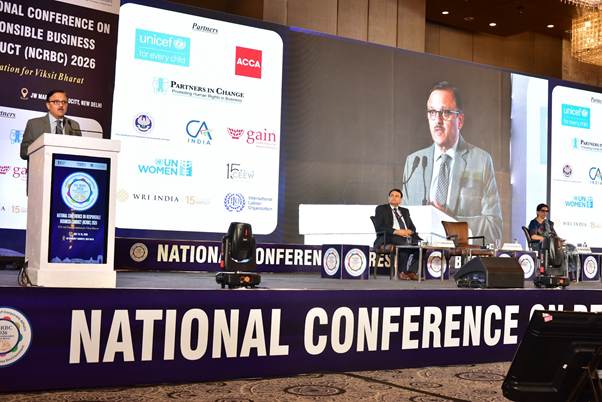
      Delivering the Keynote Address, Hon'ble Justice Shri Abhay S. Oka, Former Judge, Supreme Court of India, opened his remarks by asserting that the right to live in a pollution-free environment is an intrinsic part of the fundamental right to life guaranteed under Article 21 of the Constitution of India. Hon’ble Justice Oka emphasised that the meaning of Viksit Bharat must itself be understood through the constitutional vision of India, particularly the Fundamental Rights, the Directive Principles of State Policy and the Fundamental Duties.

      He observed, that development can be truly transformative only when it protects human dignity, advances social justice and safeguards the environment for present and future generations. Hon’ble Justice Oka traced the evolution of this jurisprudence to the enactment of the Environment (Protection) Act, 1986, which was brought into force in the aftermath of the Bhopal gas tragedy, one of the most devastating industrial disasters in the country's history. He observed that the tragedy had served as a turning point in India's environmental jurisprudence, compelling the state to institutionalise a comprehensive legal framework for environmental protection.

      Hon’ble Justice Oka remarked that a nation's true progress cannot be measured by economic indicators alone, and that environmental well-being must be treated as an equally critical marker of national development. He called upon corporates, regulators and civil society to internalise the constitutional and legal obligation towards environmental protection, social equity and justice, rather than treating it as a discretionary or peripheral concern. Hon’ble Justice congratulated IICA for hosting a Conference to deliberate on the importance of responsible conduct by businesses which is aligned with the Constitutional ethos of social equity, and environmental protection. 

      Delivering the Valedictory Address, Shri Gyaneshwar Kumar Singh, DG and CEO, Indian Institute of Corporate Affairs, reflected on the two days of deliberations at NCRBC 2026, describing the conference as a significant milestone in India's journey towards ESG-led transformation for a Viksit Bharat. He stated that Environmental, Social and Governance considerations have evolved beyond a compliance checkbox to become a foundation for business resilience, effective risk management, investment attraction and sustainable innovation. Responsible business is ultimately driven by responsible individuals and courageous leadership, rather than by regulation alone. He noted that the conference had brought together regulators, policymakers, industry leaders and civil society on a shared platform to deliberate on the future of responsible business conduct in India. Reflecting on the breadth of discussions held over the two days, spanning board-level disclosures, climate finance, sector-specific guidelines, responsible value chains, MSME competitiveness and environmental reporting metrics, he said the conference had reaffirmed the interconnectedness of India's sustainability agenda across regulators, industry and civil society.

      He emphasised that the Indian Institute of Corporate Affairs, through its School of Business Environment, remains committed to serving as a national knowledge and capacity-building hub for advancing responsible business conduct across India's corporate ecosystem. He noted that the insights and recommendations generated through the conference's High-Level Panels would inform the Institute's continuing policy research and capacity-building initiatives in the years ahead. He called upon India's businesses, regulators and civil society institutions to continue working in close partnership to strengthen the credibility, comparability and reliability of ESG disclosures.

      He reaffirmed that India's responsible business conduct framework, rooted in the country's own philosophical and legislative traditions, should continue to evolve in step with global best practice while remaining anchored in India's specific developmental priorities. He observed that the growing participation of India's Micro, Small and Medium Enterprises in the ESG ecosystem would be central to ensuring that the benefits of responsible business conduct are inclusive and widely shared. He concluded by expressing appreciation for the active participation of all delegates, speakers and partner organisations over the two days.

      Earlier in the day, the Conference featured five High-Level Panels addressing sectoral reporting, responsible value chains, MSME integration and environmental metrics. The first high-Level Panel discussion titled “Sector-Specific Guidelines for Strengthening ESG Integration,” featured Smt. Surabhi Gupta, Chief General Manager, SEBI, who noted that the BRSR framework was initially designed as a simple, sector-agnostic baseline, but must continue to evolve as materiality concerns and sector-specific data gaps emerge. She also highlighted SEBI’s ongoing efforts to strengthen the ESG ratings ecosystem through more granular data and sustained stakeholder engagement. Ms. Robin Hodess, Chief Executive Officer, Global Reporting Initiative, stressed the need to align India’s sectoral metrics with globally recognised standards to reduce the compliance burden on companies operating across jurisdictions.

      The second Panel discussion titled “Responsible Value Chains across Global and Domestic Supply Networks,” examined the global move towards mandatory due diligence and the continuing gap between corporate commitments and implementation on human rights and labour standards. The panel emphasised capacity-building for MSME suppliers, partnership-based compliance and the growing role of technology and artificial intelligence in improving supply-chain traceability.

      The third High-Level Panel of the day titled “Mainstreaming ESG in MSMEs for Competitive and Inclusive Growth,” opened with a keynote address by Shri Sivasubramanian Ramann, Chairperson, PFRDA. Shri Devendra Kumar Singh, Chairperson, Cooperative Election Authority, highlighted the potential of Udyam-linked data to support targeted policy interventions, while cautioning that policy design must reflect the predominance of micro enterprises. The representative of the Ministry of MSME underlined the need to combine compliance with a clear business case, supported by incentives for energy, water and waste management.
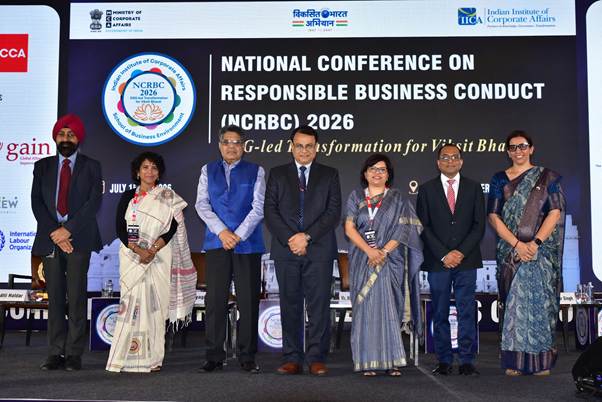
      Then the fourth High-Level Panel  titled “Beyond BRSR: Strengthening Sectoral ESG Adoption and Integration,” featured Shri Ajay Tyagi, Former Chairman, SEBI, who called for a gradual transition from a common reporting baseline to sector-specific frameworks developed through multi-stakeholder consultation. The panel also emphasised greater interoperability across global standards and a shift from backward-looking compliance reporting to forward-looking sustainability planning, supported by credible assurance. The last High-Level Panel titled, “Re-envisioning Environmental Metrics in ESG Reporting Frameworks,” brought together Dr. Ajay Mathur, Former Director General, International Solar Alliance; Dr. Virinder Sharma, Member (Technical), Commission for Air Quality Management; and Shri R.R. Rashmi, Former Special Secretary, Ministry of Environment, Forest and Climate Change. The panel examined measures to improve the rigour, reliability and comparability of environmental metrics within India’s sustainability reporting architecture.
      Following the High-Level Panels, Professor Garima Dadhich, Head, School of Business Environment, Indian Institute of Corporate Affairs, proposed the Vote of Thanks, expressing gratitude to the chief guest, DG & CEO IICA, eminent speakers, delegates, conference partner organisations and to the team of the School of Business Environment- Indian Institute of Corporate Affairs for their invaluable contributions in making NCRBC 2026 a landmark platform for advancing Responsible Business Conduct in India. She emphasised that the true success of the Conference would be reflected not merely in the deliberations held over two days, but in the collective actions and partnerships that emerge to accelerate ESG-led transformation and contribute towards the vision of a sustainable and globally competitive Viksit Bharat by 2047.

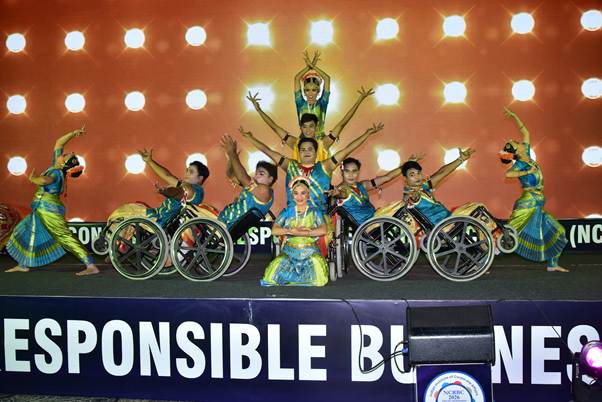
      The valedictory session concluded with a cultural performance by "We Are One," an internationally acclaimed dance group of differently-abled artists, followed by the announcement of the winners of the conference hackathon.

      With two days of substantive deliberations across the inaugural session and eight High-Level Panels, NCRBC 2026 brought together policymakers, regulators, industry leaders, professional bodies and international partners, reaffirming responsible business conduct as integral to India's journey toward becoming a developed, inclusive and ethically grounded nation by 2047.

      Topics

      ActsIncome Tax
