
Just a moment...

Top
Help
×

By creating an account you can:

Logo TaxTMI
>
Call Us / Help / Feedback

Contact Us At :

E-mail: [email protected]

Call / WhatsApp at: +91 99117 96707

For more information, Check Contact Us

FAQs :

To know Frequently Asked Questions, Check FAQs

Most Asked Video Tutorials :

For more tutorials, Check Video Tutorials

Submit Feedback/Suggestion :

Email :
Please provide your email address so we can follow up on your feedback.
Category :
Description :
Min 15 characters0/2000
Add to...
You have not created any category. Kindly create one to bookmark this item!
Create New Category
Hide
Title :
Description :
❮❮ Hide
Default View
Expand ❯❯
Close ✕
🔎 News - Adv. Search
TEXT SEARCH:

Press 'Enter' to add multiple search terms. Rules for Better Search

Search In:
Main Text + AI Text
  • Main Text
  • Main Text + AI Text
  • AI Text
Category: ?
Categorized by AI
---- All Categories ----
  • ---- All Categories ----
  • Income Tax
  • GST
  • Customs, DGFT & SEZ
  • FEMA & RBI
  • Corp. Laws, SEBI & IBC
  • PMLA, Black Money & ED
  • Budget
  • News and Press Release
  • PTI News
Month:
---- All Months ----
  • ---- All Months ----
  • January
  • February
  • March
  • April
  • May
  • June
  • July
  • August
  • September
  • October
  • November
  • December
Year:
---- All Years ----
  • ---- All Years ----
  • 2026
  • 2025
  • 2024
  • 2023
  • 2022
  • 2021
  • 2020
  • 2019
  • 2018
  • 2017
  • 2016
  • 2015
  • 2014
  • 2013
  • 2012
  • 2011
Sort By: ?
In Sort By 'Default', exact matches for text search are shown at the top, followed by the remaining results in their regular order.
RelevanceDefaultDate
    CCI approves acquisition by Opal Bidco Pte. Ltd. of 100% shareholding in STT GDC Pte. Ltd.
    Govt hikes windfall tax on diesel, ATF; cuts levy on petrol exports
    Goods worth USD 140 mn exported on first day of India-UK trade pact coming into effect
    CETA: Export consignment flagged from Bengaluru to UK
    India-EU TTC meet: Goyal says work program on FDI screening concluded
    India logs USD 2.8 bn current account surplus in April-May: RBI data
    Cong leader Baghel alleges BJP links to Mahadev betting app after Ebix Group chairman's arrest
    ED attaches Rs 158-crore assets of Delhi hospital in PMLA probe
    Mahadev app case: Chhattisgarh court sends Ebix chairman Vikas Garg to 10-day ED custody
    Bengal seeks to leverage India-UK CETA, eyes export boost for labour-intensive sectors
    Kolkata flags off first jewellery exports to UK under CETA
    UK-India trade pact comes into force; Envoy Cameron hails it as 'gold standard'
    RBI issues draft ‘Guidance on Regulatory Expectations for Data Governance’
    Govt unveils Rs 1.9 lakh cr semiconductor, mobile manufacturing push
    India-UK trade pact takes effect as Modi says deal will deepen economic ties and boost exports
    Cabinet approves two multitracking projects covering Four Districts across Odisha and Jharkhand, increasing the existing network of Indian Railways by...
    Cabinet approves National Investment Policy for Urea-2026 for Atmanirbhar Bharat (NIPU-2026)
    Cabinet approves development of 6 lane Greenfield Elevated Corridor & Ramps/Loops & Foot Over Bridge between National Highway-19 and Varanasi Ring Roa...
    Cabinet approves development of 6/4 lane Elevated Corridor along Varuna River Bank & its Ramps/Loops in Uttar Pradesh on Hybrid Annuity Model at total...
    Bajaj Finance Launches Loan Fest with Exclusive Rewards on Personal Loan Disbursal
❯❯
MaximizeMaximizeMaximize
0 / 200
Expand Note
Add to Folder

No Folders have been created

    +

    Are you sure you want to delete "My most important" ?

    NOTE:

    News
    Showing Results for :
    Reset Filters
    Results Found:
    Show All SummariesHide All Summaries
    July 16, 2026
    Show AI Summary
    Competition clearance governs full acquisition of a data-centre provider alongside co-investor economic interests in the transaction.
    Competition approval concerns Opal Bidco Pte. Ltd.'s acquisition of the entire shareholding in STT GDC Pte. Ltd., a data-centre provider. The transaction also provides for specified co-investors to acquire economic interests in STT GDC on a see-through basis. STT GDC operates in India through an indirect subsidiary and is among multiple data-centre participants active in India.
    July 16, 2026
    Show AI Summary
    Windfall tax on petroleum exports revises diesel and aviation fuel levies while reducing the petrol export levy.
    Special Additional Excise Duty on petroleum-product exports was revised from 16 July 2026, increasing the levy on diesel and aviation turbine fuel exports while reducing it on petrol exports. Duty rates on petrol and diesel cleared for domestic consumption remained unchanged. The windfall tax framework seeks to support domestic fuel availability and discourage exporters from benefiting from differences between domestic and global fuel prices during elevated crude-oil prices.
    July 15, 2026
    Show AI Summary
    Duty-free market access under the India-UK trade pact expands exports while preserving safeguards for procurement and policy space.
    The India-UK Comprehensive Economic and Trade Agreement provides duty-free access for nearly 99 per cent of Indian exports and includes reciprocal government-procurement access subject to safeguards. India retains MSME preferences, limits covered procurement to selected central entities, excludes strategic sectors, and applies minimum contract thresholds. The agreement preserves compulsory licensing and permits withdrawal of certain concessions if a future UK carbon tax adversely affects Indian exports. Its gender, SME, environment, and labour chapters contain no dispute-settlement provisions.
    July 15, 2026
    Show AI Summary
    India-UK trade agreement expands duty-free market access and tariff reductions for exports, services, manufacturing and small enterprises.
    India-UK Comprehensive Economic and Trade Agreement (CETA) is stated to provide duty-free access in the UK market for 99 per cent of Indian products and to reduce or eliminate UK import tariffs across key product categories. It is expected to support Karnataka exports in manufacturing, agricultural produce, processed food, electronics, aerospace and medical devices, with certain tariff reductions phased out over time. Mode 1 services provisions are identified as beneficial to Bengaluru's IT industry, while awareness programmes and investment roadshows are proposed to help exporters and attract investment.
    July 15, 2026
    Show AI Summary
    Foreign investment screening cooperation advances investment flows alongside trade, technology, supply-chain resilience and prospective investment-protection commitments.
    India and the European Union concluded a work programme on foreign direct investment screening, exchanging best practices to facilitate investment flows. Trade and Technology Council cooperation addresses market access, standards harmonisation, supply-chain requirements, deep-tech innovation and critical dependencies. The parties also discussed free trade agreement ratification, World Trade Organization reform, and prospective investment-protection and geographical-indications agreements. The Council provides an institutional mechanism for cooperation on trade, trusted technology and economic security.
    July 15, 2026
    Show AI Summary
    Balance of payments reporting shows a current account surplus despite a wider trade deficit and portfolio investment outflows.
    Balance of payments data for April-May 2026 records a current account surplus, supported by increased net services receipts, higher inward remittances and a marginal reduction in net income outgo. The merchandise trade deficit widened as imports rose more than exports. The overall balance of payments moved into deficit, while net foreign direct investment increased and net foreign portfolio investment recorded a larger net outflow.
    July 15, 2026
    Show AI Summary
    Online betting money laundering investigation examines alleged proxy accounts, simulated salary payments, cross-border routing, and custodial investigation of the money trail.
    Money-laundering allegations concerning an online betting syndicate involve purported routing of betting proceeds through fictitious or proxy bank accounts, simulated salary payments, share-capital investments, and foreign institutional channels. An Ebix Group chairman was arrested in connection with the alleged money trail and remanded for investigation. The investigating agency states that prosecution complaints have been filed and that separate state economic-offence and central investigations address connected cases. Political-link allegations were denied, and the stated laundering assertions remain under investigation.
    July 15, 2026
    Show AI Summary
    Money laundering asset attachment addresses alleged fund diversion through false invoices, inflated construction costs, shell entities and accommodation entries.
    Provisional attachment under the Prevention of Money Laundering Act was undertaken in an alleged financial-fraud investigation involving a hospital company. The allegations concern diversion of company funds through purportedly false medical-implant invoices and inflated hospital-construction costs routed through a related company. Accommodation-entry operators and shell entities were allegedly used to conceal the origin of illicit funds. The proceeding arose from a Serious Fraud Investigation Office chargesheet against the hospital promoters.
    July 15, 2026
    Show AI Summary
    Money-laundering investigation into online betting proceeds leads to custodial remand amid allegations of layered fund routing.
    A special PMLA court remanded Ebix Group chairman Vikas Garg to Enforcement Directorate custody in an investigation into alleged money laundering linked to online betting operations. The agency alleged that betting proceeds were routed through accommodation entries, shell entities and layered transactions into entities owned or controlled by Garg, and were used to acquire shares, securities and other assets. It also alleged dissipation or encumbrance of Ebix shares and an attempt to mortgage or sell property treated as proceeds of crime.
    July 15, 2026
    Show AI Summary
    India-UK CETA tariff elimination strengthens export prospects for labour-intensive leather, jute, jewellery and agricultural products in British markets.
    India-UK CETA tariff concessions are expected to improve West Bengal's export competitiveness in the United Kingdom. Duty-free access applies to tea, mangoes and betel leaves, while import duties on jewellery have been removed. Labour-intensive leather, jute, and gems and jewellery sectors are identified as principal beneficiaries, with tariff removal also improving seafood export prospects. Further competitiveness measures are proposed to help exporters use the agreement's trade opportunities.
    July 15, 2026
    Show AI Summary
    Zero-duty market access under CETA enables Indian jewellery exporters to enter overseas markets without import tariffs.
    Zero-duty access under the India-UK Comprehensive Economic and Trade Agreement enables eligible Indian gem and jewellery exports to enter the United Kingdom market without UK import tariffs. The agreement is expected to improve market access and support value-added manufacturing, employment, skill development, and the participation of artisans, micro, small and medium enterprises, and exporters in West Bengal's gem and jewellery sector.
    July 15, 2026
    Show AI Summary
    UK-India trade agreement introduces wider market access, tariff reductions and social security arrangements to support bilateral commerce.
    The UK-India Comprehensive Economic and Trade Agreement has entered into force, providing expanded market access, tariff reduction and trade facilitation. India receives zero-duty access for nearly all exports to the UK, while UK products entering India receive duty-free or reduced-tariff treatment. The framework covers goods including textiles, leather, engineering products, food, cosmetics, alcoholic beverages and premium cars. A bilateral social security agreement has also been operationalised to support wider commercial engagement.
    July 15, 2026
    Show AI Summary
    Data governance expectations propose stronger lifecycle controls, quality standards, accountability and third-party data-sharing safeguards for regulated financial entities.
    Draft regulatory guidance on data governance proposes expectations for regulated financial entities to maintain data that is accurate, consistent, secure and fit for purpose. The framework addresses data-governance arrangements, defined roles, data architecture, metadata and data lineage, data quality, and third-party data-sharing arrangements. It applies to specified banking entities, financial institutions, non-banking financial companies, asset reconstruction companies and credit information companies, and invites stakeholder feedback on the proposed framework.
    July 15, 2026
    Show AI Summary
    Semiconductor and mobile manufacturing incentives support domestic production, component sourcing, design investment, exports and resilient electronics supply chains.
    Semicon 2.0 and the Mobile Phone Manufacturing Scheme provide manufacturing support to expand domestic electronics production, exports and local value addition. Semicon 2.0 covers chip design, equipment and materials, fabrication, advanced packaging and testing, research, and talent development, while supporting semiconductor intellectual property and critical-component manufacturing. The mobile-phone scheme provides production-linked incentives linked to eligible sales, with additional support for domestic component sourcing and Indian investment in product design and research. The measures seek to reduce import dependence and strengthen domestic critical-technology capabilities.
    July 15, 2026
    Show AI Summary
    India-UK trade liberalisation expands tariff preferences, services access and skilled professional mobility while preserving protections for sensitive domestic sectors.
    The India-United Kingdom Comprehensive Economic and Trade Agreement establishes preferential tariff treatment for goods and expands cooperation in services, digital trade, government procurement, investment and professional mobility. India retains protections for sensitive sectors through phased tariff reductions and quota-based access, while duties on British automobiles and alcoholic beverages are reduced in stages. The accompanying social-security convention exempts eligible Indian professionals temporarily assigned to the United Kingdom from simultaneous contributions in both jurisdictions, supporting skilled-worker mobility and reducing employment-related costs.
    July 15, 2026
    Show AI Summary
    Railway capacity augmentation strengthens multimodal connectivity, freight movement, operational reliability and lower-emission transport across Odisha and Jharkhand.
    Railway capacity augmentation is approved through doubling of the Paradeep-Haridaspur route and construction of a fourth line on the Rajkharsawan-Dangoaposi route. The projects aim to reduce congestion, improve railway operational efficiency and reliability, and strengthen integrated multimodal connectivity. Enhanced capacity is intended to support freight transport of coal, iron ore, dolomite, limestone and gypsum, improve regional and tourist connectivity, promote logistics efficiency, and reduce oil imports and carbon emissions.
    July 15, 2026
    Show AI Summary
    Urea investment policy promotes gas-based domestic manufacturing through transparent cost treatment, return-on-equity parameters, and foreign-exchange risk mitigation.
    NIPU-2026 provides a framework for investment in new gas-based urea manufacturing units to increase indigenous production and reduce reliance on imported urea. It separates fixed and variable costs for transparency, provides a prescribed return-on-equity band, and mitigates foreign-exchange exposure through conversion of fixed costs into Indian rupees after four years at prevailing exchange rates. The policy supports self-sufficiency through additional domestic urea manufacturing capacity.
    July 15, 2026
    Show AI Summary
    Greenfield elevated corridor development strengthens multimodal connectivity, urban decongestion, road safety and pilgrimage access through the Hybrid Annuity Model.
    Development of a six-lane greenfield elevated connector corridor between National Highway-19 and the Varanasi Ring Road has been approved under the National Highways (Original) programme through the Hybrid Annuity Model. The access-controlled corridor includes elevated road infrastructure, bridges, loops, ramps, link roads and service roads, and is intended to divert through traffic from congested urban roads. Aligned with the PM Gati Shakti National Master Plan, it integrates road, rail, air and inland-water connectivity while improving access to logistics, religious, educational and cultural destinations.
    July 15, 2026
    Show AI Summary
    Hybrid annuity corridor development advances urban decongestion, multimodal connectivity, safer travel and efficient passenger and freight movement.
    A predominantly elevated 6/4-lane link and connector corridor along the Varuna River Bank has been approved under the Hybrid Annuity Model. Comprising carriageways, flyovers, loops, ramps and service roads, it will connect NH-31 with the Varanasi Ring Road under the Varanasi Decongestion Plan. The corridor is intended to reduce congestion and travel time, improve safety and freight movement, and strengthen access to transport, economic, social and logistics nodes through multimodal integration.
    July 15, 2026
    Show AI Summary
    Personal loan disbursal incentives provide eligible borrowers reward bundles, subject to eligibility conditions, verification, assessment and applicable terms.
    Personal loan disbursal incentive campaign offers eligible borrowers an entertainment and lifestyle voucher bundle upon successful disbursal during the specified promotional period. Reward availability is conditional on customer eligibility and applicable terms and conditions. The collateral-free, digitally processed credit facility involves eligibility-based approval, review of loan terms, KYC and bank-account verification, and application assessment before disbursal.

    News

    Back

    All News

    Showing Results for :
    Reset Filters
      No Records Found

      News

      Back

      All News

      whatsappJoin Channel
      Showing Results for : Reset Filters
      Corp. Laws, SEBI & IBC

      Fourth Edition of National Conference on Responsible Business Conduct (NCRBC) 2026 Concludes in New Delhi

      July 20, 2026

      Contents
      Summary
      Note

      Note

      -

      Bookmark

      Print

      Print

      Valedictory Session’s Keynote Address delivered by Hon'ble Justice Shri Abhay S. Oka calls for Strict Enforcement of Environmental Law on India's Path to Viksit Bharat

      The fourth edition of the National Conference on Responsible Business Conduct (NCRBC) 2026, organised by the School of Business Environment (SBE) of the Indian Institute of Corporate Affairs (IICA), an autonomous institution under the Ministry of Corporate Affairs, Government of India, concluded recently in New Delhi.

      The valedictory session featured Keynote Address by Hon'ble Justice Shri Abhay S. Oka, Former Judge, Supreme Court of India, address by Shri Gyaneshwar Kumar Singh, Director General and CEO, Indian Institute of Corporate Affairs, and a Vote of Thanks by Professor Garima Dadhich, Head, School of Business Environment, Indian Institute of Corporate Affairs.
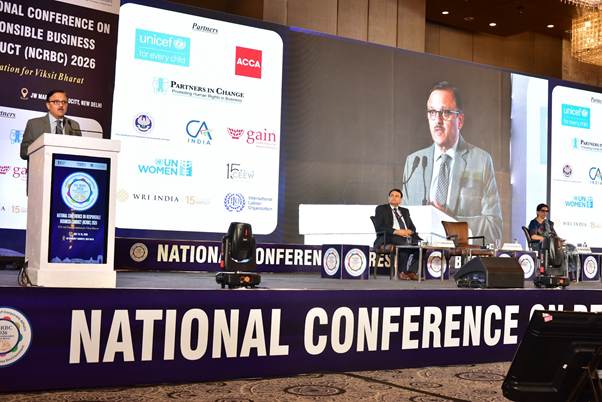
      Delivering the Keynote Address, Hon'ble Justice Shri Abhay S. Oka, Former Judge, Supreme Court of India, opened his remarks by asserting that the right to live in a pollution-free environment is an intrinsic part of the fundamental right to life guaranteed under Article 21 of the Constitution of India. Hon’ble Justice Oka emphasised that the meaning of Viksit Bharat must itself be understood through the constitutional vision of India, particularly the Fundamental Rights, the Directive Principles of State Policy and the Fundamental Duties.

      He observed, that development can be truly transformative only when it protects human dignity, advances social justice and safeguards the environment for present and future generations. Hon’ble Justice Oka traced the evolution of this jurisprudence to the enactment of the Environment (Protection) Act, 1986, which was brought into force in the aftermath of the Bhopal gas tragedy, one of the most devastating industrial disasters in the country's history. He observed that the tragedy had served as a turning point in India's environmental jurisprudence, compelling the state to institutionalise a comprehensive legal framework for environmental protection.

      Hon’ble Justice Oka remarked that a nation's true progress cannot be measured by economic indicators alone, and that environmental well-being must be treated as an equally critical marker of national development. He called upon corporates, regulators and civil society to internalise the constitutional and legal obligation towards environmental protection, social equity and justice, rather than treating it as a discretionary or peripheral concern. Hon’ble Justice congratulated IICA for hosting a Conference to deliberate on the importance of responsible conduct by businesses which is aligned with the Constitutional ethos of social equity, and environmental protection. 

      Delivering the Valedictory Address, Shri Gyaneshwar Kumar Singh, DG and CEO, Indian Institute of Corporate Affairs, reflected on the two days of deliberations at NCRBC 2026, describing the conference as a significant milestone in India's journey towards ESG-led transformation for a Viksit Bharat. He stated that Environmental, Social and Governance considerations have evolved beyond a compliance checkbox to become a foundation for business resilience, effective risk management, investment attraction and sustainable innovation. Responsible business is ultimately driven by responsible individuals and courageous leadership, rather than by regulation alone. He noted that the conference had brought together regulators, policymakers, industry leaders and civil society on a shared platform to deliberate on the future of responsible business conduct in India. Reflecting on the breadth of discussions held over the two days, spanning board-level disclosures, climate finance, sector-specific guidelines, responsible value chains, MSME competitiveness and environmental reporting metrics, he said the conference had reaffirmed the interconnectedness of India's sustainability agenda across regulators, industry and civil society.

      He emphasised that the Indian Institute of Corporate Affairs, through its School of Business Environment, remains committed to serving as a national knowledge and capacity-building hub for advancing responsible business conduct across India's corporate ecosystem. He noted that the insights and recommendations generated through the conference's High-Level Panels would inform the Institute's continuing policy research and capacity-building initiatives in the years ahead. He called upon India's businesses, regulators and civil society institutions to continue working in close partnership to strengthen the credibility, comparability and reliability of ESG disclosures.

      He reaffirmed that India's responsible business conduct framework, rooted in the country's own philosophical and legislative traditions, should continue to evolve in step with global best practice while remaining anchored in India's specific developmental priorities. He observed that the growing participation of India's Micro, Small and Medium Enterprises in the ESG ecosystem would be central to ensuring that the benefits of responsible business conduct are inclusive and widely shared. He concluded by expressing appreciation for the active participation of all delegates, speakers and partner organisations over the two days.

      Earlier in the day, the Conference featured five High-Level Panels addressing sectoral reporting, responsible value chains, MSME integration and environmental metrics. The first high-Level Panel discussion titled “Sector-Specific Guidelines for Strengthening ESG Integration,” featured Smt. Surabhi Gupta, Chief General Manager, SEBI, who noted that the BRSR framework was initially designed as a simple, sector-agnostic baseline, but must continue to evolve as materiality concerns and sector-specific data gaps emerge. She also highlighted SEBI’s ongoing efforts to strengthen the ESG ratings ecosystem through more granular data and sustained stakeholder engagement. Ms. Robin Hodess, Chief Executive Officer, Global Reporting Initiative, stressed the need to align India’s sectoral metrics with globally recognised standards to reduce the compliance burden on companies operating across jurisdictions.

      The second Panel discussion titled “Responsible Value Chains across Global and Domestic Supply Networks,” examined the global move towards mandatory due diligence and the continuing gap between corporate commitments and implementation on human rights and labour standards. The panel emphasised capacity-building for MSME suppliers, partnership-based compliance and the growing role of technology and artificial intelligence in improving supply-chain traceability.

      The third High-Level Panel of the day titled “Mainstreaming ESG in MSMEs for Competitive and Inclusive Growth,” opened with a keynote address by Shri Sivasubramanian Ramann, Chairperson, PFRDA. Shri Devendra Kumar Singh, Chairperson, Cooperative Election Authority, highlighted the potential of Udyam-linked data to support targeted policy interventions, while cautioning that policy design must reflect the predominance of micro enterprises. The representative of the Ministry of MSME underlined the need to combine compliance with a clear business case, supported by incentives for energy, water and waste management.
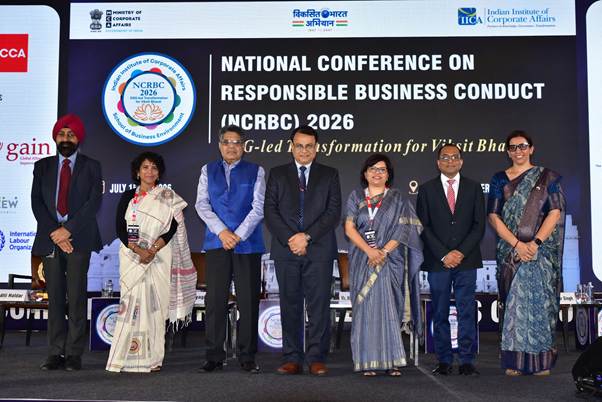
      Then the fourth High-Level Panel  titled “Beyond BRSR: Strengthening Sectoral ESG Adoption and Integration,” featured Shri Ajay Tyagi, Former Chairman, SEBI, who called for a gradual transition from a common reporting baseline to sector-specific frameworks developed through multi-stakeholder consultation. The panel also emphasised greater interoperability across global standards and a shift from backward-looking compliance reporting to forward-looking sustainability planning, supported by credible assurance. The last High-Level Panel titled, “Re-envisioning Environmental Metrics in ESG Reporting Frameworks,” brought together Dr. Ajay Mathur, Former Director General, International Solar Alliance; Dr. Virinder Sharma, Member (Technical), Commission for Air Quality Management; and Shri R.R. Rashmi, Former Special Secretary, Ministry of Environment, Forest and Climate Change. The panel examined measures to improve the rigour, reliability and comparability of environmental metrics within India’s sustainability reporting architecture.
      Following the High-Level Panels, Professor Garima Dadhich, Head, School of Business Environment, Indian Institute of Corporate Affairs, proposed the Vote of Thanks, expressing gratitude to the chief guest, DG & CEO IICA, eminent speakers, delegates, conference partner organisations and to the team of the School of Business Environment- Indian Institute of Corporate Affairs for their invaluable contributions in making NCRBC 2026 a landmark platform for advancing Responsible Business Conduct in India. She emphasised that the true success of the Conference would be reflected not merely in the deliberations held over two days, but in the collective actions and partnerships that emerge to accelerate ESG-led transformation and contribute towards the vision of a sustainable and globally competitive Viksit Bharat by 2047.

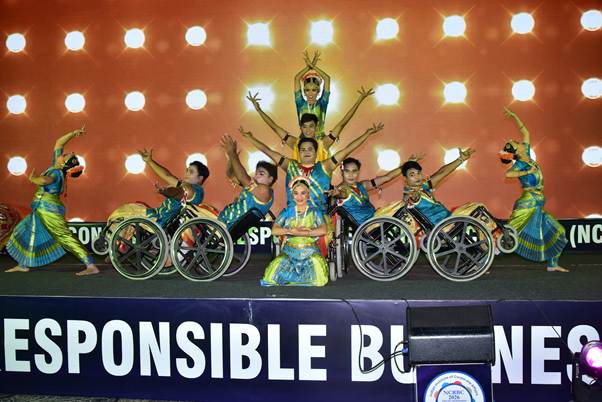
      The valedictory session concluded with a cultural performance by "We Are One," an internationally acclaimed dance group of differently-abled artists, followed by the announcement of the winners of the conference hackathon.

      With two days of substantive deliberations across the inaugural session and eight High-Level Panels, NCRBC 2026 brought together policymakers, regulators, industry leaders, professional bodies and international partners, reaffirming responsible business conduct as integral to India's journey toward becoming a developed, inclusive and ethically grounded nation by 2047.

      Topics

      ActsIncome Tax
