
Just a moment...

Top
Help
×

By creating an account you can:

Logo TaxTMI
>
Call Us / Help / Feedback

Contact Us At :

E-mail: [email protected]

Call / WhatsApp at: +91 99117 96707

For more information, Check Contact Us

FAQs :

To know Frequently Asked Questions, Check FAQs

Most Asked Video Tutorials :

For more tutorials, Check Video Tutorials

Submit Feedback/Suggestion :

Email :
Please provide your email address so we can follow up on your feedback.
Category :
Description :
Min 15 characters0/2000
Add to...
You have not created any category. Kindly create one to bookmark this item!
Create New Category
Hide
Title :
Description :
❮❮ Hide
Default View
Expand ❯❯
Close ✕
🔎 News - Adv. Search
TEXT SEARCH:

Press 'Enter' to add multiple search terms. Rules for Better Search

Search In:
Main Text + AI Text
  • Main Text
  • Main Text + AI Text
  • AI Text
Category: ?
Categorized by AI
---- All Categories ----
  • ---- All Categories ----
  • Income Tax
  • GST
  • Customs, DGFT & SEZ
  • FEMA & RBI
  • Corp. Laws, SEBI & IBC
  • PMLA, Black Money & ED
  • Budget
  • News and Press Release
  • PTI News
Month:
---- All Months ----
  • ---- All Months ----
  • January
  • February
  • March
  • April
  • May
  • June
  • July
  • August
  • September
  • October
  • November
  • December
Year:
---- All Years ----
  • ---- All Years ----
  • 2026
  • 2025
  • 2024
  • 2023
  • 2022
  • 2021
  • 2020
  • 2019
  • 2018
  • 2017
  • 2016
  • 2015
  • 2014
  • 2013
  • 2012
  • 2011
Sort By: ?
In Sort By 'Default', exact matches for text search are shown at the top, followed by the remaining results in their regular order.
RelevanceDefaultDate
    Infosys: AI Revenues at 8.2% in Q1; Resilient Operating Margin of 21.1%
    Shares skid in Asia in sell-off of AI-related shares as Brent oil trades near $100 per barrel
    30-member Indian commerce chamber delegation to visit Sri Lanka
    Rupee rises 22 paise to 96.51 against US dollar in early trade
    ED conducts raids in UP, Delhi and Punjab in Rs 450-crore bank loan 'fraud'
    US slaps 10 per cent tariff on goods imported from India over forced labour concerns
    NICDC Organises Cross-Learning Site Visit to AURIC Smart City to Strengthen Industrial Corridor Development
    India Concludes Eighth Trade Policy Review at WTO in Geneva
    US' temporary 10 pc tariff set to expire on Friday unless extended or new duties announced
    PNB to establish Quantum Finance Innovation Hub in Amaravati
    Infosys veteran Ashiss Kumar Dash to succeed Salil Parekh as new CEO in 2027
    Gold falls Rs 400 per 10 grams amid surging oil prices
    PNB and Andhra Pradesh sign MoU to establish India's first Bank-led Quantum Finance Hub at Amaravati
    Govt allows FDI in inventory-based e-commerce model only for export purposes
    Joint home loans in India - interest rates start at 7.25%* p.a. for salaried applicants
    6Wresearch: India Export Attractiveness Tracker 2026
    Govt allows FDI in inventory-based model of e-commerce only for export purposes
    CRIF India Launches Chennai Chapter of 'Credit Goes to HER' to Strengthen Women's Leadership in the Credit Ecosystem
    Loan Fest 2026: Apply for a Bajaj Finance Personal Loan Online with Attractive Offers
    Rupee slips 4 paise to settle at 96.57 against US dollar
❯❯
MaximizeMaximizeMaximize
0 / 200
Expand Note
Add to Folder

No Folders have been created

    +

    Are you sure you want to delete "My most important" ?

    NOTE:

    News
    Showing Results for :
    Reset Filters
    Results Found:
    Show All SummariesHide All Summaries
    July 24, 2026
    Show AI Summary
    Forward-looking statements receive safe-harbor qualification amid reported IFRS performance, AI-led transformation initiatives, and revised revenue-growth guidance.
    Infosys reported first-quarter IFRS financial performance, including revenue growth, operating margin, earnings per share, free cash flow, and large-deal contract value, while revising revenue-growth guidance and retaining operating-margin guidance. The release describes AI-led enterprise transformation, cloud modernization, digital banking, financial-crime operations, and technology services engagements. Forward-looking statements are subject to safe-harbor protection and may differ materially because of business, talent, economic, technological, regulatory, cybersecurity, litigation, investigation, and tariff-related risks.
    July 24, 2026
    Show AI Summary
    Forced-labour import enforcement drives new tariffs as expiring stopgap levies and market uncertainty heighten trade-compliance concerns.
    Import tariffs were announced on goods from trading partners said not to have fully enforced prohibitions on products made with forced labour. The measures apply to imports from 60 trading partners representing most United States imports and were introduced as existing stopgap levies approached expiry, following a Supreme Court setback affecting other tariff measures. The announcement occurred amid market uncertainty linked to energy-route disruptions, rising crude-oil prices, inflation concerns, and scrutiny of artificial-intelligence investment spending.
    July 24, 2026
    Show AI Summary
    Cross-border commercial engagement supports Indian and Sri Lankan businesses in identifying partnerships and strengthening trade and investment relationships.
    Cross-border trade and investment engagement between India and Sri Lanka is proposed through a commerce chamber delegation representing diverse Indian industry sectors. A networking session is intended to enable direct interactions between businesses, identify partnership opportunities, discuss commercial collaboration and develop new business connections. The engagement seeks to strengthen commercial relationships across participating industries within the established bilateral trade and investment relationship.
    July 24, 2026
    Show AI Summary
    Foreign exchange market intervention limited rupee depreciation amid elevated oil prices, importer dollar demand, capital outflows and equity market weakness.
    Foreign exchange market conditions reflected an early appreciation of the rupee against the US dollar, with likely central bank intervention through state-owned banks reported as limiting sharper depreciation. Softer dollar conditions provided limited support, while elevated crude oil prices increased dollar demand from oil marketing companies and sustained importer buying pressure. Foreign institutional investor equity outflows, domestic equity weakness, and West Asia tensions affecting oil prices also influenced the rupee.
    July 24, 2026
    Show AI Summary
    Money-laundering investigation examines alleged bank-loan fund diversion through shell entities, accommodation entries, fake invoices and circular transactions.
    A money-laundering investigation under the Prevention of Money Laundering Act concerns alleged bank-loan fraud involving Santosh Overseas Ltd., its promoters and linked entities. Searches were conducted at premises in Uttar Pradesh, Delhi and Punjab. The investigation, arising from a Central Bureau of Investigation case, alleges diversion and layering of loan funds through shell entities, accommodation-entry operators and related companies by means of purportedly fake invoices and circular financial transactions.
    July 24, 2026
    Show AI Summary
    Forced-labour import prohibitions shape tariff treatment as India's policy amendment secures a lower rate for imported goods.
    Forced-labour import prohibitions are linked to tariff treatment under Section 301 of the Trade Act of 1974. Goods imported from India receive a lower tariff rate after India amended its foreign trade policy to prohibit imports of goods produced using forced labour. The framework excludes certain raw materials, goods causing economy-wide disruption, and products unavailable in sufficient domestic quantities. India has contested the underlying investigations and proposes that the issues be addressed through a bilateral trade agreement.
    July 24, 2026
    Show AI Summary
    Integrated industrial city development promotes cross-learning on digital governance, investor facilitation, infrastructure planning and plug-and-play industrial parks.
    Industrial corridor development is being supported through cross-learning on AURIC Smart City's integrated planning, infrastructure and governance practices. The programme addresses master planning, utility systems, digital monitoring, land utilisation, investor facilitation, project implementation and coordination among implementing agencies. It also considers application of these practices to the Bharat Audyogik Vikas Yojana for plug-and-play industrial parks, with emphasis on integrated utilities, digital land management, investor-friendly approvals, sustainable infrastructure and multimodal connectivity.
    July 24, 2026
    Show AI Summary
    WTO trade policy review highlights India's commitment to transparent trade rules, development policy space and multilateral engagement.
    India reaffirmed an open, transparent, predictable and WTO-consistent trade and investment regime through tariff reform, customs simplification and free trade agreement initiatives. Its trade policy was presented as balancing developmental needs with WTO principles: agricultural tariffs protect vulnerable farmers, while industrial tariffs support supply-chain resilience and domestic manufacturing. India also committed to transparent, consultative and rules-compliant sanitary measures, technical regulations and trade remedies, with investigations based on objective evidence, due process and judicial oversight, including continued application of the Lesser Duty Rule in anti-dumping matters.
    July 23, 2026
    Show AI Summary
    Temporary Section 122 surcharge expiry may restore MFN treatment for Indian exports, while Section 301 tariff uncertainty continues.
    The US temporary Section 122 import surcharge on Indian goods is scheduled to expire unless extended or replaced, restoring affected imports to normal US MFN tariff treatment. Liability depends on entry for consumption or warehouse withdrawal. Section 232 national-security tariffs remain unchanged. Indian exports may still face fresh measures under Section 301 investigations into forced labour and excess manufacturing capacity, alongside potential country-specific or sectoral tariffs. The expiry may improve export competitiveness and market access, particularly for labour-intensive and MSME-driven sectors.
    July 23, 2026
    Show AI Summary
    Quantum finance innovation will advance secure digital banking through cybersecurity, fraud detection, collaborative research, workforce development and digital literacy.
    A Quantum Finance Innovation Hub is proposed to apply quantum technologies to banking through stronger cybersecurity, proactive financial-fraud detection and secure digital financial ecosystems. The initiative will bring together industry, academia, startups, research organisations and government agencies to promote innovation in quantum computing, artificial intelligence and related technologies. It also focuses on workforce development, digital literacy, public confidence in digital financial services, and technology-enabled responses to cybercrime and digital-arrest scams.
    July 23, 2026
    Show AI Summary
    Chief executive succession plan appoints a CEO designate, subject to shareholder approval, for an AI-led corporate leadership transition.
    Corporate leadership succession at Infosys is proposed through the appointment of Ashiss Kumar Dash as Managing Director and Chief Executive Officer designate from 1 April 2027. The five-year appointment is subject to shareholder approval and follows a recommendation of the Board's Nomination and Remuneration Committee. The incumbent will remain in office until the transition date and support an orderly transfer of responsibilities. The succession plan identifies the CEO designate's business, technology-delivery, client and global operations experience as relevant to AI-led transformation.
    July 23, 2026
    Show AI Summary
    Bullion market pressure intensified as rising oil prices, inflation concerns and restrictive monetary policy expectations weakened gold and silver sentiment.
    Gold and silver prices declined amid weaker global bullion trends, profit-booking, and higher crude oil prices linked to Middle East tensions. Market commentary associated the decline with inflation concerns and expectations that major central banks may sustain restrictive monetary policy for longer. Gold was described as facing near-term pressure from higher interest-rate expectations, inflation risks, and geopolitical uncertainty.
    July 23, 2026
    Show AI Summary
    Quantum finance innovation will develop secure, AI-enabled banking solutions through collaborative research, startup incubation, cybersecurity enhancement and workforce development.
    Quantum finance innovation is to be advanced through a memorandum of understanding for establishing the PNB Quantum Finance Hub at Amaravati Quantum Valley. The hub will develop, test and support adoption of secure, intelligent and future-ready banking solutions using Quantum Computing and Artificial Intelligence. It will bring together industry, academia, startups and government agencies for research, innovation, incubation and acceleration of financial technologies, focusing on cybersecurity, fraud detection, operational efficiency, risk management and customer experience.
    July 23, 2026
    Show AI Summary
    Foreign investment in inventory-based e-commerce is allowed only for exports of Indian-made goods, while domestic retail remains prohibited.
    Foreign direct investment in inventory-based e-commerce is permitted exclusively for exports of goods or products manufactured or produced in India. Restrictions on business-to-consumer and inventory-based e-commerce do not apply to these exports, subject to the Foreign Trade Policy 2023 and export regulations. Foreign direct investment in inventory-based e-commerce retailing for domestic sales remains prohibited, with the revised position taking effect upon the relevant foreign exchange notification.
    July 23, 2026
    Show AI Summary
    Joint Home Loan Eligibility and Shared Repayment Liability Shape Borrowing Capacity, Tax Claims, Documentation, and Exit Planning.
    Joint home loans allow eligible applicants to combine income for a single housing loan, while making every co-applicant fully responsible for repayment. Eligibility depends on each applicant's income, financial obligations, credit history, age, repayment capacity and property criteria. Applicants should agree on EMI sharing, ownership proportions and exit arrangements before applying, as removal of a co-applicant requires lender approval and reassessment. Co-owner borrowers may claim applicable interest and principal repayment deductions subject to ownership, contribution and income-tax requirements. Each applicant must provide separate identity, income and banking documentation.
    July 23, 2026
    Show AI Summary
    Export competitiveness increasingly depends on regulatory compliance, preferential trade access and diversification into smartphones, medicines, petroleum products and semiconductors.
    India's export potential to 2031 is centred on smartphones, polished diamonds, petroleum products and medicines, with the United States, Hong Kong, Japan, China, Singapore and the United Arab Emirates as important markets. New product opportunities include iron ore concentrates, gasoline vehicles and light petroleum oils. Although selected destinations offer duty-free or preferential access, market entry in mature markets increasingly depends on compliance with non-tariff measures, including registration, quality certification, safety documentation and product standards. Semiconductor-related manufacturing is identified as a long-term opportunity supported by expanding electronics capacity, supply-chain diversification and domestic incentives.
    July 23, 2026
    Show AI Summary
    Foreign investment in inventory-based e-commerce is permitted exclusively for exports of Indian-manufactured or produced goods under export compliance rules.
    Foreign direct investment in inventory-based e-commerce is permitted exclusively for exports of goods or products manufactured or produced in India. Foreign direct investment remains permitted in business-to-business e-commerce and the marketplace model, while business-to-consumer and inventory-based direct sales to consumers remain prohibited except for the specified export activity. Export-oriented inventory-based operations must comply with the applicable Foreign Trade Policy and foreign exchange regulations governing exports.
    July 23, 2026
    Show AI Summary
    Women's leadership in credit expands through a Chennai community platform supporting mentorship, inclusive lending practices, and financial ecosystem collaboration.
    The Chennai chapter of the 'Credit Goes to HER' initiative provides a platform for women professionals in banking, NBFCs, fintech, housing finance, academia and policy to share knowledge, obtain mentorship and collaborate on inclusive credit practices. It seeks to strengthen women's leadership and participation in the credit ecosystem while supporting responsible lending, financial inclusion, transparency and data-driven decision-making.
    July 23, 2026
    Show AI Summary
    Digital personal-loan campaign combines online collateral-free borrowing, eligibility-based assessment, flexible repayment options and conditional lifestyle rewards for successful disbursals.
    Digital personal-loan campaign permits eligible customers to apply online for collateral-free borrowing and receive specified lifestyle rewards upon successful disbursal, subject to campaign terms. Applicants may check an offer, provide personal, financial and employment information, review loan terms, complete know-your-customer and bank-account verification, and undergo assessment. Interest rates, loan amounts and repayment tenures depend on eligibility, credit profile, income and internal assessment. An EMI calculator supports comparison of repayment options and estimation of monthly instalments before application.
    July 23, 2026
    Show AI Summary
    Foreign-exchange market pressure weakened the rupee as elevated crude prices and risk sentiment drove trading conditions.
    Foreign-exchange market movement saw the rupee depreciate against the US dollar amid elevated crude oil prices linked to heightened West Asia hostilities. Weak domestic equity markets and foreign investor equity outflows contributed to negative sentiment. Market commentary indicated that prospective Reserve Bank of India intervention supported the rupee and could limit sharper depreciation, while shipping-security concerns contributed to elevated oil prices.

    News

    Back

    All News

    Showing Results for :
    Reset Filters
      No Records Found

      News

      Back

      All News

      whatsappJoin Channel
      Showing Results for : Reset Filters
      Corp. Laws, SEBI & IBC

      Fourth Edition of National Conference on Responsible Business Conduct (NCRBC) 2026 Concludes in New Delhi

      July 20, 2026

      Contents
      Summary
      Note

      Note

      -

      Bookmark

      Print

      Print

      Valedictory Session’s Keynote Address delivered by Hon'ble Justice Shri Abhay S. Oka calls for Strict Enforcement of Environmental Law on India's Path to Viksit Bharat

      The fourth edition of the National Conference on Responsible Business Conduct (NCRBC) 2026, organised by the School of Business Environment (SBE) of the Indian Institute of Corporate Affairs (IICA), an autonomous institution under the Ministry of Corporate Affairs, Government of India, concluded recently in New Delhi.

      The valedictory session featured Keynote Address by Hon'ble Justice Shri Abhay S. Oka, Former Judge, Supreme Court of India, address by Shri Gyaneshwar Kumar Singh, Director General and CEO, Indian Institute of Corporate Affairs, and a Vote of Thanks by Professor Garima Dadhich, Head, School of Business Environment, Indian Institute of Corporate Affairs.
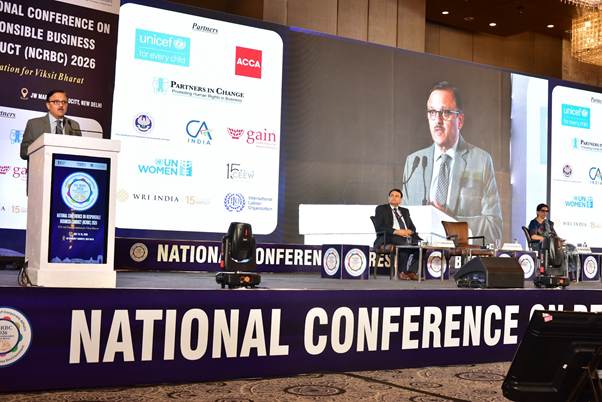
      Delivering the Keynote Address, Hon'ble Justice Shri Abhay S. Oka, Former Judge, Supreme Court of India, opened his remarks by asserting that the right to live in a pollution-free environment is an intrinsic part of the fundamental right to life guaranteed under Article 21 of the Constitution of India. Hon’ble Justice Oka emphasised that the meaning of Viksit Bharat must itself be understood through the constitutional vision of India, particularly the Fundamental Rights, the Directive Principles of State Policy and the Fundamental Duties.

      He observed, that development can be truly transformative only when it protects human dignity, advances social justice and safeguards the environment for present and future generations. Hon’ble Justice Oka traced the evolution of this jurisprudence to the enactment of the Environment (Protection) Act, 1986, which was brought into force in the aftermath of the Bhopal gas tragedy, one of the most devastating industrial disasters in the country's history. He observed that the tragedy had served as a turning point in India's environmental jurisprudence, compelling the state to institutionalise a comprehensive legal framework for environmental protection.

      Hon’ble Justice Oka remarked that a nation's true progress cannot be measured by economic indicators alone, and that environmental well-being must be treated as an equally critical marker of national development. He called upon corporates, regulators and civil society to internalise the constitutional and legal obligation towards environmental protection, social equity and justice, rather than treating it as a discretionary or peripheral concern. Hon’ble Justice congratulated IICA for hosting a Conference to deliberate on the importance of responsible conduct by businesses which is aligned with the Constitutional ethos of social equity, and environmental protection. 

      Delivering the Valedictory Address, Shri Gyaneshwar Kumar Singh, DG and CEO, Indian Institute of Corporate Affairs, reflected on the two days of deliberations at NCRBC 2026, describing the conference as a significant milestone in India's journey towards ESG-led transformation for a Viksit Bharat. He stated that Environmental, Social and Governance considerations have evolved beyond a compliance checkbox to become a foundation for business resilience, effective risk management, investment attraction and sustainable innovation. Responsible business is ultimately driven by responsible individuals and courageous leadership, rather than by regulation alone. He noted that the conference had brought together regulators, policymakers, industry leaders and civil society on a shared platform to deliberate on the future of responsible business conduct in India. Reflecting on the breadth of discussions held over the two days, spanning board-level disclosures, climate finance, sector-specific guidelines, responsible value chains, MSME competitiveness and environmental reporting metrics, he said the conference had reaffirmed the interconnectedness of India's sustainability agenda across regulators, industry and civil society.

      He emphasised that the Indian Institute of Corporate Affairs, through its School of Business Environment, remains committed to serving as a national knowledge and capacity-building hub for advancing responsible business conduct across India's corporate ecosystem. He noted that the insights and recommendations generated through the conference's High-Level Panels would inform the Institute's continuing policy research and capacity-building initiatives in the years ahead. He called upon India's businesses, regulators and civil society institutions to continue working in close partnership to strengthen the credibility, comparability and reliability of ESG disclosures.

      He reaffirmed that India's responsible business conduct framework, rooted in the country's own philosophical and legislative traditions, should continue to evolve in step with global best practice while remaining anchored in India's specific developmental priorities. He observed that the growing participation of India's Micro, Small and Medium Enterprises in the ESG ecosystem would be central to ensuring that the benefits of responsible business conduct are inclusive and widely shared. He concluded by expressing appreciation for the active participation of all delegates, speakers and partner organisations over the two days.

      Earlier in the day, the Conference featured five High-Level Panels addressing sectoral reporting, responsible value chains, MSME integration and environmental metrics. The first high-Level Panel discussion titled “Sector-Specific Guidelines for Strengthening ESG Integration,” featured Smt. Surabhi Gupta, Chief General Manager, SEBI, who noted that the BRSR framework was initially designed as a simple, sector-agnostic baseline, but must continue to evolve as materiality concerns and sector-specific data gaps emerge. She also highlighted SEBI’s ongoing efforts to strengthen the ESG ratings ecosystem through more granular data and sustained stakeholder engagement. Ms. Robin Hodess, Chief Executive Officer, Global Reporting Initiative, stressed the need to align India’s sectoral metrics with globally recognised standards to reduce the compliance burden on companies operating across jurisdictions.

      The second Panel discussion titled “Responsible Value Chains across Global and Domestic Supply Networks,” examined the global move towards mandatory due diligence and the continuing gap between corporate commitments and implementation on human rights and labour standards. The panel emphasised capacity-building for MSME suppliers, partnership-based compliance and the growing role of technology and artificial intelligence in improving supply-chain traceability.

      The third High-Level Panel of the day titled “Mainstreaming ESG in MSMEs for Competitive and Inclusive Growth,” opened with a keynote address by Shri Sivasubramanian Ramann, Chairperson, PFRDA. Shri Devendra Kumar Singh, Chairperson, Cooperative Election Authority, highlighted the potential of Udyam-linked data to support targeted policy interventions, while cautioning that policy design must reflect the predominance of micro enterprises. The representative of the Ministry of MSME underlined the need to combine compliance with a clear business case, supported by incentives for energy, water and waste management.
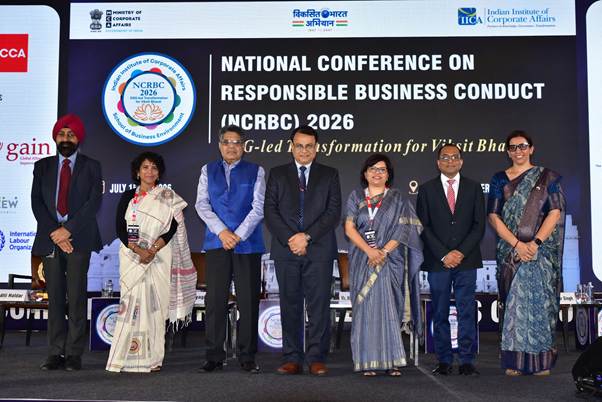
      Then the fourth High-Level Panel  titled “Beyond BRSR: Strengthening Sectoral ESG Adoption and Integration,” featured Shri Ajay Tyagi, Former Chairman, SEBI, who called for a gradual transition from a common reporting baseline to sector-specific frameworks developed through multi-stakeholder consultation. The panel also emphasised greater interoperability across global standards and a shift from backward-looking compliance reporting to forward-looking sustainability planning, supported by credible assurance. The last High-Level Panel titled, “Re-envisioning Environmental Metrics in ESG Reporting Frameworks,” brought together Dr. Ajay Mathur, Former Director General, International Solar Alliance; Dr. Virinder Sharma, Member (Technical), Commission for Air Quality Management; and Shri R.R. Rashmi, Former Special Secretary, Ministry of Environment, Forest and Climate Change. The panel examined measures to improve the rigour, reliability and comparability of environmental metrics within India’s sustainability reporting architecture.
      Following the High-Level Panels, Professor Garima Dadhich, Head, School of Business Environment, Indian Institute of Corporate Affairs, proposed the Vote of Thanks, expressing gratitude to the chief guest, DG & CEO IICA, eminent speakers, delegates, conference partner organisations and to the team of the School of Business Environment- Indian Institute of Corporate Affairs for their invaluable contributions in making NCRBC 2026 a landmark platform for advancing Responsible Business Conduct in India. She emphasised that the true success of the Conference would be reflected not merely in the deliberations held over two days, but in the collective actions and partnerships that emerge to accelerate ESG-led transformation and contribute towards the vision of a sustainable and globally competitive Viksit Bharat by 2047.

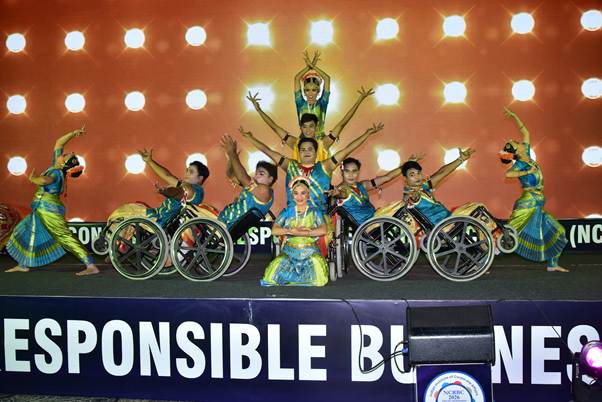
      The valedictory session concluded with a cultural performance by "We Are One," an internationally acclaimed dance group of differently-abled artists, followed by the announcement of the winners of the conference hackathon.

      With two days of substantive deliberations across the inaugural session and eight High-Level Panels, NCRBC 2026 brought together policymakers, regulators, industry leaders, professional bodies and international partners, reaffirming responsible business conduct as integral to India's journey toward becoming a developed, inclusive and ethically grounded nation by 2047.

      Topics

      ActsIncome Tax
