

Loading...

Top
Help
×

By creating an account you can:

Logo TaxTMI
Call Us / Help / Feedback

Contact Us At :

E-mail: [email protected]

Call / WhatsApp at: +91 99117 96707

For more information, Check Contact Us

FAQs :

To know Frequently Asked Questions, Check FAQs

Most Asked Video Tutorials :

For more tutorials, Check Video Tutorials

Submit Feedback/Suggestion :

Email :
Please provide your email address so we can follow up on your feedback.
Category :
Description :
Min 15 characters 0/2000
Make Most of Text Search
  1. Checkout this video tutorial: How to search effectively on TaxTMI.
  2. Put words in double quotes for exact word search, eg: "income tax"
  3. Avoid noise words such as : 'and, of, the, a'
  4. Sort by Relevance to get the most relevant document.
  5. Press Enter to add multiple terms/multiple phrases, and then click on Search to Search.
  6. Text Search
  7. The system will try to fetch results that contains ALL your words.
  8. Once you add keywords, you'll see a new 'Search In' filter that makes your results even more precise.
  9. Text Search
Add to...
You have not created any category. Kindly create one to bookmark this item!
Create New Category
Hide
Title :
Description :
❮❮ Hide
Default View
Expand ❯❯
Close ✕
🔎 News - Adv. Search
TEXT SEARCH:

Press 'Enter' to add multiple search terms. Rules for Better Search

Search In:
Main Text + AI Text
  • Main Text
  • Main Text + AI Text
  • AI Text
Category: ?
Categorized by AI
---- All Categories ----
  • ---- All Categories ----
  • Income Tax
  • GST
  • Customs, DGFT & SEZ
  • FEMA & RBI
  • Corp. Laws, SEBI & IBC
  • PMLA, Black Money & ED
  • Budget
  • News and Press Release
  • PTI News
Month:
---- All Months ----
  • ---- All Months ----
  • January
  • February
  • March
  • April
  • May
  • June
  • July
  • August
  • September
  • October
  • November
  • December
Year:
---- All Years ----
  • ---- All Years ----
  • 2026
  • 2025
  • 2024
  • 2023
  • 2022
  • 2021
  • 2020
  • 2019
  • 2018
  • 2017
  • 2016
  • 2015
  • 2014
  • 2013
  • 2012
  • 2011
Sort By: ?
In Sort By 'Default', exact matches for text search are shown at the top, followed by the remaining results in their regular order.
Relevance Default Date
    Government's Financial Inclusion Mission Continues to Foster Economic Empowerment Through Universal Banking, Social Security and Credit Access
    Tribunal absolves Lalit Modi of FEMA violation in 2009 South Africa IPL event
    NABARD sanctions Rs 15,056 cr for 6,175 rural infrastructure projects in Haryana
    SUPREME COURT HIGHLIGHTS
    Government and RBI Strengthen Digital Lending Ecosystem Through New Regulatory Framework, Digital Lending App Directory and Enhanced Customer Safeguar...
    A First for India: EbixCash World Money's Perpetual RBI Licence Brings Trade and Family Remittances Within Reach of Millions - Unlocking Opportunities...
    Rationalisation of Foreign Exchange Management (Non-Debt Instruments) Rules, 2019 – Draft Rules for Comments
    CARD91 offers its comprehensive PPI Suite to Indian Overseas Bank with RuPay NCMC Capability
    Government Expands FTAs, Export Promotion Measures to Diversify Export Markets
    PLI Schemes Attract Over ₹2.40 Lakh Crore Investment, Generate More Than 14.15 Lakh Jobs
    SC issues notice on Venugopal Dhoot's plea against order upholding separate insolvency for VIL, VOVL
    Russian Technology Leaders Visit AVPL Drone City to Foster Industrial Collaboration
    India’s 8th Trade Policy Review at WTO Scheduled on 21 and 23 July 2026
    India Becomes a Party to the WTO Agreement on Fisheries Subsidies by Depositing its Instrument of Acceptance
    FIRST PRESS RELEASE OF INDEX OF CORE INDUSTRIES OF NEW SERIES WITH BASE YEAR 2022-23
    Central Bureau of Narcotics (CBN) India thwarts illegal trafficking of 12 crore Tramadol Hydrochloride, a.k.a. “fighter drug” tablets under “Ope...
    Trump imposes 50 per cent tariffs on Canadian goods, citing disputes over autos, alcohol and cheese
    Rupee falls 6 paise to close 96.36 against US dollar
    India gets USD 20.72 bn forex inflows under swap facility since Jun: RBI
    J'khand aiming to increase GI-tagged products to 25, Atthe Mutton among those in pipeline: official
❯❯
Maximize Maximize Maximize
0 / 200
Expand Note
Add to Folder

No Folders have been created

+

Are you sure you want to delete "My most important" ?

NOTE:

News
Showing Results for :
Reset Filters
Results Found:
Show All Summaries Hide All Summaries
July 22, 2026
Show AI Summary
Financial inclusion expands universal banking, social insurance, pensions and collateral-free credit for underserved households and entrepreneurs.
Financial inclusion is pursued through universal banking under Pradhan Mantri Jan Dhan Yojana, social-security coverage through life, accident and pension schemes, and credit access for underserved borrowers. Pradhan Mantri Mudra Yojana provides collateral-free institutional finance to micro and small business units for income-generating activities. The Stand-Up India Scheme supports Scheduled Caste, Scheduled Tribe and women entrepreneurs through loans for greenfield projects in manufacturing, trading, services and agriculture-allied activities.
July 21, 2026
Show AI Summary
Foreign exchange contravention liability requires evidence that the person was responsible for the overseas transfer in question.
Foreign exchange transfer for the 2009 South Africa cricket tournament was examined under the Foreign Exchange Management Act after funds were moved to an overseas entity without prior Reserve Bank approval. The appellate tribunal set aside the penalty imposed on Lalit Modi, finding no material establishing that he was in charge of the relevant affairs or personally responsible for the alleged contravention. Liability for a foreign-exchange contravention must rest on evidence connecting the person proceeded against with responsibility for the impugned transaction.
July 21, 2026
Show AI Summary
Rural infrastructure financing under RIDF supports irrigation, roads, water supply, cooperative digitisation, producer organisations and climate-resilient livelihoods.
Rural Infrastructure Development Fund financing supports rural infrastructure in Haryana, including irrigation, roads and drinking-water assets. Rural cooperative strengthening includes digitisation and financial viability of Primary Agricultural Credit Societies, alongside promotion and financial support for Farmer Producer Organisations. Climate-resilient measures include watershed development, groundwater management, micro-irrigation, direct seeding of rice and vegetable clusters, supplemented by livelihood training for rural women and agricultural lending and project-appraisal support.
July 21, 2026
Show AI Summary
Supreme Court proceedings address juvenile adult trials, insolvency, electoral representation, environmental funds and foreign-exchange complaint requirements.
Supreme Court proceedings covered election representation, criminal justice, insolvency and regulatory compliance. The Court considered challenges concerning political-party merger approval, separate insolvency proceedings for group entities, and espionage charges. It sought responses on an appeal mechanism for persons excluded from the National Register of Citizens and alleged non-utilisation of environmental relief funds. Criminal matters included medical assessment for interim bail, a fresh trial in a blast case, and the principle that a juvenile accused of murder may face adult trial where statutory conditions for a heinous offence are met.
July 21, 2026
Show AI Summary
Digital lending safeguards require verified app associations, responsible recovery, data privacy, grievance redressal and reporting channels against illegal loan apps.
Digital lending safeguards include a public directory enabling customers to verify a digital lending app's association with a regulated entity. The Digital Lending Directions, 2025 impose mandatory requirements on recovery practices, data privacy and customer grievance redressal for regulated entities, lending service providers and digital lending apps. Measures also include blocking illegal loan applications following due process, cybercrime reporting channels, complaint facilities for unlawful money collection, and public awareness programmes on fraud prevention and risk mitigation.
July 21, 2026
Show AI Summary
Authorised Dealer Category-II remittances expand to specified trade and family-maintenance payments under the revised FEMA framework.
FEMA framework revisions described as effective from May 2026 expand Authorised Dealer Category-II activities to include specified trade remittances and family-maintenance remittances, subject to the applicable RBI and FEMA framework. EbixCash World Money Limited states that its perpetual AD-II licence carries this expanded scope. The release describes a non-bank channel for MSME and SME cross-border payments, supported by Nostro-account settlement, remittance and travel-card services, and technology-enabled compliance measures including document verification, sanctions screening, fraud detection and transaction monitoring.
July 21, 2026
Show AI Summary
Foreign investment regulation: Draft rules propose simpler, principle-based compliance and clearer separation of procedural requirements from investment policy.
Draft Foreign Exchange Management (Foreign Investment) Rules, 2026 propose a simplified, principle-based foreign investment framework. The proposals rationalise provisions, harmonise definitions, and separate procedural foreign-exchange requirements from foreign direct investment policy and sector-specific conditions. They aim to streamline procedures, reduce compliance burdens, enhance operational flexibility, and apply investor-neutral and investee-neutral provisions while preserving regulatory safeguards. The draft Rules remain subject to public consultation before finalisation.
July 21, 2026
Show AI Summary
Prepaid payment instrument programme adds mobility and gift card capabilities with digital servicing subject to applicable programme conditions.
Prepaid payment instrument programme launched for Indian Overseas Bank through CARD91's technology stack, incorporating RuPay National Common Mobility Card and Gift Card capabilities. The programme was implemented following requisite approvals, testing and compliance validation. The RuPay NCMC facility supports prepaid, tap-based payments for metro, bus and parking transactions, subject to the bank's programme conditions and user eligibility. Digital card servicing may include balance enquiry, transaction history, reload or top-up functions, and customer support, subject to applicable programme terms.
July 21, 2026
Show AI Summary
Free trade agreements and e-commerce export reforms expand preferential market access, address non-tariff barriers, and support small exporters.
Export market diversification is advanced through trade agreements, export-promotion measures and capacity building. Free Trade Agreements seek preferential market access, increased trade and investment, and support for labour-intensive exports, while technical barriers to trade provisions and engagement mechanisms address standards, regulatory requirements and non-tariff barriers. Cross-border e-commerce exports are supported through trade-finance and compliance assistance, E-Commerce Export Hubs, District Export Hubs, simplified courier-export procedures, reverse-logistics facilitation, logistics planning, duty-and-tax remission, and MSME export facilitation.
July 21, 2026
Show AI Summary
Production Linked Incentive Schemes strengthen domestic manufacturing through investment support, export growth, employment generation, monitoring and eligibility reforms.
Production Linked Incentive Schemes for 14 sectors promote domestic manufacturing, investment, exports, employment and global competitiveness. Overall coordination and monitoring rests with the Department for Promotion of Industry and Internal Trade, while sector-specific implementation is undertaken by the relevant ministries and departments. Implementation is periodically reviewed, with scheme modifications, rationalised guidelines, relaxation of specified eligibility conditions, project monitoring, stakeholder consultation and inter-ministerial issue resolution used to improve uptake and strengthen domestic manufacturing ecosystems.
July 21, 2026
Show AI Summary
Separate corporate insolvency processes remain contested over foreign asset treatment, specialised resolution needs, and creditors' commercial decision-making.
Separate corporate insolvency resolution processes for VIL and VOVL are disputed following reversal of an earlier consolidation direction. Independent processes were preferred because the entities operate in distinct sectors and may require specialised resolution, while creditors' choice was treated as commercial wisdom not ordinarily open to tribunal interference. The dispute also concerns whether foreign oil and gas assets should be treated as VIL assets, against the background of VIL's conversion from co-obligor to corporate guarantor to ring-fence those assets from domestic business liabilities.
July 21, 2026
Show AI Summary
Drone technology collaboration promotes joint manufacturing, technology transfer, rural entrepreneurship and global market access through an integrated industrial ecosystem.
India-Russia industrial collaboration in drone technology is proposed through engagement on technology transfer, joint manufacturing, research collaboration, investment, exports and global market access. Drone City is presented as an integrated ecosystem covering manufacturing, research and development, testing, certification support, skill development, incubation, warehousing, startup acceleration and international technology partnerships. Its expansion and panchayat-level entrepreneurship programme are expected to create rural drone enterprises and employment in manufacturing, component production, quality control, maintenance, logistics and technical support.
July 21, 2026
Show AI Summary
WTO trade policy review will assess India's trade measures, transparency framework, reforms, and responses to member questions.
India's eighth Trade Policy Review under the World Trade Organization framework examines its trade policies and developments during the 2021-2025 review period. The process uses a Government Report and a Secretariat Report and provides a comprehensive peer examination of border and behind-the-border trade measures to promote transparency, predictability and understanding. The review addresses trade agreements, Goods and Services Tax rationalisation, digital trade-facilitation measures, and Member questions on digitisation, MSMEs, women's economic participation, Viksit Bharat and the Atmanirbhar Bharat Abhiyan.
July 21, 2026
Show AI Summary
Fisheries subsidy disciplines promote sustainable marine resource use while excluding aquaculture and inland fisheries from their scope.
The WTO Agreement on Fisheries Subsidies disciplines subsidies concerning marine wild-capture fishing and fishing-related activities at sea. It prohibits subsidies linked to illegal, unreported and unregulated fishing and fishing of overfished stocks, promoting conservation and sustainable use of marine resources. Aquaculture and inland fisheries remain outside its scope. India's fisheries management framework is identified as supporting implementation while preserving policy space and safeguarding the interests of traditional and small-scale fishers.
July 21, 2026
Show AI Summary
Revised Index of Core Industries adopts a new base year, adds iron ore, and revises sector measurement methodology.
The revised Index of Core Industries series adopts 2022-23 as its base year, replaces the former series and expands coverage to nine industries by including iron ore. Steel is measured using gross production data, while only raw coal is retained to avoid double counting. Weights are derived from the corresponding Index of Industrial Production series and normalised to 100. A geometric-mean linking methodology connects the former and revised series. June 2026 provisional estimates show overall year-on-year ICI growth, led principally by iron ore and electricity.
July 21, 2026
Show AI Summary
Risk-based export controls exposed alleged pharmaceutical diversion, prompting NDPS enforcement against transnational illicit opioid trafficking networks.
Risk-based export controls and intelligence-led enforcement under the NDPS Act, 1985 addressed an alleged attempt to divert an export consignment of high-strength Tramadol Hydrochloride tablets into illicit international channels. Enquiries with the International Narcotics Control Board and competent authorities indicated that the declared destination had been misrepresented. The action involved seizure of the consignment and arrests of persons alleged to be connected with the export arrangement and conspiracy. The operation emphasises risk-based profiling, export-control scrutiny, intelligence sharing, and international coordination against pharmaceutical diversion and transnational drug trafficking.
July 21, 2026
Show AI Summary
Trade tariffs on Canadian goods target alleged discrimination against American automobiles, alcohol and dairy products under trade law.
United States trade action imposes tariffs on most Canadian goods, citing alleged discriminatory treatment of American automobiles, alcoholic beverages and dairy products. The measures apply to goods previously protected under the United States-Mexico-Canada Agreement, subject to exclusions for energy products, potash, fish and critical minerals. The stated grounds include Canadian retaliatory tariffs, restrictions on American alcohol sales, treatment of dairy imports, and tariffs on certain United States motor vehicles outside preferential trade treatment.
July 20, 2026
Show AI Summary
Foreign exchange market movement saw rupee depreciation amid geopolitical risk, higher crude prices, stronger dollar conditions and equity outflows.
Foreign exchange market movement saw the rupee depreciate by 6 paise to close at 96.36 against the US dollar, amid global risk aversion, higher crude oil prices, escalating US-Iran tensions and rising US Treasury yields. Market commentary indicated that anticipated Reserve Bank of India intervention could limit further downside. The report also noted a stronger dollar index, domestic equity-market declines, foreign institutional equity outflows, and an increase in India's foreign exchange reserves.
July 20, 2026
Show AI Summary
Concessional foreign-exchange swaps incentivise fresh FCNR(B) deposits and foreign borrowings to strengthen balance-of-payments liquidity.
The concessional foreign-exchange swap facility incentivises fresh FCNR(B) deposits, overseas foreign-currency borrowings and external commercial borrowings to strengthen the balance of payments and support foreign-exchange liquidity. Its availability is time-limited, with FCNR(B) deposits eligible until September 2026 and OFCB and ECB inflows eligible until December 2026. Reported inflows were primarily mobilised through FCNR(B) deposits.
July 20, 2026
Show AI Summary
Geographical indication recognition protects traditional product identity while supporting rural entrepreneurship, quality maintenance, digital access and artisan market opportunities.
Geographical Indication recognition is being pursued for additional traditional products from Jharkhand to protect product identity and expand protected regional products. GI recognition supports cultural heritage, rural entrepreneurship and market access for artisans and primary producers. Post-registration measures emphasise product-quality maintenance and digital e-commerce access, alongside skill development, marketing initiatives, rural haats and support for non-farm sectors.

News

Back

All News

Showing Results for :
Reset Filters
No Records Found

News

Showing Results for : Reset Filters
Corp. Laws, SEBI & IBC

Fourth Edition of IICA’s National Conference on Responsible Business Conduct (NCRBC) 2026 held in New Delhi

July 17, 2026

Contents
Summary
Note

Note

-

Bookmark

Print

Print

Inaugural session of NCRBC 2026 Calls for Positioning ESG-led Responsible Business Conduct as a Driver of India's Economic Competitiveness on the Path to Viksit Bharat

The fourth edition of the National Conference on Responsible Business Conduct (NCRBC) 2026 was inaugurated in New Delhi. The two-day conference themed "ESG-led Transformation for Viksit Bharat” has been organised by the School of Business Environment (SBE) of the Indian Institute of Corporate Affairs (IICA), an autonomous institution under the Ministry of Corporate Affairs, Government of India.
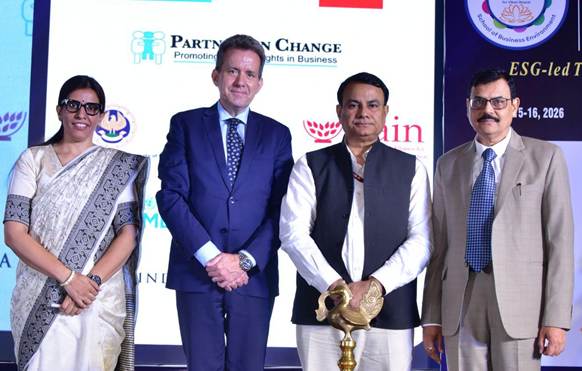
Delivering the Special Address, Shri Nitin Gupta, Chairperson, National Financial Reporting Authority (NFRA), emphasised that Responsible Business Conduct is integral to the vision of Viksit Bharat and to fostering competitive enterprises, trusted markets, inclusive growth and environmental sustainability.

Shri Gupta observed that India has made significant progress in strengthening sustainability disclosures and must now focus on enhancing their quality, reliability and decision usefulness. He emphasised that sustainability information should be relevant, comparable, evidence-based and verifiable, supported by robust methodologies, reliable source systems and effective internal controls.

Highlighting the growing importance of credible sustainability reporting, NFRA’s Shri Gupta stated that sustainability information must be subjected to the same discipline and rigour that underpin financial reporting and audit. He stressed that the principles of documentation, traceability, reconciliation, control ownership, evidence retention, professional scepticism and independent examination are equally essential for ensuring the credibility of sustainability disclosures.

Shri Gupta also underscored the need to adopt a proportionate and pragmatic approach to sustainability reporting while leveraging technology and strengthening institutional capacities, particularly across value chains and among MSMEs.

Delivering the Welcome Address, Shri Gyaneshwar Kumar Singh, Director General and CEO, Indian Institute of Corporate Affairs (IICA), stated that India’s aspiration of becoming a USD 30 trillion economy by 2047 requires Environmental, Social and Governance (ESG) principles to move beyond regulatory compliance and become an integral part of the country’s economic development model.

Shri Singh emphasised that Responsible Business Conduct is deeply rooted in India’s civilisational ethos and has evolved through progressive policy and regulatory reforms. Referring to the evolution of the country’s responsible business framework, he highlighted the journey from the Voluntary Guidelines on Corporate Social Responsibility issued in 2009 to the introduction of the mandatory Business Responsibility and Sustainability Reporting (BRSR) framework in 2021.

He further noted that Section 166 (2) of the Companies Act, 2013 had incorporated the principle of stakeholder primacy into Indian corporate law well before it gained wider global recognition, reflecting India’s early commitment to integrating sustainability with corporate governance.

Describing India’s evolving sustainability landscape as a transition from “ESG 1.0” to “ESG 2.0”, Shri Singh observed that ESG is no longer confined to regulatory compliance but is emerging as a strategic driver of long-term enterprise value, effective risk management and business resilience.

He stressed that this transition calls for stronger legal, governance and accountability frameworks to ensure that sustainability commitments are credible, enforceable and aligned with fiduciary responsibilities. Outlining the priorities for the next phase of India’s ESG journey, Shri Singh emphasised the need to integrate sustainability considerations into board-level decision-making, strengthen legal and regulatory frameworks for sustainability data assurance to address the risks of greenwashing, and leverage emerging technologies, including Artificial Intelligence, to enhance the quality, traceability and transparency of sustainability data across value chains.

In a special address, Mr. Jesper Moller, Deputy Representative (Programmes), UNICEF India, said child rights must be integrated into core business strategy rather than treated as a philanthropic concern, noting that India is home to over 400 million children who represent its future workforce and consumers. He illustrated how decisions such as maternity leave, workplace crèches and responsible supply chain practices directly affect children's wellbeing, citing the example of a young mother at a tea estate in Assam whose employer's family-friendly policies improved both her child's care and the company's employee retention.

Speaking virtually, Ms. Helen Brand, Chief Executive, ACCA (Association of Chartered Certified Accountants), reaffirmed ACCA's partnership with IICA on sustainable business practices, describing India's economy as a "rocket ship bound to the moon" given its rapid growth and rising global influence. Citing ACCA's Global Talent Trends Report 2026, she noted that a growing majority of finance professionals worldwide now want careers that make a positive social impact, and that an employer's reputation on social and human rights issues is an increasingly important factor where professionals choose to work.

Delivering the concluding address of the inaugural session, Professor Garima Dadhich, Head, School of Business Environment, Indian Institute of Corporate Affairs, described responsible business conduct as essential to Viksit Bharat and called for sustainability to be viewed as a foundation for growth rather than a compliance exercise. She outlined three guiding philosophies for the conference, generational responsibility, cultural anchoring in the Rig Vedic call for collective action, "Sangachhadhwam Samvadadhwam Sam Vo Manamsi Janatam," and alignment with India's G20 vision of "One Earth, One Family, One Future," and noted that this year's deliberations are anchored in the Union Budget 2026–27 that has placed green growth, climate transition and sustainable infrastructure at the very centre of the nation’s fiscal priorities. The Parliamentary Standing Committee on Finance has also called for stronger ESG frameworks, sharper disclosures and more rigorous impact assessments.
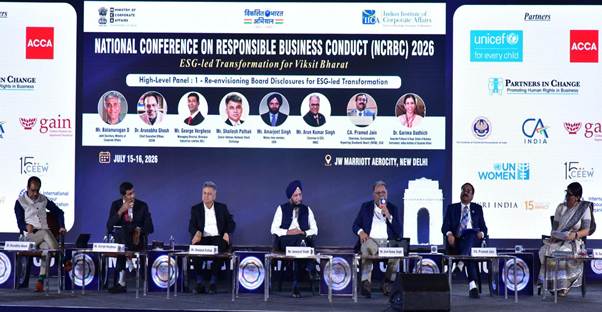
Following the inaugural session, a High-Level Panel discussion on "ESG, Governance and Board-Level Disclosures," moderated by Professor Garima Dadhich, brought together regulators and industry leaders to examine how responsible business conduct can be embedded into corporate governance. Shri Amarjeet Singh, Whole-Time Member, Securities and Exchange Board of India (SEBI), cautioned against rushing to converge with global standards, saying India should chart its own glide path suited to its stage of development rather than align hastily with international frameworks.

Shri Arun Kumar Singh, Chairman, Oil and Natural Gas Corporation (ONGC), said over-promising and under-delivering is "far better" than under-promising, and called on regulators to reward companies for ambition and intent rather than penalise them for falling short. Intent and trust play the key role in governance.

Dr. Arunabha Ghosh, Chief Executive Officer, CEEW (Council on Energy, Environment and Water), said ESG is too often treated as a "headache" rather than an opportunity, pointing to an estimated USD 4 trillion investment opportunity in India's green economy.

Shri Shailesh Pathak, Senior Advisor, National Stock Exchange (NSE), said capital "goes to where it sees opportunity, but stays where it has trust," describing the Social Stock Exchange as a transparent bridge between capital and social enterprises.

Shri George Varghese, Managing Director, Kirloskar Industries Limited (KIL), recounted how tighter emission norms, initially seen as a cost burden, ultimately opened up international markets for his company's products.

CA Pramod Jain, Chairman, Sustainability Reporting Standards Board (SRSB), Institute of Chartered Accountants of India (ICAI), said India has become one of the first countries to make ESG assurance mandatory rather than voluntary, lending board disclosures the same credibility as financial statements. The panel was duly moderated by Prof. Garima Dadhich, Head School of Business Environment, IICA.

With substantive participation of more than three hundred and fifty senior corporate leaders, ESG professionals, policymakers and international delegates, and thought-provoking deliberations led by eminent speakers, the first day of NCRBC 2026 laid a strong foundation for the sessions to follow.

The second day will feature further High-Level Panels on sector-specific guidelines for strengthening ESG integration, responsible value chains across global and domestic supply networks, mainstreaming ESG in MSMEs for competitive and inclusive growth, strengthening sectoral ESG adoption beyond BRSR, and reenvisioning environmental metrics in ESG reporting frameworks, concluding with a valedictory session. Therefore, with an elaborate two-day agenda, IICA's NCRBC 2026, held with support from the partner organisations UNICEF, Partners in Change and ACCA (Association of Chartered Certified Accountants) as Lead Partners, the Institute of Chartered Accountants of India (ICAI) and the Global Alliance for Improved Nutrition (GAIN) as Associate Partners, and UN Women, CEEW (Council on Energy, Environment and Water), WRI India and the International Labour Organisation (ILO) as Session Partners, aims to position responsible business conduct as integral to India's journey toward becoming a developed, inclusive and ethically grounded nation by 2047.

Topics

Acts Income Tax
