

Loading...

Top
Help
×

By creating an account you can:

Logo TaxTMI
Call Us / Help / Feedback

Contact Us At :

E-mail: [email protected]

Call / WhatsApp at: +91 99117 96707

For more information, Check Contact Us

FAQs :

To know Frequently Asked Questions, Check FAQs

Most Asked Video Tutorials :

For more tutorials, Check Video Tutorials

Submit Feedback/Suggestion :

Email :
Please provide your email address so we can follow up on your feedback.
Category :
Description :
Min 15 characters 0/2000
Make Most of Text Search
  1. Checkout this video tutorial: How to search effectively on TaxTMI.
  2. Put words in double quotes for exact word search, eg: "income tax"
  3. Avoid noise words such as : 'and, of, the, a'
  4. Sort by Relevance to get the most relevant document.
  5. Press Enter to add multiple terms/multiple phrases, and then click on Search to Search.
  6. Text Search
  7. The system will try to fetch results that contains ALL your words.
  8. Once you add keywords, you'll see a new 'Search In' filter that makes your results even more precise.
  9. Text Search
Add to...
You have not created any category. Kindly create one to bookmark this item!
Create New Category
Hide
Title :
Description :
❮❮ Hide
Default View
Expand ❯❯
Close ✕
🔎 News - Adv. Search
TEXT SEARCH:

Press 'Enter' to add multiple search terms. Rules for Better Search

Search In:
Main Text + AI Text
  • Main Text
  • Main Text + AI Text
  • AI Text
Category: ?
Categorized by AI
---- All Categories ----
  • ---- All Categories ----
  • Income Tax
  • GST
  • Customs, DGFT & SEZ
  • FEMA & RBI
  • Corp. Laws, SEBI & IBC
  • PMLA, Black Money & ED
  • Budget
  • News and Press Release
  • PTI News
Month:
---- All Months ----
  • ---- All Months ----
  • January
  • February
  • March
  • April
  • May
  • June
  • July
  • August
  • September
  • October
  • November
  • December
Year:
---- All Years ----
  • ---- All Years ----
  • 2026
  • 2025
  • 2024
  • 2023
  • 2022
  • 2021
  • 2020
  • 2019
  • 2018
  • 2017
  • 2016
  • 2015
  • 2014
  • 2013
  • 2012
  • 2011
Sort By: ?
In Sort By 'Default', exact matches for text search are shown at the top, followed by the remaining results in their regular order.
Relevance Default Date
    PM leading country with firmness, skill through global conflict: Rajnath
    Xi warns Trump on Taiwan during talks on trade and Iran war
    IDFC FIRST Bank launches Business Multiplier credit card for Founders & Entrepreneurs
    National Council for Cement and Building Materials (NCB) Organises National Workshop on Durability Design and Quality Assurance of Concrete
    EU Includes India in Revised Draft List for Continued Export of Aquaculture Products to European Market from September 2026
    Xi warns Trump on Taiwan as US, China discuss trade and Iran war
    ED freezes Rs 526 cr bank deposits in PMLA case against Gameskraft
    ED opposes Vadra plea in Delhi HC against trial court summons in Haryana land deal case
    Sensex jumps nearly 790 pts on buying in telecom, banking shares
    Rupee settles at record low of 95.73 against US dollar
    Taiwan tensions could jeopardise ‘new vision’ in China-US ties: Xi after meeting Trump
    Trump, Xi hold talks in ‘biggest summit ever’
    Ant Digital Technologies and Ryt Bank Win Best AI-Powered Customer Experience Award in Malaysia
    The Era of Informal Influence Is Over: India's Creator Economy Is Entering Its Institutional Age
    India bans sugar exports till Sept 30
    Cabinet approves one new project covering Ahmedabad District in the state of Gujarat, increasing the existing network of Indian Railways by about 134 ...
    Republic of Chile Foreign Minister H.E. Mr. Francisco Pérez Mackenna, Leads High-Level Delegation to India to Strengthen Economic and Commercial Coop...
    Union Minister of Commerce and Industry Shri Piyush Goyal Felicitates LEAPS 2025 Winners Across 13 Categories Celebrating Excellence in Logistics and ...
    West Asia crisis: Worried by high VAT on PNG, small-scale industries in MP seek rate cut
    Govt may have to hike fuel prices if West Asia crisis prolongs: RBI Guv
❯❯
Maximize Maximize Maximize
0 / 200
Expand Note
Add to Folder

No Folders have been created

+

Are you sure you want to delete "My most important" ?

NOTE:

News
Showing Results for :
Reset Filters
Results Found:
Show All Summaries Hide All Summaries
May 14, 2026
Show AI Summary
Trade resilience and democratic legacy shape India's development narrative amid global tensions and tariff pressures.
India's trade and economic resilience was linked to adverse global geopolitical and tariff conditions, with reference to trade agreements signed with 38 countries and their impact on international commerce. The address also recalled India's nuclear tests under sanctions, Bhairon Singh Shekhawat's grassroots political legacy, his support for democratic values, and his early advocacy of simultaneous elections, along with his Antyodaya-oriented concern for the poorest sections and development-focused politics.
May 14, 2026
Show AI Summary
Taiwan and trade tensions shape China-US talks as both sides address energy security and Iran's nuclear issue.
China and the United States discussed Taiwan, trade, energy security and the Iran conflict, while signalling a new vision for a constructive and strategically stable bilateral relationship. The Chinese president warned that mishandling Taiwan could lead to clashes and conflicts and urged caution to preserve overall stability. The leaders also discussed wider market access, Chinese investment, agricultural purchases, fentanyl precursor controls, and keeping the Strait of Hormuz open while opposing Iran's acquisition of nuclear weapons.
May 14, 2026
Show AI Summary
FD-backed business credit card offers dedicated spending limits, forex savings, rewards and cash-flow support for entrepreneurs.
IDFC FIRST Bank launched an FD-backed Business Multiplier Metal Credit Card for founders, entrepreneurs and business owners, designed for business spending and cash-flow management. The card provides a dedicated business credit limit linked to a fixed deposit, helping separate business and personal expenses while covering office supplies, digital marketing, SaaS subscriptions, travel, equipment purchases, inventory procurement, vendor payments and employee reimbursements. It also offers interest-free credit, 0% forex markup, rewards, UPI payments, lounge access, trip cancellation cover and employee card controls.
May 14, 2026
Show AI Summary
Durability-centric concrete design gains focus as a new certification programme supports quality assurance and code implementation readiness.
Durability-centric concrete design and quality assurance were discussed at a national workshop organised by the National Council for Cement and Building Materials on the draft revisions proposed in IS 456:2025. The workshop brought together industry, academia, research institutions and the Bureau of Indian Standards to examine durability design, performance-based specifications, quality assurance practices and implementation readiness for the proposed code changes. A six-month online certification programme on Advanced Concrete Technology was also launched to support capacity building and professional training.
May 14, 2026
Show AI Summary
Aquaculture export compliance drives India's inclusion in the EU revised draft list for continued seafood market access.
India has been included in the European Union's revised draft list for continued export of aquaculture products to the EU market from September 2026, following compliance measures under the EU framework governing antimicrobial use in food-producing animals. The inclusion reflects recognition of India's regulatory compliance, residue monitoring and food safety systems, and of sustained efforts to strengthen responsible aquaculture practices, testing, surveillance, traceability and quality assurance.
May 14, 2026
Show AI Summary
Taiwan tensions and trade talks shape China-US agenda as leaders discuss energy security and Iran concerns.
China and the United States discussed a broad bilateral agenda covering Taiwan, trade, energy security and the Iran conflict. Xi Jinping warned that mishandling the Taiwan issue could lead to clashes and conflicts, while both sides also discussed expanding economic cooperation, keeping the Strait of Hormuz open and preventing Iran from acquiring a nuclear weapon. The talks further touched on fentanyl precursors, agricultural purchases, tariffs, technology, rare earth supply chains and US arms sales to Taiwan.
May 14, 2026
Show AI Summary
Money laundering probe over online gaming platform leads to freezing of deposits and seizure of assets
The Enforcement Directorate conducted searches under the Prevention of Money Laundering Act in a money-laundering case against an online gaming platform and its associated entities, based on multiple police FIRs alleging cheating and fraud. The operation led to the freezing of bank deposits, bonds and fixed deposits, and the seizure of gold jewellery and cash. The case concerns real-money online games, and three founders were also arrested following the searches.
May 14, 2026
Show AI Summary
Money laundering jurisdiction dispute over Haryana land deal summons and scheduled offences under the PMLA
Enforcement Directorate opposed a petition challenging a trial court summons in a money laundering case arising from a Haryana land deal, while the petitioner argued that the agency lacked jurisdiction because the predicate offences were not scheduled offences under the Prevention of Money Laundering Act at the relevant time. The trial court had earlier taken cognisance of the charge sheet and directed the accused to appear, referring to sufficient material to proceed further under the Act.
May 14, 2026
Show AI Summary
Market sentiment improves on rupee-weakness measures, as telecom and banking buying lifts equities higher.
Indian equities extended gains for a second consecutive session, with the Sensex rising sharply in volatile trade and the Nifty also closing higher. The recovery was led by value buying in telecom, banking and pharma shares, while IT stocks remained weak. Market sentiment was supported by expectations of possible government measures to address rupee weakness, including consideration of bond tax relief for foreign investors and a possible tightening of the Liberalized Remittance Scheme to curb capital outflows.
May 14, 2026
Show AI Summary
Rupee weakness deepens as strong dollar, crude oil prices and inflation concerns pressure currency trade.
Rupee weakness was driven by a strong US dollar, elevated crude oil prices and inflation concerns, with the currency falling to a record provisional low against the US dollar in volatile interbank trade. Market participants expected a negative bias in the near term because rising inflation in the United States reduced rate-cut expectations, while geopolitical tensions, foreign fund outflows and disruptions to crude petroleum imports added pressure on the currency.
May 14, 2026
Show AI Summary
Strategic stability in China-US ties hinges on Taiwan caution, with trade and wider cooperation also under discussion.
China and the United States reached a political understanding described as a new vision for constructive bilateral ties centred on strategic stability, cooperation, manageable competition and peaceful handling of differences. The Taiwan question was identified as the most sensitive issue in China-US relations, with cross-Strait peace and stability described as central to stable bilateral ties and support for Taiwan independence said to be incompatible with that objective. Trade and broader cooperation were also discussed, including economic, health, agriculture, tourism and law enforcement engagement.
May 14, 2026
Show AI Summary
Trade frictions and energy security dominate US-China talks amid tariff disputes, export controls and rare earth supply chain concerns.
US and Chinese leaders held high-level talks on trade frictions, tariffs, export controls, advanced technology, rare earth supply chains, Taiwan and wider geopolitical tensions linked to the Iran war and Strait of Hormuz disruptions. The meeting was aimed at stabilising relations through direct dialogue and addressing economic and security differences, while both sides emphasised partnership, mutual prosperity and the need to avoid escalation. Plans for a trade board and continued negotiations on tariffs were also noted.
May 14, 2026
Show AI Summary
AI-powered customer experience drives recognition for a digital banking partnership in Malaysia's fast-growing financial services market.
Partnership between Ant Digital Technologies and Ryt Bank received recognition in Malaysia for an AI-powered customer experience and engagement initiative in digital banking. The collaboration was noted for deploying enterprise-grade AI to deliver personalised, scalable and real-time financial services across digital channels, with an emphasis on conversational customer interactions, improved service responsiveness and enhanced customer engagement. The report also notes Ryt Bank's status as a licensed Malaysian digital bank and its use of AI-enabled banking functions such as transfers, bill payments, card usage, PayLater services and an AI assistant.
May 14, 2026
Show AI Summary
Creator economy formalisation is accelerating as GST registration, AI adoption, and disclosure compliance reshape influencer marketing.
India's creator economy is described as moving into a formalised industry shaped by standardised processes, infrastructure-led growth, and regulatory governance. GST registration is presented as a baseline for institutional brand partnerships, while regional expansion, brand accountability, AI adoption, and compliance requirements are identified as the main forces reshaping influencer marketing. ASCI disclosures, SEBI scrutiny, and DPDP compliance are framed as structural filters for durable participation in the sector.
May 14, 2026
Show AI Summary
Sugar export prohibition tightened to protect domestic supply, with limited exceptions for quota-linked and approved shipments.
Sugar exports are placed under a prohibited regime with immediate effect until 30 September 2026, by amendment of the export policy from restricted to prohibited. The measure is stated to support domestic availability and contain prices, following earlier licence-based control of exports. The prohibition does not apply to exports to the European Union and the United States under the CXL and Tariff Rate Quota arrangements, or to shipments under the advance authorisation scheme, government-to-government exports, and consignments already in the physical export pipeline.
May 14, 2026
Show AI Summary
Semi high-speed rail connectivity gets a boost as the Ahmedabad-Dholera project aims to improve mobility and logistics efficiency.
Cabinet approval has been granted for the Ahmedabad (Sarkhej)-Dholera Semi High-Speed Double Line project in Gujarat, covering Ahmedabad district and adding about 134 km to the Indian Railways network. The project, with an estimated cost of Rs. 20,667 crore, is planned for completion by 2030-31 and is described as Indian Railways' first semi high-speed project using indigenously developed technology. It is intended to improve direct connectivity, reduce travel time and enhance mobility, service reliability and logistics efficiency.
May 14, 2026
Show AI Summary
Comprehensive Economic Partnership Agreement talks advance as India and Chile deepen trade, investment and business cooperation.
Bilateral economic and commercial cooperation between India and Chile was advanced through high-level ministerial and official engagements focused on deepening trade, investment and institutional ties. The discussions reaffirmed the shared commitment of both sides to expand bilateral business engagement and to work towards the early conclusion of a Comprehensive Economic Partnership Agreement as a framework for unlocking the relationship's economic potential. The talks also covered trade facilitation, market access, investment promotion and stronger economic institutional engagement.
May 14, 2026
Show AI Summary
Logistics excellence recognition drives innovation, multimodality and sustainability across supply chains under a structured national awards framework.
Recognition was conferred on logistics organisations across core logistics, MSMEs, startups, institutions and special categories for operational excellence, innovation, sustainability, multimodality and technology adoption in supply chain and logistics services. The LEAPS 2025 initiative was described as a flagship national platform aligned with PM GatiShakti and the National Logistics Policy to acknowledge leadership in logistics performance and best practices. The evaluation process for LEAPS 2025 was stated to have been conducted through a structured and transparent mechanism involving online applications, expert committee scrutiny and award committee review.
May 13, 2026
Show AI Summary
VAT on industrial piped natural gas draws MSME demand for rate cut and GST inclusion to ease costs
Micro, small and medium enterprises in Madhya Pradesh sought a reduction in the VAT on piped natural gas used for industrial purposes, saying high fuel prices and the absence of GST input tax credit are raising production costs and hurting competitiveness. They urged either a lower VAT rate or inclusion of PNG within the GST ambit. Industry and business groups also demanded simplification of the GST return filing process.
May 13, 2026
Show AI Summary
Fuel price pass-through concerns grow as West Asia crisis disrupts oil supplies and pressures India's import-dependent economy.
Energy price pressures from the West Asia conflict and Strait of Hormuz disruption are affecting India's import-dependent economy. The Reserve Bank Governor noted that sustained disruption may require the government to pass on higher fuel costs to retail prices, even though petrol and diesel prices have so far not been raised.

News

Back

All News

Showing Results for :
Reset Filters
No Records Found

News

Showing Results for : Reset Filters

Prosperous States for a Prosperous India - Speech by Dr. Poonam Gupta, Deputy Governor, Reserve Bank of India, delivered at the ‘Columbia Indian Economy Summit 2026’ at the Raj Centre on Indian Economic Policy at Columbia University on April 11, 2026

May 12, 2026

Contents
Summary
Note

Note

-

Bookmark

Print

Print

It is my pleasure to be here at the Columbia Indian Economy Summit, 2026. I would like to thank Prof. Arvind Panagariya for his kind invitation to me to speak on issues related to India’s growth trajectory, both at the national and at the states’ level.

My talk is in three parts. I will first present select salient features of the trajectory of economic growth of India over the past four decades, and what it bodes for the years to come. Then, I will present key characteristics of the states’ respective growth trajectories. Finally, I will draw some inferences and implications from these observations for our quest to attain the status of a much more prosperous economy by 2047.

1. Salient features of the trajectory of economic growth of India over the past four decades2

India’s economic growth has consistently accelerated since the early 1980s. Average real gross domestic product (GDP) growth has increased from 5.7 per cent in the 1980s to 5.8 per cent in the 1990s, rising further to 6.3 per cent in the 2000s, to 6.6 per cent in the 2010s, and reaching 7.7 per cent in the most recent four-year period (Table 1).

Table 1: GDP growth and per capita income growth
  Annual average real GDP growth
(per cent)
Annual average real per capita income growth
(per cent)
1980-81 to 1989-90 5.7 3.5
1990-91 to 1999-2000 5.8 3.7
2000-01 to 2009-10 6.3 4.6
2010-11 to 2019-20 6.6 5.2
2022-23 to 2025-2026* 7.7 6.7
Note: 1. *: Excluding the COVID years of 2020-21 and 2021-22; 2. Data is for the base year 2011-12.
Source: The Ministry of Statistics and Programme Implementation (MoSPI). Back series with 2011-12 base has been taken from Economic and Political Weekly Research Foundation (EPWRF), https://epwrfits.in/index.aspx (last accessed on April 10, 2026).

The acceleration is even more pronounced in per capita income (Figure 1). From about US$ 274 in 1981 and US$ 306 in 1991, per capita income has risen nearly tenfold to around US$ 2700 in 2024. Importantly, while it took over two decades for per capita income to double initially, it has expanded by almost fivefold in the subsequent two decades, indicating a clear structural shift in growth momentum. As per the forecasts in October 2025 World Economic Outlook (WEO) of the IMF, per capita income is projected to increase to US$ 2818 in 2025, US$ 3051 in 2026 and US$ 4346 in 2030.
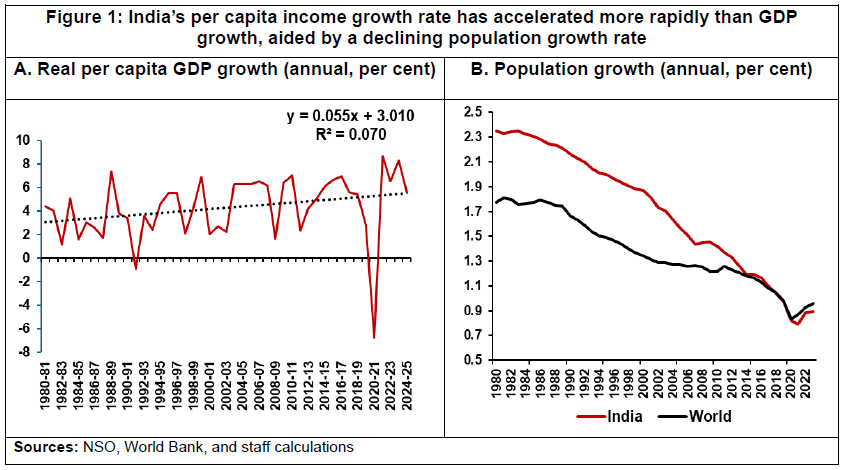
Figure 1: India’s per capita income growth rate has accelerated more rapidly than GDP growth, aided by a declining population growth rate

Decline in population growth, too, has contributed to faster per capita income growth. India’s population growth, once significantly above the global average, has steadily moderated and has converged to global levels since around 2014, amplifying gains in per capita terms.

India has attained a virtuous cycle of accelerated growth and macroeconomic stability. Macroeconomic stability is reflected in sustainable and resilient outcomes across inflation, the current account balance, fiscal position, debt quality, and financial sector health, among others. Key macroeconomic outcomes, especially growth (overall and sectoral) and inflation, are broadly less volatile and move within a narrower, more predictable range.

Inflation has declined at a faster rate than in most economies, resulting in a narrowing of the inflation differential vis-à-vis advanced economies and other emerging and developing economies. India’s decadal average current account deficit has varied within a moderate range of 0.5-2.2 per cent of GDP since 1990 and has remained modest in recent years. The banking sector has undergone a structural turnaround­­–following a decade-long phase of balance sheet repair, banks today are significantly stronger and better capitalized, both historically and relative to their peers.

On the fiscal front, while deficit and debt levels rose during COVID-19, India has retreated to a path of consolidation, with a clear focus on reducing deficits and stabilizing debt over the medium term.3 There has been a distinct focus on enhancing the quality of fiscal outcomes, with a notable shift towards capital expenditure, thereby strengthening the growth potential of the economy (Government of India, 2026).

These improved outcomes are attributed to robust policy frameworks and nimble policy responses. India’s policy frameworks have steadily evolved and today reflect global best practices, while remaining well-anchored in domestic realities. In fiscal policy, the Fiscal Responsibility and Budget Management (FRBM) framework has provided a rule-based path for fiscal management, while retaining flexibility to respond to shocks such as COVID and other external events. In tax policy, reforms such as the Goods and Services Tax (GST) have unified the indirect tax system and improved compliance.

In monetary policy, the Flexible Inflation Targeting (FIT) framework introduced in 2016 has lowered inflation, anchored inflation expectations, reduced macroeconomic volatility, and enhanced policy credibility. In the broader financial sector, stronger banking supervision, improved capital norms, and wide-ranging regulatory reforms across financial markets have reinforced system resilience.

2. Salient features of the trajectory of economic growth across states

States have become more prosperous than before. India’s growth story consists of broad-based prosperity, with every state recording a significant increase in per capita gross state domestic product (GSDP) over the past two decades, indicating that progress has been nationwide rather than confined to a few states or regions.4 This is seen both in US dollar terms as well as in constant rupees terms, adjusted for inflation.

In the last two decades, average per capita incomes across states have surged nearly fivefold in current US dollar terms and more than threefold in constant rupees, underscoring the strength and sustained pace of India’s long-term income gains (Table 2).

Table 2: Ratio of per capita GSDP in 2024-25 to 2003-04
States Constant INR Current USD
Sikkim 6.0 11.4
Telangana 4.5 7.9
Karnataka 3.9 6.7
Tamil Nadu 4.2 6.6
Uttarakhand 3.9 6.1
Andhra Pradesh 3.5 5.9
Arunachal Pradesh 2.7 5.8
Odisha 3.4 5.7
Haryana 3.3 5.6
Goa 3.3 5.5
Gujarat 4.0 5.4
Mizoram 4.3 5.3
Rajasthan 2.7 5.2
Madhya Pradesh 2.9 5.2
Bihar 3.0 5.1
Kerala 3.2 5.0
Tripura 3.9 4.9
Assam 2.8 4.9
Maharashtra 3.3 4.8
Uttar Pradesh 2.7 4.7
Chhattisgarh 2.7 4.7
Nagaland 3.0 4.6
Himachal Pradesh 3.2 4.4
West Bengal 2.5 4.4
Punjab 2.6 3.7
Jharkhand 2.5 3.6
Manipur 2.1 3.5
Meghalaya 2.2 3.3
Average 3.3 5.4
Notes: 1. Due to data unavailability, 2023–24 values are used for 2024–25 for Sikkim, Goa, Gujarat, Mizoram, Nagaland, and Manipur; 2. GSDP at constant prices INR is based on 2011-12 base year; 3. Average is the unweighted average; 4. Data for Telangana from the year 2003-04, including backcasted series, was sourced from EPWRF. 5. Per capita income in USD was computed by dividing the current price per capita income by the respective annual average exchange rate.
Sources: MoSPI (sourced from EPWRF); Database on Indian Economy (DBIE) RBI; and staff calculations.

Yet, the pace of income growth has varied across states. Some states have become five to ten times more prosperous over the last two decades, while others have recorded more modest gains of around three times. One strong correlate of the relative performance is their initial prosperity levels. Per capita income levels in more prosperous states have grown faster than in relatively less prosperous ones. The fact that richer states have experienced greater prosperity than the poorer states in the past, and that this trend has not reversed, implies that income levels across states have not been converging.

Notwithstanding this, the extent of divergence has weakened considerably over time (Figure 2a, 2b, and 2c). In other words, the growth gap between richer and poorer states has narrowed in recent years. The association between initial income and subsequent growth was positive and statistically significant (at 5 per cent level) during the decade of 1990s (Figure 2a). It became numerically smaller and less significant statistically in the subsequent decade (at 10 per cent level, Figure 2b). During the last decade, the coefficient has declined sharply; and the relationship between the initial income and the subsequent decadal growth has become insignificant (Figure 2c). The attrition of divergence can be attributed to the better performance of relatively lower-income states such as Odisha, Assam, and Uttar Pradesh during the past decade, among other factors.
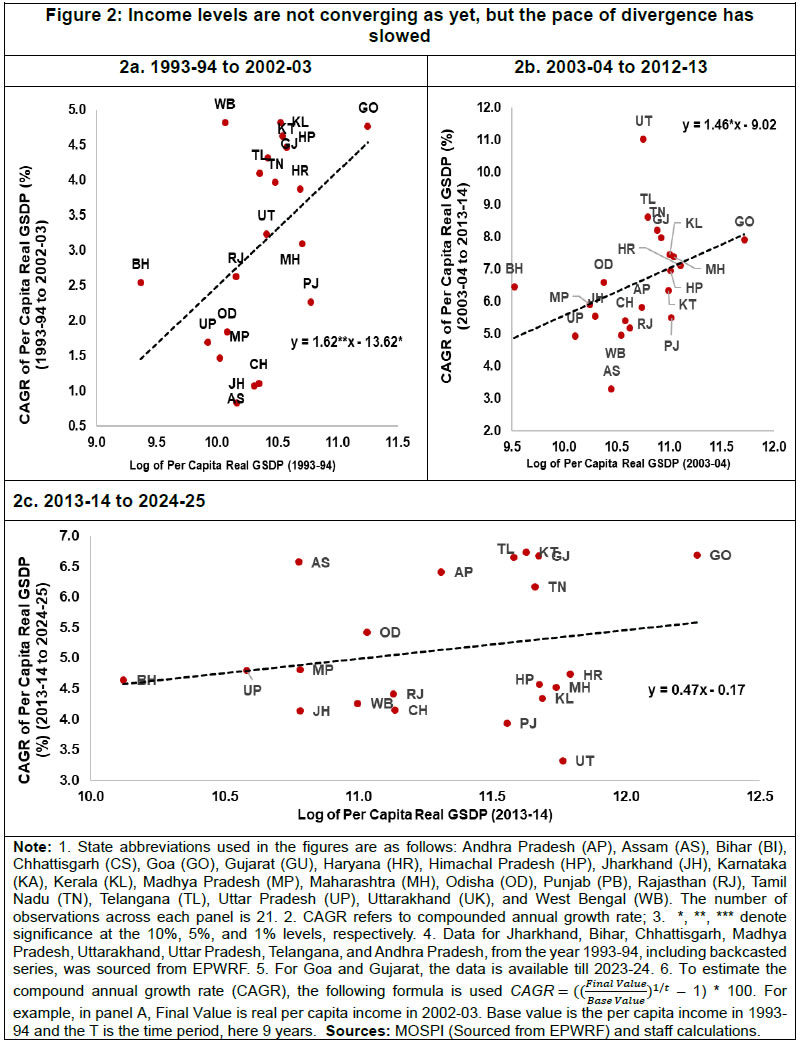
Figure 2: Income levels are not converging as yet, but the pace of divergence has slowed

Overall, the outperformance of the richer states in the past has been driven not only by higher income growth but also by slower population growth (Table 3). States above median income levels have both higher GSDP growth as well as slower population growth, resulting in a faster growth in per capita income.

Table 3: Average GDP growth and population growth across states
(per cent)
  Average annual real GSDP growth from 2003-04 to 2024-25 Average annual population growth from 2003-04 to 2024-25
Below median 6.8 1.4
Above median 7.7 1.1
Notes: 1. Due to data unavailability, 2023–24 values are used for 2024–25 for Sikkim, Goa, Gujarat, Mizoram, Nagaland, and Manipur. 2. Based on real per capita GSDP in 2003–04, states were classified as above or below the median. Above-median states include Andhra Pradesh, Arunachal Pradesh, Goa, Gujarat, Haryana, Himachal Pradesh, Karnataka, Kerala, Maharashtra, Punjab, Sikkim, Tamil Nadu, Telangana and Uttarakhand. Below-median states comprise Assam, Bihar, Chhattisgarh, Jharkhand, Madhya Pradesh, Manipur, Meghalaya, Mizoram, Nagaland, Odisha, Rajasthan, Tripura, Uttar Pradesh, and West Bengal. 3. The unweighted average is presented. 4. Data for Telangana from the year 2003-04, including backcasted series, was sourced from EPWRF.
Source: MoSPI (Sourced from EPWRF) and staff calculations. 

While income convergence across states remains gradual, several other welfare indicators, most notably per capita consumption expenditure, have been converging more decisively. In earlier periods, for example in case of rural consumption expenditure, consumption growth tended to be positively associated with initial consumption levels, meaning richer states showed higher levels of consumption growth (Figures 3a and 3b). However, in the recent period (2011–12 to 2023–24), this relationship has reversed: states with historically lower consumption levels are now recording faster consumption growth, a pattern confirmed by a statistically significant negative coefficient on initial consumption levels (Figure 3c). This marks a meaningful shift toward distributional convergence in living standards across Indian states.
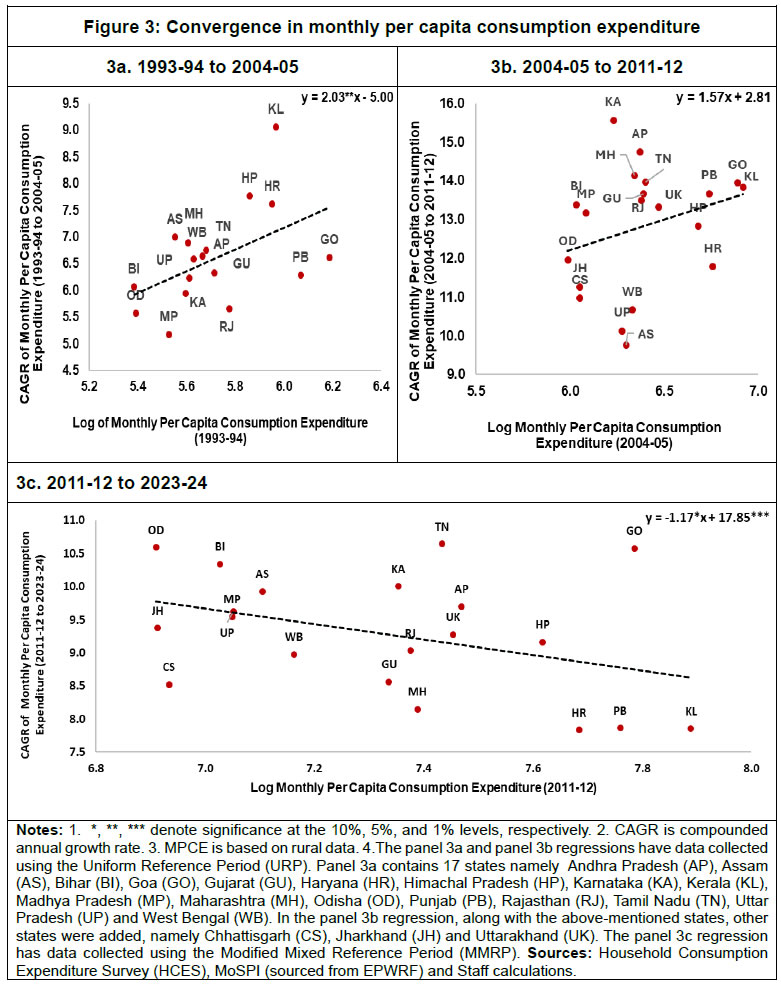
Figure 3: Convergence in monthly per capita consumption expenditure

Beyond consumption expenditure, multiple other dimensions of socio-economic wellbeing have been converging. Indicators spanning health, education, demography, physical infrastructure, access to electricity, safe drinking water, sanitation, clean cooking fuel, and financial inclusion have all trended toward greater parity across states, irrespective of their initial income levels. This broad-based convergence is likely driven by sustained policy efforts, saturation levels in the richer states where further gains are numerically not feasible or are inherently harder to achieve, and rising demand in the poorer states that have been experiencing increases in their income levels.

Figure 4 (4a to 4h) illustrate these trends across a selection of key outcome indicators. Women’s literacy rate (literacy rate per 100 women) has risen steadily over the decades while fertility rate (number of births per female) has declined sequentially (Figures 4a and 4b). Percentage of children who are not underweight has improved meaningfully, increasing from around 62 per cent in 2005-06 to close to 70 per cent in 2019-21 (Figure 4c). Infant survival rate, too, has also improved sequentially over the decades (Figure 4d).

Access to basic services has strengthened considerably across states with an increase in households’ access to electricity, sanitation facilities, improved drinking water facilities (Figures 4e, 4f and 4g). Financial deepening indicators have improved, e.g. per cent of women in India with access to a bank account has jumped to around 80 per cent during 2019-21 from 14 per cent in 2005-06 (Figure 4h). Convergence is also evident in other development indicators like sex ratio (proportion of females to males), vitamin A coverage among children, incidence of anaemia among women and children, stunting (low height for age) and wasting (low weight for height), access to clean fuel, women’s ownership of a phone and house/land; and household health insurance coverage.5 There is significant improvement in each of these indicators, with a narrowing of dispersion across states, reflecting a broad-based improvement in welfare outcomes as well as increasing convergence in living standards across states. What we have depicted here is only a subset of indicators. There are many other indicators where similar phenomenon is prominently visible.
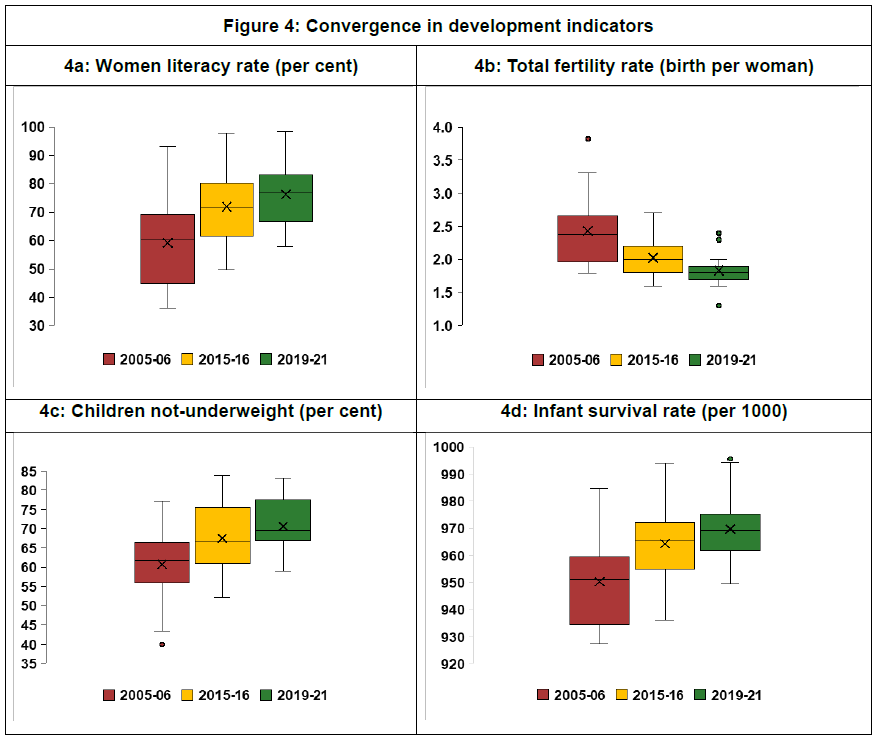
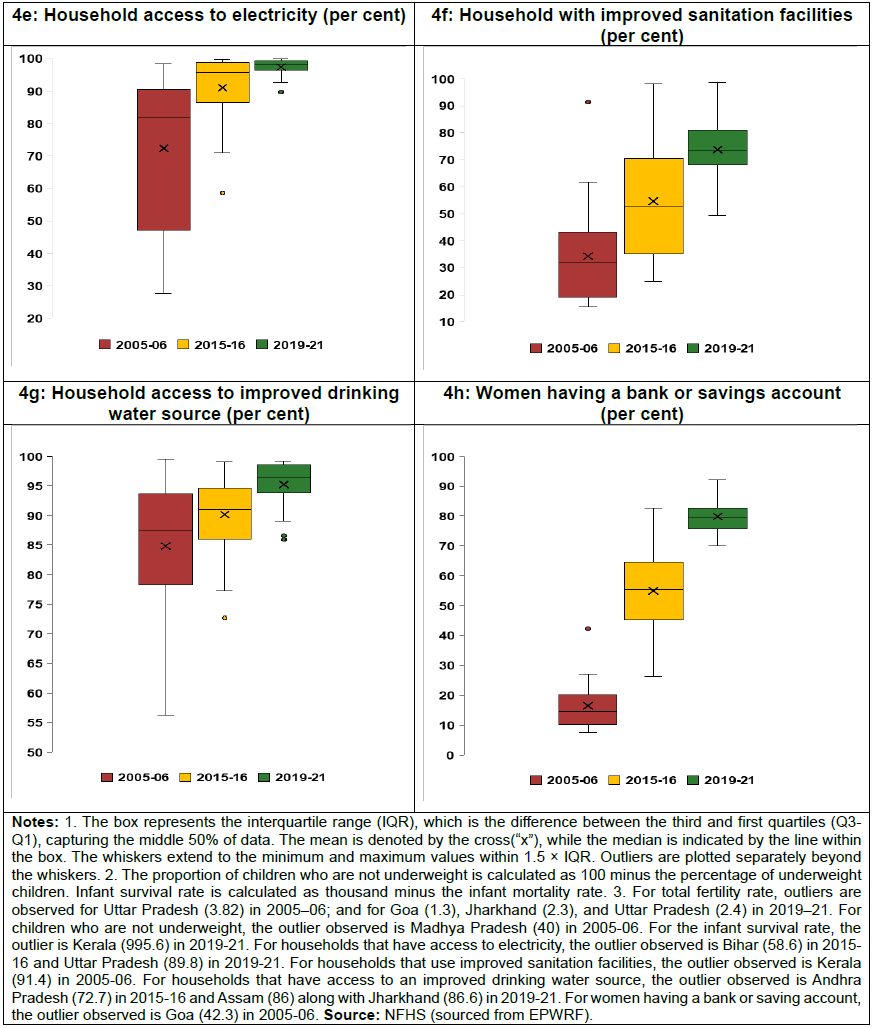
Figure 4: Convergence in development indicators

It is equally important to note that convergence has not been universal across all enablers of growth and development. Data limitations make it difficult to establish this with full empirical precision, but interstate convergence appears limited for some of the structural variables, including the share of agriculture in state economies, the pace of movement out of agriculture, productivity growth, capital formation, FDI inflows, and bank credit growth. As per the patterns in these indicators, some of the drivers or correlates of growth are still showing divergence across states.

If the past rates of growth are maintained, many states will become or come close to becoming “rich” by 2047 (as per the prevailing international thresholds of prosperity). As a simple thought experiment, we calculate each state's average annual growth rate in per capita GSDP (in USD terms and again in constant INR) over the past decade (2013-14 to 2024-25); and use these to project income levels in 2046-47 assuming that the same rate of growth would prevail over the next two decades.6

On this basis, India's per capita income is projected to grow by 4 times in USD terms by 2046-47. This expansion is expected to be broad-based: both above-median and below-median states are projected to record substantial gains, with below-median states contributing considerable momentum, reinforcing the inclusive nature of India's growth trajectory (Figure 5).
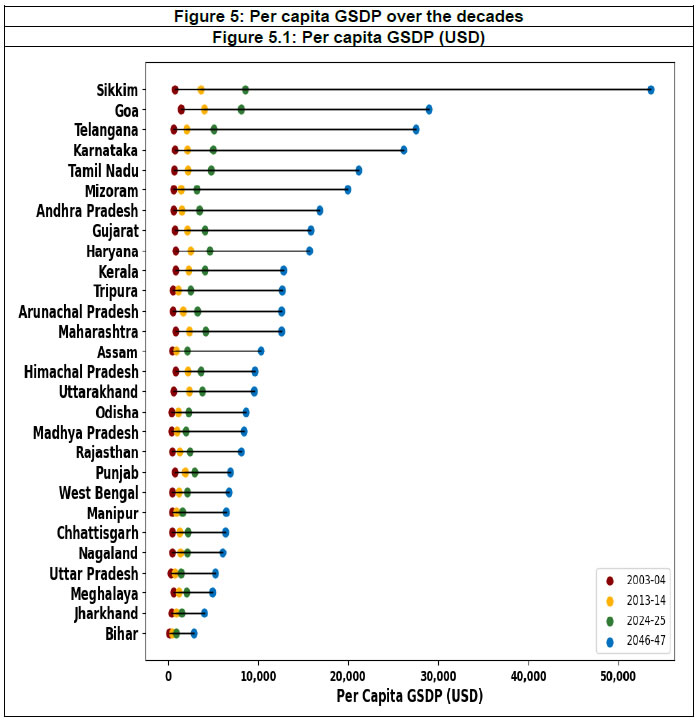
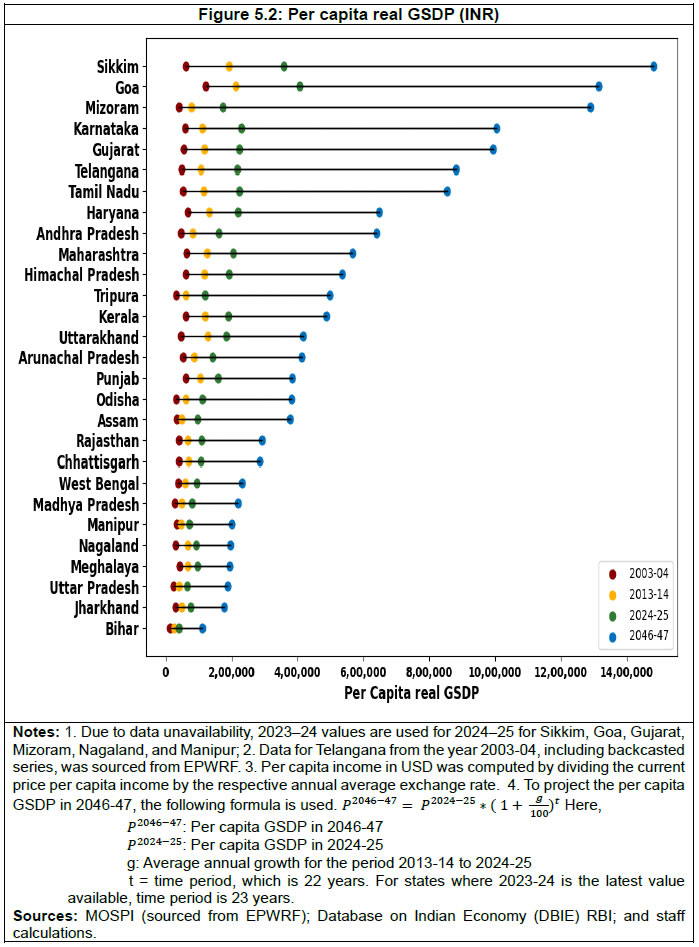
Figure 5: Per capita GSDP over the decades

Figure 5: Per capita GSDP over the decades

3. Inferences and implications of the above observations for our quest to attain the status of a much more prosperous economy by 2047

Sustaining or exceeding recent growth trajectories to reach an even higher level of prosperity by 2047 will require extending our growth frameworks at the subnational levels. Policy priorities will naturally differ across the spectrum of states. For above-median states, the focus ought to be on innovation and scale, planned urbanization, attracting global and domestic talent, expanding market share both domestically and internationally, and actively taking part in shaping national frameworks on trade, FDI, and finance. For below-median states, priorities could include unlocking productivity in agriculture and reimagining the sector; building skills; integrating more in the national and international labour markets, complementing more advanced states, particularly in labour-intensive activities, emulating proven best practices nationally and internationally while developing niche strengths, and strengthening fiscal capacity to support faster growth.

Accelerating growth would require a clearer acknowledgement and more effective use of the distinct policy roles available to the centre and the states respectively.

Many macro policies are formulated at the national level. These include monetary policy; financial sector regulation covering banks, non-bank financial institutions; development of equity and debt markets, and private equity; policies related to the external sector including for trade, exchange rate and capital account openness; and industrial and competition policy among others.

At the state level, the policy space and levers available are different, though no less consequential. State governments shape the ease of doing business environment; determine land and labour market conditions; quality and reach of education and health services; delivery of public services; and enhancing the quality of public finances including allocation of their budgets into recurrent and capital expenditure and between merit and non-merit activities. Strengthening all of these in a holistic framework would be important to accelerate the rate of growth of prosperity for each one of the states and thereby the national average.

Conclusion

Prosperity is both India’s ambition and its destiny. The central question is no longer whether India will prosper, but how quickly, how broadly, and how equitably that prosperity would be shared across its states and its people.

The pace of income divergence has weakened considerably with the growth gap between richer and poorer states narrowing over successive decades. Meanwhile convergence has been faster and more decisive across a wide set of welfare and development indicators: per capita consumption expenditure, literacy, nutrition, access to basic services, financial inclusion, and a range of health and gender outcomes. Lagging states are catching up, and the distribution of wellbeing across India is becoming more equal.

Looking ahead, if growth trajectories of the past two decades are sustained, the average state per capita income could approach high-income thresholds by 2046-47. Crucially, below-median states are projected to contribute substantially to this expansion, reinforcing the broad-based nature of India’s growth story. Realising and accelerating the path to this potential, however, would require moving towards state-specific growth strategies that are anchored in local strengths, structural realities, and their respective stages of development.

This calls for holistic assessments, richer dialogues, greater awareness, specific actions across states, alongside learning from each other, to fully leverage their existing strengths and building new comparative advantages.

References

Eichengreen, Barry, Gupta, Poonam, and Ahmed, Ayesha. (2024). India's debt dilemma, India Policy Forum, vol. 20(1), pages 1-62.

Government of India (2026). Fiscal developments - Anchoring stability through credible consolidation, Chapter 2, Economic Survey 2025-26, Ministry of Finance.

Gupta, Poonam (2025). Policy frameworks for economic resilience: The case of emerging markets and India (Address at the Business Standard BFSI Insight Summit, Mumbai).

Gupta, Poonam (2026). Perspectives on India’s growth: Last four decades to the present (14th Foundation Day Lecture, Centre for Development Studies).

International Monetary Fund (2025). World Economic Outlook, October.

Panagariya, Arvind (2010). India on the growth turnpike: No state left behind, Columbia Program on Indian Economic Policies Working Paper No. 2010-1.

Reserve Bank of India (2025). Financial Stability Report, December.

----

1 Speech by Dr. Poonam Gupta, Deputy Governor, Reserve Bank of India, delivered at the ‘Columbia Indian Economy Summit 2026’ at the Raj Centre on Indian Economic Policy at Columbia University on April 11, 2026. Inputs provided by Asish Thomas George, Somnath Sharma, and Shivam are gratefully acknowledged.

2 This section draws on Gupta (2026).

3 India’s public debt remains sustainable. As noted by Eichengreen, Gupta, and Ahmed (2024), its structure–predominantly domestic, long-term, and rupee-denominated–mitigates rollover and currency risks, and under most assumptions, the debt-to-GDP ratio is expected to decline gradually.

4 See Panagariya (2010) for evidence to this effect in the earlier decades.

5 Households with at least one family member covered by health insurance.

6 This simple approach is agnostic about the sources of growth or the respective trajectories of population growth rates, nominal GSDP growth rates; or that of the deflators.

Topics

Acts Income Tax
