

Loading...

Top
Help
×

By creating an account you can:

Logo TaxTMI
Call Us / Help / Feedback

Contact Us At :

E-mail: [email protected]

Call / WhatsApp at: +91 99117 96707

For more information, Check Contact Us

FAQs :

To know Frequently Asked Questions, Check FAQs

Most Asked Video Tutorials :

For more tutorials, Check Video Tutorials

Submit Feedback/Suggestion :

Email :
Please provide your email address so we can follow up on your feedback.
Category :
Description :
Min 15 characters 0/2000
Make Most of Text Search
  1. Checkout this video tutorial: How to search effectively on TaxTMI.
  2. Put words in double quotes for exact word search, eg: "income tax"
  3. Avoid noise words such as : 'and, of, the, a'
  4. Sort by Relevance to get the most relevant document.
  5. Press Enter to add multiple terms/multiple phrases, and then click on Search to Search.
  6. Text Search
  7. The system will try to fetch results that contains ALL your words.
  8. Once you add keywords, you'll see a new 'Search In' filter that makes your results even more precise.
  9. Text Search
Add to...
You have not created any category. Kindly create one to bookmark this item!
Create New Category
Hide
Title :
Description :
❮❮ Hide
Default View
Expand ❯❯
Close ✕
🔎 News - Adv. Search
TEXT SEARCH:

Press 'Enter' to add multiple search terms. Rules for Better Search

Search In:
Main Text + AI Text
  • Main Text
  • Main Text + AI Text
  • AI Text
Category: ?
Categorized by AI
---- All Categories ----
  • ---- All Categories ----
  • Income Tax
  • GST
  • Customs, DGFT & SEZ
  • FEMA & RBI
  • Corp. Laws, SEBI & IBC
  • PMLA, Black Money & ED
  • Budget
  • News and Press Release
  • PTI News
Month:
---- All Months ----
  • ---- All Months ----
  • January
  • February
  • March
  • April
  • May
  • June
  • July
  • August
  • September
  • October
  • November
  • December
Year:
---- All Years ----
  • ---- All Years ----
  • 2026
  • 2025
  • 2024
  • 2023
  • 2022
  • 2021
  • 2020
  • 2019
  • 2018
  • 2017
  • 2016
  • 2015
  • 2014
  • 2013
  • 2012
  • 2011
Sort By: ?
In Sort By 'Default', exact matches for text search are shown at the top, followed by the remaining results in their regular order.
Relevance Default Date
    FDA awaiting response from restaurants at Mumbai Cricket Association premises: Mundhe
    India emerges as key diesel supplier to Europe as Russian, US flows falter
    Trump keeps heralding an economic boom, but even a solid jobs report is causing problems for him
    Telangana CM urges TCS'' HyperVault to launch its Hyderabad AI data centre by June 2028
    CBI FIR against Subhash Chandra for 'inflating' net worth to secure Rs 980 Cr in loans
    TCS subsidiary HyperVault to invest Rs 70,000 cr to develop Hyderabad AI data centre
    CBI FIR against Subhash Chandra for 'inflation' of net worth to secure nearly Rs 1,000-cr in loans
    Union Minister of Commerce & Industry Shri Piyush Goyal Calls for Nationwide FTA Utilisation Drive to Expand India’s Global Trade Footprint
    Union Minister of Commerce & Industry Shri Piyush Goyal Calls Upon Automotive Industry to Deepen Localisation, Expand Exports and Prepare to Serve Glo...
    GeM and Textiles Committee Sign MoU to Boost Procurement of Recycled and Upcycled Textiles
    India–EU FTA Opens Huge Opportunities for Farmers, MSMEs, Innovators, Startups and Businesses in India and Europe: Commerce and Industry Minister Sh...
    First Batch of Corporate Mitra Course Commences with 2879 Learners registered
    NFRA Constitutes Advisory Committee on Audit Quality, Assurance and Technology
    ED arrests ex-panchayat CEO who allotted govt funds for fake marriages during COVID lockdown
    Goyal blames market conditions for Jet Airways' downfall; ED says he 'bled airline to death'
    Rupee rises 8 paise to close at 94.43 against US dollar
    NSE gets regulatory nod for Rs 30,000 cr IPO, the biggest so far
    Sensex rebounds 362 pts, snaps 4-day losses on strong rally in metal, oil shares
    Forex kitty jumps USD 11.47 bn to fresh all-time high of USD 740.8 bn
    NSE gets Sebi nod for Rs 30,000-cr IPO, one of India's largest public issues
❯❯
Maximize Maximize Maximize
0 / 200
Expand Note
Add to Folder

No Folders have been created

+

Are you sure you want to delete "My most important" ?

NOTE:

News
Showing Results for :
Reset Filters
Results Found:
Show All Summaries Hide All Summaries
September 6, 2026
Show AI Summary
Food business licensing: Third-party restaurant operators require their own licences and cannot operate under another entity's registration.
Food Business Operator licensing requires the entity holding a food licence or registration to itself conduct the licensed food business at the specified premises. A third-party operator cannot operate under another entity's licence or registration and must obtain its own licence or registration. Regulatory notices concerning such arrangements may also address hygiene lapses and structural violations, followed by consideration of the operators' responses.
September 6, 2026
Show AI Summary
European diesel supply dependence on alternative refiners grows amid constrained exports, weakening transatlantic flows, and restricted shipping routes.
European diesel supply is becoming increasingly dependent on Indian refining capacity as Russian diesel and gasoil exports remain constrained by export restrictions, refinery disruptions and port outages, while US shipments to Europe have weakened. Alternative supply routes offer limited additional clean-product volumes because reduced tanker crossings and lower ship-to-ship transfers offshore Oman constrain flows through the Strait of Hormuz. Low diesel inventories, seasonal demand and planned refinery maintenance increase exposure to supply disruptions.
September 5, 2026
Show AI Summary
Tariff-driven inflation and elevated borrowing costs constrain growth, while durable deficit reduction may require spending restraint and tax increases.
Persistent inflation, elevated interest rates and rising public debt constrain economic growth policy. Tariffs and oil shortages are identified as contributing to inflationary pressures, while lower interest rates could increase money flows and worsen inflation. Tariffs, tax cuts, artificial intelligence productivity gains and anti-fraud measures are advanced as mechanisms to support growth, investment and domestic employment. Fiscal sustainability, however, cannot be achieved through growth alone where social security and healthcare costs exceed revenue growth; deficit reduction may require slower spending, spending reductions and tax increases.
September 5, 2026
Show AI Summary
AI data centre development receives state support for a high-capacity campus and accelerated commissioning timetable.
HyperVault's proposed artificial-intelligence data-centre campus in Hyderabad is planned on 264 acres, with investment projected at up to Rs 70,000 crore and capacity of up to 1 GW. The campus is intended to provide high-density, liquid-cooled computing infrastructure for frontier AI companies and hyperscalers. Telangana's Chief Minister sought inauguration by June 2, 2028, while assuring required governmental sanctions and support. The project is estimated to create 7,000 jobs.
September 5, 2026
Show AI Summary
Inflated net-worth certificates allegedly enabled secured lending, triggering fraud, breach-of-trust and asset-stripping allegations after default.
Alleged inflation of net-worth certificates is said to have induced approval and disbursal of two corporate loan facilities aggregating Rs 980 crore, each secured by continuing personal guarantees. The facilities subsequently defaulted. The FIR alleges that materially higher net-worth representations made in 2018 were later contradicted during insolvency proceedings, and attributes the lending to collusion among the guarantor, borrower entities and their officers. Allegations include cheating, creation of false documents, misappropriation and misapplication of loan funds, breach of trust, and asset stripping intended to frustrate recovery.
September 5, 2026
Show AI Summary
AI data centre infrastructure investment enables phased deployment of high-density, liquid-cooled computing capacity using green and water-neutral design.
HyperVault plans to develop an artificial intelligence data-centre campus on 264 acres in Hyderabad, with capacity of up to 1 GW and investment by HyperVault and its partners of up to Rs 70,000 crore. The facility is intended to provide high-density, liquid-cooled computing infrastructure for frontier AI companies and hyperscalers. Development will proceed in phases according to customer demand and technology requirements, incorporating green-energy use and water-neutral design principles.
September 5, 2026
Show AI Summary
Alleged inflation of personal net worth underpins fraud and breach-of-trust accusations over secured corporate lending.
CBI registration of an FIR concerns allegations that inflated personal net-worth certificates were used to secure corporate loan facilities from Life Insurance Corporation Housing Finance Ltd. The lender alleges that the certificates influenced lending decisions, the facilities subsequently defaulted, and later insolvency proceedings disclosed inconsistency between the represented and asserted net-worth figures. Allegations include collusion with borrower entities, false documentation, cheating, misappropriation of loan funds, and breach of lender trust.
September 5, 2026
Show AI Summary
Free trade agreement utilisation requires district-level exporter support, rules-of-origin assistance, standards compliance, and coordinated market-access outreach nationwide.
Free Trade Agreement utilisation is to be advanced through coordinated action by central and state governments, sectoral ministries, Export Promotion Councils, industry associations and local export-support institutions. Preferential treatment is assessed against tariff rates faced by competing countries, while export competitiveness depends on scale, quality, customer trust and timely delivery. The Export Promotion Mission supports export credit, digitised compliance and FTA documentation, including rules-of-origin certification. District-level identification of products, clusters, new exporters and practical constraints, supported by workshops and rapid online facilitation, is intended to deepen market access.
September 5, 2026
Show AI Summary
Automotive localisation and export competitiveness are prioritised through global-standard manufacturing, technology partnerships, sustainable mobility, and government infrastructure support.
Automotive-sector localisation, export expansion and global-standard manufacturing are prioritised to strengthen India's role in global production and trade. Companies are urged to invest in technology, innovation, research and development, use domestic scale for overseas markets, and avoid supplying inferior products domestically. Trade agreements are positioned as channels for market access, technology absorption and exports. Greater indigenisation is encouraged through component localisation, technology collaborations and expanded exports, supported by critical minerals, batteries, indigenous energy sources, research funding, plug-and-play infrastructure and industrial ecosystems.
September 5, 2026
Show AI Summary
Circular textile procurement integrates certification, product categories and seller support to expand government markets for recycled materials.
Memorandum of Understanding for circular textile procurement links certification, standardisation and public-market access for recycled and upcycled products made from textile waste, scrap and second-hand clothes. The Textiles Committee will identify, verify, certify and recognise eligible producers and support specifications, catalogues and capacity building. Government e Marketplace will create dedicated product categories, onboard sellers, facilitate online market linkages, promote products to government buyers, and provide training and handholding to recyclers and upcyclers.
September 5, 2026
Show AI Summary
India-EU Free Trade Agreement promotes tariff reduction, market access, investment resilience, and India-Belgium industrial and skills cooperation.
India-EU Free Trade Agreement is presented as reducing or removing tariffs on more than 95 per cent of Indian and European goods exports while protecting sensitive sectors on both sides. It is intended to expand trade, investment and economic resilience, with the Port of Antwerp-Bruges serving as a major gateway for Indian exports into European markets. India-Belgium cooperation is identified in gems and jewellery, semiconductors, green hydrogen, advanced manufacturing, agriculture and food processing, supported by mutual recognition, workforce mobility, skills development and technology collaboration.
September 5, 2026
Show AI Summary
MSME compliance capacity-building programme launches structured learning and workplace training to develop certified paraprofessional support.
Corporate Mitra Course has commenced to develop trained and certified paraprofessionals capable of providing affordable business and regulatory compliance support to Micro, Small and Medium Enterprises. The 12-month programme includes six months of structured academic learning and six months of on-the-job training in professional firms. Its digital learning system offers recorded lectures, reference materials, assessments and learner-support facilities. The programme aims to strengthen MSME formalisation, ease of doing business, trust, transparency, accountability and orderly growth.
September 5, 2026
Show AI Summary
Audit quality advisory committee broadens expert input on assurance, technology, and stakeholder perspectives in oversight.
NFRA has constituted an Advisory Committee on Audit Quality, Assurance and Technology under Rules 15 and 16 of the National Financial Reporting Authority Rules, 2018. The Committee will provide expert inputs and suggestions on matters significantly affecting audit quality, while supporting functions relating to awareness of auditing and accounting standards. Its members represent professionals, chief financial officers, audit committees, independent directors, technology experts, regulators and industry.
September 4, 2026
Show AI Summary
Money laundering allegations over fraudulent marriage-assistance disbursements prompted investigation into false credentials and ineligible beneficiary payments.
Alleged money laundering arose from fraudulent disbursement of marriage-assistance funds intended for daughters of registered construction workers. The allegations include approvals and releases for suspicious marriage cases, use of bank accounts opened or misused on false credentials, multiple cash withdrawals, and extension of benefits to ineligible persons. Investigation under the Prevention of Money Laundering Act followed an economic-offences FIR concerning suspected misuse of the welfare scheme.
September 4, 2026
Show AI Summary
Money-laundering allegations: discharge plea attributes airline's financial collapse to macroeconomic conditions and denies loan siphoning through sales agents.
Money-laundering proceedings arising from alleged bank fraud concern claims that loans advanced to an airline were siphoned off. The discharge application attributes the airline's financial collapse to adverse macroeconomic conditions rather than fraudulent conduct or laundering, denies diversion through General Sales Agents, and maintains that related payments were board-approved and disclosed. It also contests the treatment of the bank's outstanding claim as funds received by the founder, while the investigating agency alleges systemic fraud, loan diversion and laundering.
September 4, 2026
Show AI Summary
Foreign exchange market conditions supported rupee appreciation, while oil prices and geopolitical tensions limited potential gains.
Foreign exchange market conditions supported the rupee's appreciation by 8 paise to 94.43 against the US dollar, aided by positive domestic equity markets, improved risk appetite, foreign capital inflows and foreign institutional buying. Reserve Bank of India intervention was also cited as support. Elevated crude oil prices, safe-haven dollar demand and United States-Iran tensions were identified as factors limiting further gains. India's foreign exchange reserves increased to a new all-time high during the relevant reporting week.
September 4, 2026
Show AI Summary
Offer-for-sale IPO clearance enables existing exchange shareholders to monetise holdings, while sale proceeds remain outside the exchange.
Regulatory clearance permits the National Stock Exchange to proceed with an initial public offering structured wholly as an offer for sale by existing shareholders. The proposed issue does not raise fresh capital, and sale proceeds will accrue to the selling shareholders rather than the exchange. Revised offer documents were required after addition of a selling shareholder, triggering a fresh public-feedback period. The offering follows settlement of co-location and dark-fibre matters and governance and compliance measures addressing regulatory concerns.
September 4, 2026
Show AI Summary
Equity market resilience was tempered by profit booking, geopolitical tensions, global rate expectations and domestic liquidity.
Equity markets registered a recovery after four consecutive losing sessions, led by buying in metal, private banking, oil and gas, housing finance, telecommunication, insurance, commodities and financial services shares. The benchmark equity index closed higher, while the broader index recorded a modest gain after retreating from an intraday level above the psychological threshold during the newly introduced Closing Auction Session. Investor sentiment was supported by easing interest-rate concerns, strong earnings momentum, resilient economic growth and domestic demand, but was constrained by profit booking, geopolitical tensions and crude-oil price risks.
September 4, 2026
Show AI Summary
Forex reserve management reflects rising foreign currency assets and gold holdings, alongside marginal declines in SDRs and IMF reserve position.
India's foreign exchange reserves increased to a fresh all-time high, supported principally by higher foreign currency assets and gold reserves. Reserve accumulation has continued after concessional foreign-exchange swap initiatives introduced amid local-currency depreciation. Foreign currency assets, expressed in United States dollar terms, also reflect valuation effects from movements in currencies such as the euro, pound and yen. Special drawing rights and the reserve position with the International Monetary Fund declined marginally.
September 4, 2026
Show AI Summary
IPO regulatory clearance enables further public issue preparations, with existing shareholders proposing a complete offer for sale.
SEBI's final observations on the proposed initial public offering enable the National Stock Exchange to undertake further public-issue preparations, subject to applicable regulatory requirements. The proposed issue is structured entirely as an offer for sale, under which existing shareholders would divest a portion of their holdings rather than the exchange issuing new shares. The draft red herring prospectus contemplates sale of 14.89 crore shares, representing nearly 6 per cent of the exchange's stake.

News

Back

All News

Showing Results for :
Reset Filters
No Records Found

News

Showing Results for : Reset Filters

Prosperous States for a Prosperous India - Speech by Dr. Poonam Gupta, Deputy Governor, Reserve Bank of India, delivered at the ‘Columbia Indian Economy Summit 2026’ at the Raj Centre on Indian Economic Policy at Columbia University on April 11, 2026

May 12, 2026

Contents
Summary
Note

Note

-

Bookmark

Print

Print

It is my pleasure to be here at the Columbia Indian Economy Summit, 2026. I would like to thank Prof. Arvind Panagariya for his kind invitation to me to speak on issues related to India’s growth trajectory, both at the national and at the states’ level.

My talk is in three parts. I will first present select salient features of the trajectory of economic growth of India over the past four decades, and what it bodes for the years to come. Then, I will present key characteristics of the states’ respective growth trajectories. Finally, I will draw some inferences and implications from these observations for our quest to attain the status of a much more prosperous economy by 2047.

1. Salient features of the trajectory of economic growth of India over the past four decades2

India’s economic growth has consistently accelerated since the early 1980s. Average real gross domestic product (GDP) growth has increased from 5.7 per cent in the 1980s to 5.8 per cent in the 1990s, rising further to 6.3 per cent in the 2000s, to 6.6 per cent in the 2010s, and reaching 7.7 per cent in the most recent four-year period (Table 1).

Table 1: GDP growth and per capita income growth
  Annual average real GDP growth
(per cent)
Annual average real per capita income growth
(per cent)
1980-81 to 1989-90 5.7 3.5
1990-91 to 1999-2000 5.8 3.7
2000-01 to 2009-10 6.3 4.6
2010-11 to 2019-20 6.6 5.2
2022-23 to 2025-2026* 7.7 6.7
Note: 1. *: Excluding the COVID years of 2020-21 and 2021-22; 2. Data is for the base year 2011-12.
Source: The Ministry of Statistics and Programme Implementation (MoSPI). Back series with 2011-12 base has been taken from Economic and Political Weekly Research Foundation (EPWRF), https://epwrfits.in/index.aspx (last accessed on April 10, 2026).

The acceleration is even more pronounced in per capita income (Figure 1). From about US$ 274 in 1981 and US$ 306 in 1991, per capita income has risen nearly tenfold to around US$ 2700 in 2024. Importantly, while it took over two decades for per capita income to double initially, it has expanded by almost fivefold in the subsequent two decades, indicating a clear structural shift in growth momentum. As per the forecasts in October 2025 World Economic Outlook (WEO) of the IMF, per capita income is projected to increase to US$ 2818 in 2025, US$ 3051 in 2026 and US$ 4346 in 2030.
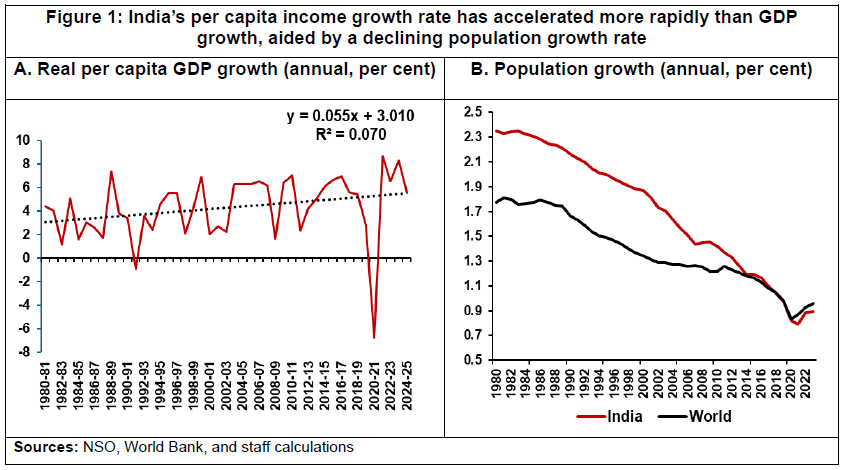
Figure 1: India’s per capita income growth rate has accelerated more rapidly than GDP growth, aided by a declining population growth rate

Decline in population growth, too, has contributed to faster per capita income growth. India’s population growth, once significantly above the global average, has steadily moderated and has converged to global levels since around 2014, amplifying gains in per capita terms.

India has attained a virtuous cycle of accelerated growth and macroeconomic stability. Macroeconomic stability is reflected in sustainable and resilient outcomes across inflation, the current account balance, fiscal position, debt quality, and financial sector health, among others. Key macroeconomic outcomes, especially growth (overall and sectoral) and inflation, are broadly less volatile and move within a narrower, more predictable range.

Inflation has declined at a faster rate than in most economies, resulting in a narrowing of the inflation differential vis-à-vis advanced economies and other emerging and developing economies. India’s decadal average current account deficit has varied within a moderate range of 0.5-2.2 per cent of GDP since 1990 and has remained modest in recent years. The banking sector has undergone a structural turnaround­­–following a decade-long phase of balance sheet repair, banks today are significantly stronger and better capitalized, both historically and relative to their peers.

On the fiscal front, while deficit and debt levels rose during COVID-19, India has retreated to a path of consolidation, with a clear focus on reducing deficits and stabilizing debt over the medium term.3 There has been a distinct focus on enhancing the quality of fiscal outcomes, with a notable shift towards capital expenditure, thereby strengthening the growth potential of the economy (Government of India, 2026).

These improved outcomes are attributed to robust policy frameworks and nimble policy responses. India’s policy frameworks have steadily evolved and today reflect global best practices, while remaining well-anchored in domestic realities. In fiscal policy, the Fiscal Responsibility and Budget Management (FRBM) framework has provided a rule-based path for fiscal management, while retaining flexibility to respond to shocks such as COVID and other external events. In tax policy, reforms such as the Goods and Services Tax (GST) have unified the indirect tax system and improved compliance.

In monetary policy, the Flexible Inflation Targeting (FIT) framework introduced in 2016 has lowered inflation, anchored inflation expectations, reduced macroeconomic volatility, and enhanced policy credibility. In the broader financial sector, stronger banking supervision, improved capital norms, and wide-ranging regulatory reforms across financial markets have reinforced system resilience.

2. Salient features of the trajectory of economic growth across states

States have become more prosperous than before. India’s growth story consists of broad-based prosperity, with every state recording a significant increase in per capita gross state domestic product (GSDP) over the past two decades, indicating that progress has been nationwide rather than confined to a few states or regions.4 This is seen both in US dollar terms as well as in constant rupees terms, adjusted for inflation.

In the last two decades, average per capita incomes across states have surged nearly fivefold in current US dollar terms and more than threefold in constant rupees, underscoring the strength and sustained pace of India’s long-term income gains (Table 2).

Table 2: Ratio of per capita GSDP in 2024-25 to 2003-04
States Constant INR Current USD
Sikkim 6.0 11.4
Telangana 4.5 7.9
Karnataka 3.9 6.7
Tamil Nadu 4.2 6.6
Uttarakhand 3.9 6.1
Andhra Pradesh 3.5 5.9
Arunachal Pradesh 2.7 5.8
Odisha 3.4 5.7
Haryana 3.3 5.6
Goa 3.3 5.5
Gujarat 4.0 5.4
Mizoram 4.3 5.3
Rajasthan 2.7 5.2
Madhya Pradesh 2.9 5.2
Bihar 3.0 5.1
Kerala 3.2 5.0
Tripura 3.9 4.9
Assam 2.8 4.9
Maharashtra 3.3 4.8
Uttar Pradesh 2.7 4.7
Chhattisgarh 2.7 4.7
Nagaland 3.0 4.6
Himachal Pradesh 3.2 4.4
West Bengal 2.5 4.4
Punjab 2.6 3.7
Jharkhand 2.5 3.6
Manipur 2.1 3.5
Meghalaya 2.2 3.3
Average 3.3 5.4
Notes: 1. Due to data unavailability, 2023–24 values are used for 2024–25 for Sikkim, Goa, Gujarat, Mizoram, Nagaland, and Manipur; 2. GSDP at constant prices INR is based on 2011-12 base year; 3. Average is the unweighted average; 4. Data for Telangana from the year 2003-04, including backcasted series, was sourced from EPWRF. 5. Per capita income in USD was computed by dividing the current price per capita income by the respective annual average exchange rate.
Sources: MoSPI (sourced from EPWRF); Database on Indian Economy (DBIE) RBI; and staff calculations.

Yet, the pace of income growth has varied across states. Some states have become five to ten times more prosperous over the last two decades, while others have recorded more modest gains of around three times. One strong correlate of the relative performance is their initial prosperity levels. Per capita income levels in more prosperous states have grown faster than in relatively less prosperous ones. The fact that richer states have experienced greater prosperity than the poorer states in the past, and that this trend has not reversed, implies that income levels across states have not been converging.

Notwithstanding this, the extent of divergence has weakened considerably over time (Figure 2a, 2b, and 2c). In other words, the growth gap between richer and poorer states has narrowed in recent years. The association between initial income and subsequent growth was positive and statistically significant (at 5 per cent level) during the decade of 1990s (Figure 2a). It became numerically smaller and less significant statistically in the subsequent decade (at 10 per cent level, Figure 2b). During the last decade, the coefficient has declined sharply; and the relationship between the initial income and the subsequent decadal growth has become insignificant (Figure 2c). The attrition of divergence can be attributed to the better performance of relatively lower-income states such as Odisha, Assam, and Uttar Pradesh during the past decade, among other factors.
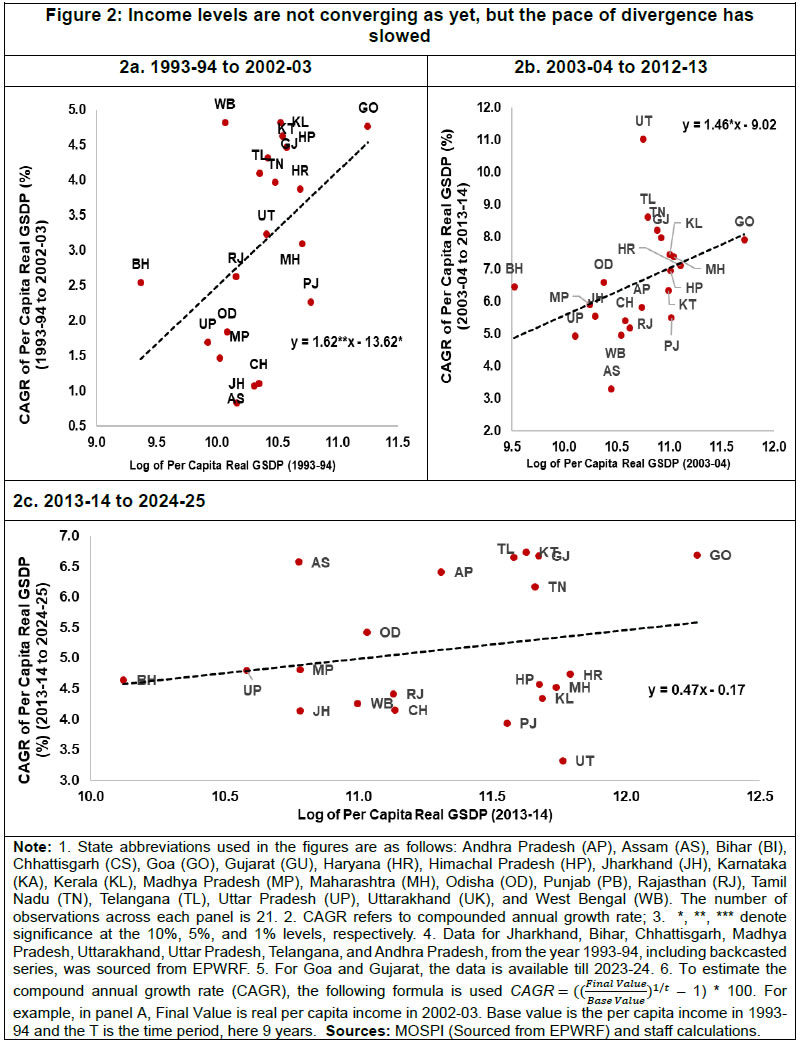
Figure 2: Income levels are not converging as yet, but the pace of divergence has slowed

Overall, the outperformance of the richer states in the past has been driven not only by higher income growth but also by slower population growth (Table 3). States above median income levels have both higher GSDP growth as well as slower population growth, resulting in a faster growth in per capita income.

Table 3: Average GDP growth and population growth across states
(per cent)
  Average annual real GSDP growth from 2003-04 to 2024-25 Average annual population growth from 2003-04 to 2024-25
Below median 6.8 1.4
Above median 7.7 1.1
Notes: 1. Due to data unavailability, 2023–24 values are used for 2024–25 for Sikkim, Goa, Gujarat, Mizoram, Nagaland, and Manipur. 2. Based on real per capita GSDP in 2003–04, states were classified as above or below the median. Above-median states include Andhra Pradesh, Arunachal Pradesh, Goa, Gujarat, Haryana, Himachal Pradesh, Karnataka, Kerala, Maharashtra, Punjab, Sikkim, Tamil Nadu, Telangana and Uttarakhand. Below-median states comprise Assam, Bihar, Chhattisgarh, Jharkhand, Madhya Pradesh, Manipur, Meghalaya, Mizoram, Nagaland, Odisha, Rajasthan, Tripura, Uttar Pradesh, and West Bengal. 3. The unweighted average is presented. 4. Data for Telangana from the year 2003-04, including backcasted series, was sourced from EPWRF.
Source: MoSPI (Sourced from EPWRF) and staff calculations. 

While income convergence across states remains gradual, several other welfare indicators, most notably per capita consumption expenditure, have been converging more decisively. In earlier periods, for example in case of rural consumption expenditure, consumption growth tended to be positively associated with initial consumption levels, meaning richer states showed higher levels of consumption growth (Figures 3a and 3b). However, in the recent period (2011–12 to 2023–24), this relationship has reversed: states with historically lower consumption levels are now recording faster consumption growth, a pattern confirmed by a statistically significant negative coefficient on initial consumption levels (Figure 3c). This marks a meaningful shift toward distributional convergence in living standards across Indian states.
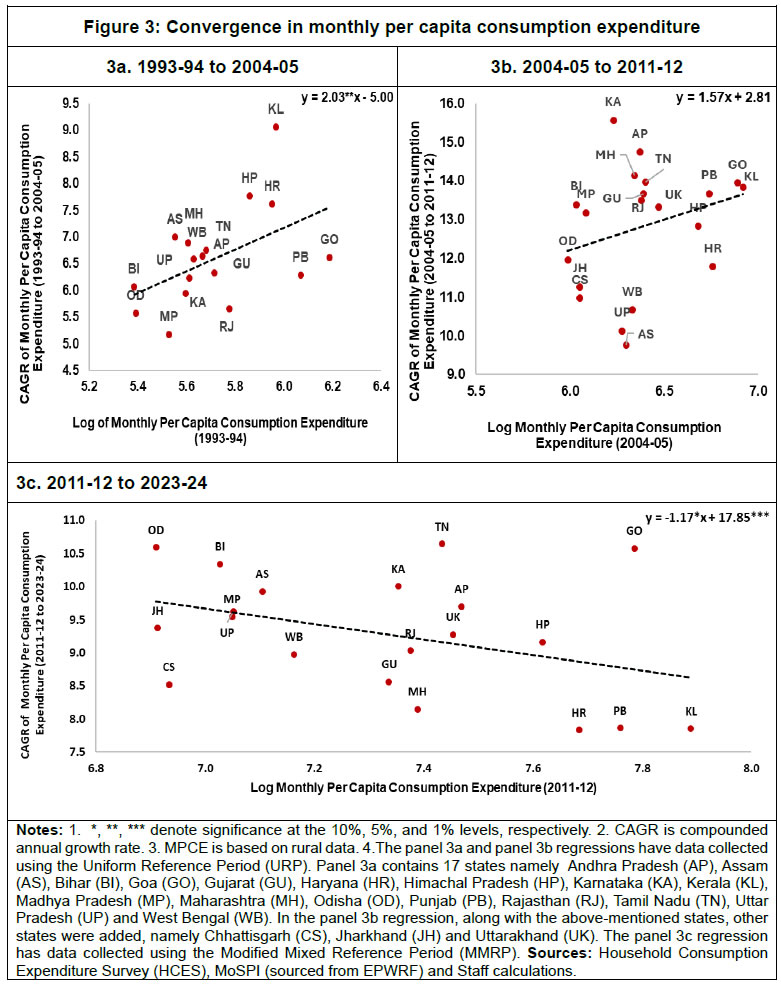
Figure 3: Convergence in monthly per capita consumption expenditure

Beyond consumption expenditure, multiple other dimensions of socio-economic wellbeing have been converging. Indicators spanning health, education, demography, physical infrastructure, access to electricity, safe drinking water, sanitation, clean cooking fuel, and financial inclusion have all trended toward greater parity across states, irrespective of their initial income levels. This broad-based convergence is likely driven by sustained policy efforts, saturation levels in the richer states where further gains are numerically not feasible or are inherently harder to achieve, and rising demand in the poorer states that have been experiencing increases in their income levels.

Figure 4 (4a to 4h) illustrate these trends across a selection of key outcome indicators. Women’s literacy rate (literacy rate per 100 women) has risen steadily over the decades while fertility rate (number of births per female) has declined sequentially (Figures 4a and 4b). Percentage of children who are not underweight has improved meaningfully, increasing from around 62 per cent in 2005-06 to close to 70 per cent in 2019-21 (Figure 4c). Infant survival rate, too, has also improved sequentially over the decades (Figure 4d).

Access to basic services has strengthened considerably across states with an increase in households’ access to electricity, sanitation facilities, improved drinking water facilities (Figures 4e, 4f and 4g). Financial deepening indicators have improved, e.g. per cent of women in India with access to a bank account has jumped to around 80 per cent during 2019-21 from 14 per cent in 2005-06 (Figure 4h). Convergence is also evident in other development indicators like sex ratio (proportion of females to males), vitamin A coverage among children, incidence of anaemia among women and children, stunting (low height for age) and wasting (low weight for height), access to clean fuel, women’s ownership of a phone and house/land; and household health insurance coverage.5 There is significant improvement in each of these indicators, with a narrowing of dispersion across states, reflecting a broad-based improvement in welfare outcomes as well as increasing convergence in living standards across states. What we have depicted here is only a subset of indicators. There are many other indicators where similar phenomenon is prominently visible.
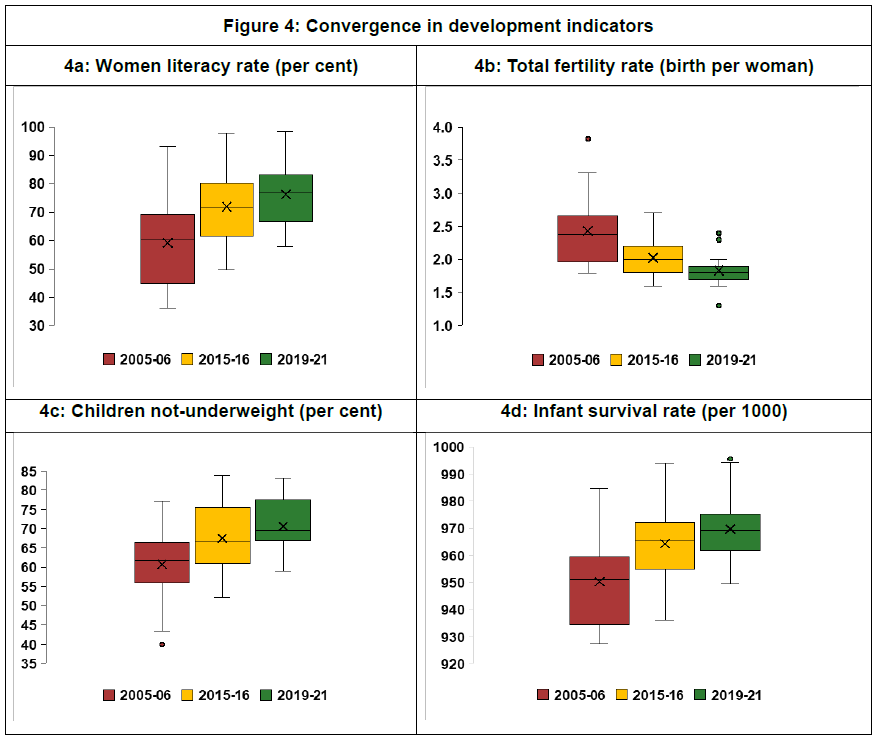
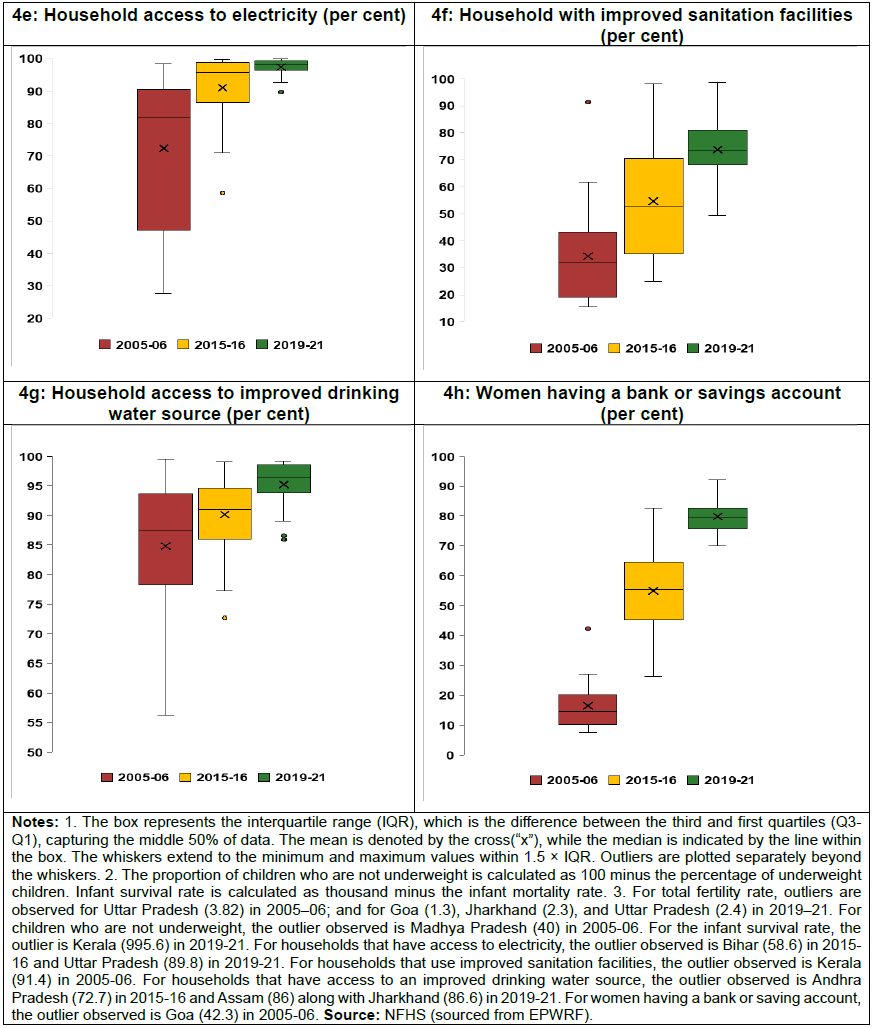
Figure 4: Convergence in development indicators

It is equally important to note that convergence has not been universal across all enablers of growth and development. Data limitations make it difficult to establish this with full empirical precision, but interstate convergence appears limited for some of the structural variables, including the share of agriculture in state economies, the pace of movement out of agriculture, productivity growth, capital formation, FDI inflows, and bank credit growth. As per the patterns in these indicators, some of the drivers or correlates of growth are still showing divergence across states.

If the past rates of growth are maintained, many states will become or come close to becoming “rich” by 2047 (as per the prevailing international thresholds of prosperity). As a simple thought experiment, we calculate each state's average annual growth rate in per capita GSDP (in USD terms and again in constant INR) over the past decade (2013-14 to 2024-25); and use these to project income levels in 2046-47 assuming that the same rate of growth would prevail over the next two decades.6

On this basis, India's per capita income is projected to grow by 4 times in USD terms by 2046-47. This expansion is expected to be broad-based: both above-median and below-median states are projected to record substantial gains, with below-median states contributing considerable momentum, reinforcing the inclusive nature of India's growth trajectory (Figure 5).
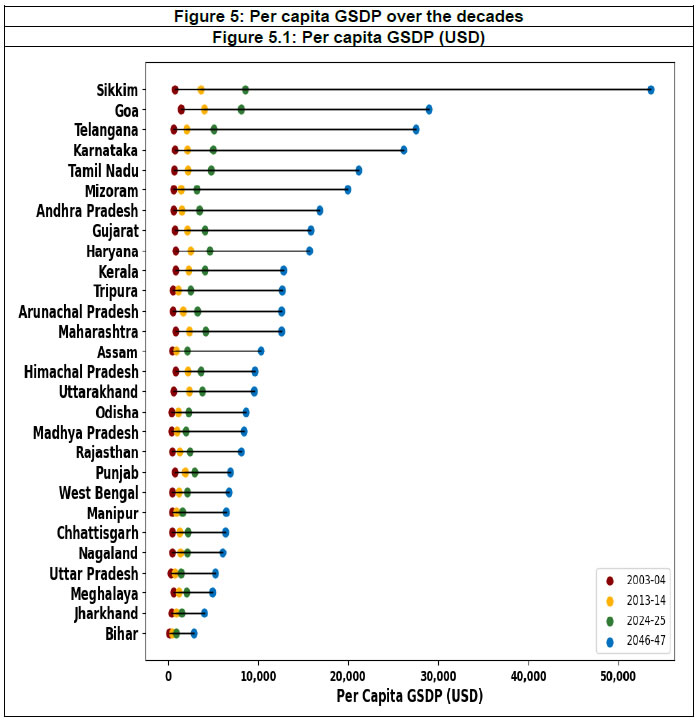
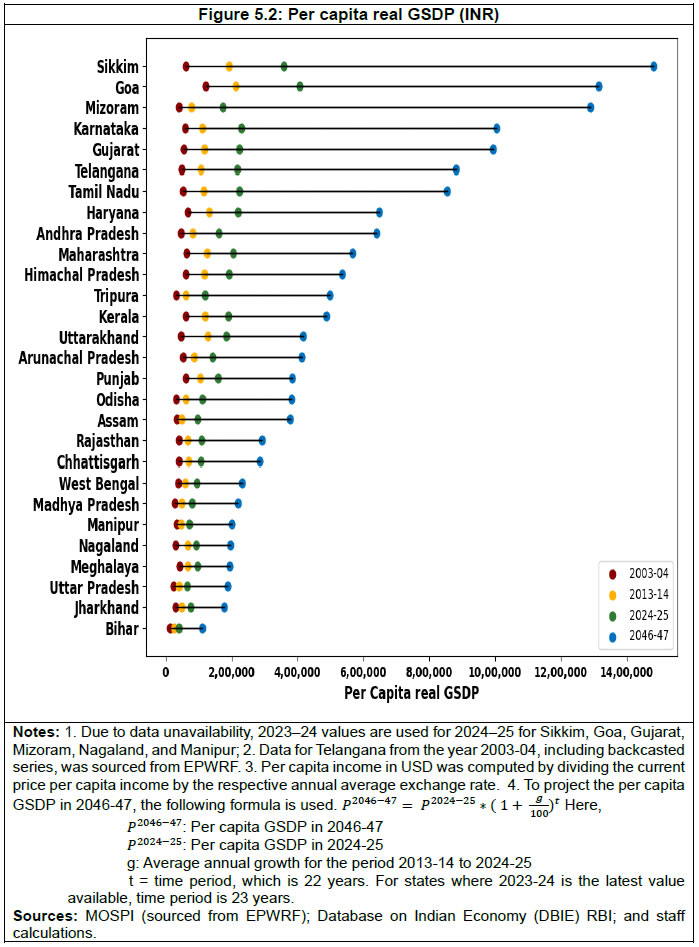
Figure 5: Per capita GSDP over the decades

Figure 5: Per capita GSDP over the decades

3. Inferences and implications of the above observations for our quest to attain the status of a much more prosperous economy by 2047

Sustaining or exceeding recent growth trajectories to reach an even higher level of prosperity by 2047 will require extending our growth frameworks at the subnational levels. Policy priorities will naturally differ across the spectrum of states. For above-median states, the focus ought to be on innovation and scale, planned urbanization, attracting global and domestic talent, expanding market share both domestically and internationally, and actively taking part in shaping national frameworks on trade, FDI, and finance. For below-median states, priorities could include unlocking productivity in agriculture and reimagining the sector; building skills; integrating more in the national and international labour markets, complementing more advanced states, particularly in labour-intensive activities, emulating proven best practices nationally and internationally while developing niche strengths, and strengthening fiscal capacity to support faster growth.

Accelerating growth would require a clearer acknowledgement and more effective use of the distinct policy roles available to the centre and the states respectively.

Many macro policies are formulated at the national level. These include monetary policy; financial sector regulation covering banks, non-bank financial institutions; development of equity and debt markets, and private equity; policies related to the external sector including for trade, exchange rate and capital account openness; and industrial and competition policy among others.

At the state level, the policy space and levers available are different, though no less consequential. State governments shape the ease of doing business environment; determine land and labour market conditions; quality and reach of education and health services; delivery of public services; and enhancing the quality of public finances including allocation of their budgets into recurrent and capital expenditure and between merit and non-merit activities. Strengthening all of these in a holistic framework would be important to accelerate the rate of growth of prosperity for each one of the states and thereby the national average.

Conclusion

Prosperity is both India’s ambition and its destiny. The central question is no longer whether India will prosper, but how quickly, how broadly, and how equitably that prosperity would be shared across its states and its people.

The pace of income divergence has weakened considerably with the growth gap between richer and poorer states narrowing over successive decades. Meanwhile convergence has been faster and more decisive across a wide set of welfare and development indicators: per capita consumption expenditure, literacy, nutrition, access to basic services, financial inclusion, and a range of health and gender outcomes. Lagging states are catching up, and the distribution of wellbeing across India is becoming more equal.

Looking ahead, if growth trajectories of the past two decades are sustained, the average state per capita income could approach high-income thresholds by 2046-47. Crucially, below-median states are projected to contribute substantially to this expansion, reinforcing the broad-based nature of India’s growth story. Realising and accelerating the path to this potential, however, would require moving towards state-specific growth strategies that are anchored in local strengths, structural realities, and their respective stages of development.

This calls for holistic assessments, richer dialogues, greater awareness, specific actions across states, alongside learning from each other, to fully leverage their existing strengths and building new comparative advantages.

References

Eichengreen, Barry, Gupta, Poonam, and Ahmed, Ayesha. (2024). India's debt dilemma, India Policy Forum, vol. 20(1), pages 1-62.

Government of India (2026). Fiscal developments - Anchoring stability through credible consolidation, Chapter 2, Economic Survey 2025-26, Ministry of Finance.

Gupta, Poonam (2025). Policy frameworks for economic resilience: The case of emerging markets and India (Address at the Business Standard BFSI Insight Summit, Mumbai).

Gupta, Poonam (2026). Perspectives on India’s growth: Last four decades to the present (14th Foundation Day Lecture, Centre for Development Studies).

International Monetary Fund (2025). World Economic Outlook, October.

Panagariya, Arvind (2010). India on the growth turnpike: No state left behind, Columbia Program on Indian Economic Policies Working Paper No. 2010-1.

Reserve Bank of India (2025). Financial Stability Report, December.

----

1 Speech by Dr. Poonam Gupta, Deputy Governor, Reserve Bank of India, delivered at the ‘Columbia Indian Economy Summit 2026’ at the Raj Centre on Indian Economic Policy at Columbia University on April 11, 2026. Inputs provided by Asish Thomas George, Somnath Sharma, and Shivam are gratefully acknowledged.

2 This section draws on Gupta (2026).

3 India’s public debt remains sustainable. As noted by Eichengreen, Gupta, and Ahmed (2024), its structure–predominantly domestic, long-term, and rupee-denominated–mitigates rollover and currency risks, and under most assumptions, the debt-to-GDP ratio is expected to decline gradually.

4 See Panagariya (2010) for evidence to this effect in the earlier decades.

5 Households with at least one family member covered by health insurance.

6 This simple approach is agnostic about the sources of growth or the respective trajectories of population growth rates, nominal GSDP growth rates; or that of the deflators.

Topics

Acts Income Tax
