

Just a moment...

Top
Help
×

By creating an account you can:

Logo TaxTMI
Call Us / Help / Feedback

Contact Us At :

E-mail: [email protected]

Call / WhatsApp at: +91 99117 96707

For more information, Check Contact Us

FAQs :

To know Frequently Asked Questions, Check FAQs

Most Asked Video Tutorials :

For more tutorials, Check Video Tutorials

Submit Feedback/Suggestion :

Email :
Please provide your email address so we can follow up on your feedback.
Category :
Description :
Min 15 characters 0/2000
Make Most of Text Search
  1. Checkout this video tutorial: How to search effectively on TaxTMI.
  2. Put words in double quotes for exact word search, eg: "income tax"
  3. Avoid noise words such as : 'and, of, the, a'
  4. Sort by Relevance to get the most relevant document.
  5. Press Enter to add multiple terms/multiple phrases, and then click on Search to Search.
  6. Text Search
  7. The system will try to fetch results that contains ALL your words.
  8. Once you add keywords, you'll see a new 'Search In' filter that makes your results even more precise.
  9. Text Search
Add to...
You have not created any category. Kindly create one to bookmark this item!
Create New Category
Hide
Title :
Description :
❮❮ Hide
Default View
Expand ❯❯
Close ✕
🔎 News - Adv. Search
TEXT SEARCH:

Press 'Enter' to add multiple search terms. Rules for Better Search

Search In:
Main Text + AI Text
  • Main Text
  • Main Text + AI Text
  • AI Text
Category: ?
Categorized by AI
---- All Categories ----
  • ---- All Categories ----
  • Income Tax
  • GST
  • Customs, DGFT & SEZ
  • FEMA & RBI
  • Corp. Laws, SEBI & IBC
  • PMLA, Black Money & ED
  • Budget
  • News and Press Release
  • PTI News
Month:
---- All Months ----
  • ---- All Months ----
  • January
  • February
  • March
  • April
  • May
  • June
  • July
  • August
  • September
  • October
  • November
  • December
Year:
---- All Years ----
  • ---- All Years ----
  • 2026
  • 2025
  • 2024
  • 2023
  • 2022
  • 2021
  • 2020
  • 2019
  • 2018
  • 2017
  • 2016
  • 2015
  • 2014
  • 2013
  • 2012
  • 2011
Sort By: ?
In Sort By 'Default', exact matches for text search are shown at the top, followed by the remaining results in their regular order.
Relevance Default Date
❯❯
Maximize Maximize Maximize
0 / 200
Expand Note
Add to Folder

No Folders have been created

+

Are you sure you want to delete "My most important" ?

NOTE:

News
Showing Results for :
Reset Filters
Results Found:
Show All Summaries Hide All Summaries
March 25, 2026
Show AI Summary
Scientific research donation reporting under FORM 15 requires annual electronic furnishing by the recipient institution.
FORM 15 is a prescribed annual statement to be furnished by a prescribed undertaking or institution in respect of sums received for scientific research during a tax year. It applies to eligible sums received for scientific, social science or statistical research, and not to charitable donations. The obligation lies with the recipient institution, the statement is to be furnished annually on or before 31st May, and it must include donor-wise particulars, approval details, and receipt information. Non-furnishing or incorrect furnishing may affect the donor's deduction and attract statutory consequences.
March 25, 2026
Show AI Summary
In-house R&D approval under Form 14 conditions tax deduction eligibility and links scientific recognition with compliance oversight.
Proposed Form 14 is the statutory approval order for an in-house research and development facility under section 45(2) of the Income-tax Act, 2025. Issued by the Department of Scientific and Industrial Research under Rule 29, it records the company's particulars, the facility details, DSIR recognition, and the grant of approval for the deduction framework. The approval is facility-specific, depends on continued DSIR recognition, and does not by itself establish deduction entitlement.
March 25, 2026
Show AI Summary
In-house research and development approval governs deduction claims subject to DSIR recognition and statutory compliance.
FORM 14 is the prescribed approval order issued by DSIR for a company's in-house research and development facility under section 45(2) read with Rule 29. It formally grants approval, records the scientific research to be undertaken, links the approval with DSIR recognition and the company's application, and supports a deduction claim subject to compliance with statutory conditions. The form is facility-specific, not a filing form, and may be withdrawn for non-compliance or withdrawal of DSIR recognition.
March 25, 2026
Show AI Summary
Scientific research and development audit reporting supports deduction claims through mandatory independent certification and account verification.
Proposed FORM 13 is the annual statutory audit report for an approved in-house scientific research and development facility under section 45(2) of the Income-tax Act, 2025. It is furnished by the company through an independent accountant and provides independent assurance on maintenance of separate accounts, correctness of capital and revenue expenditure, conformity with DSIR guidelines, and linkage with audited financial statements. FORM 13 is a mandatory supporting document for deduction claims and operates with FORM 11, FORM 14 and FORM 12 in the compliance framework.
March 25, 2026
Show AI Summary
In-house R&D audit report defines compliance for deduction claims through separate accounts and certified expenditure.
FORM 13 is the accountant's annual audit report for an approved in-house scientific research and development facility claimed under section 45(2). It certifies maintenance of separate accounts, correctness of expenditure, and conformity with DSIR guidelines, and must be attached with or furnished in support of the company's return of income. The form is a mandatory compliance requirement, but deduction remains subject to verification and assessment.
March 25, 2026
Show AI Summary
Research and development deduction reporting through Form 12 supports technical certification, expenditure verification, and compliance oversight.
Proposed Form 12 is the statutory reporting form through which the prescribed authority, acting under Rule 29, submits findings and certification regarding an approved in-house research and development facility to the jurisdictional Chief Commissioner of Income-tax. It operates within the compliance framework for deduction of expenditure on approved in-house R&D facilities under section 45(2) of the Income-tax Act, 2025 and records evaluation details, eligible expenditure and asset movements for verification of deduction claims.
March 25, 2026
Show AI Summary
Research and development deduction reporting through FORM 12 supports verification of eligible expenditure and compliance oversight.
FORM 12 is a statutory report furnished by the prescribed authority under section 45(2) read with Rule 29 for an approved in-house research and development facility. It is filed with the Chief Commissioner of Income-tax and records the facility's examination, recognition status, and eligible capital and revenue expenditure for verifying deduction claims. The form is not filed by the company and does not itself determine final allowability of deduction, which remains subject to departmental verification during processing or assessment.
March 25, 2026
Show AI Summary
In-house R&D facility approval framework under income tax law requires DSIR cooperation, audit compliance, and ongoing reporting.
FORM 11 sets out the statutory application and agreement framework for approval of in-house research and development facilities under section 45(2) of the Income-tax Act, 2025, read with Rule 29. It applies to eligible companies maintaining or proposing to maintain an in-house R&D facility and requires disclosure of company particulars, a DSIR agreement, and binding undertakings on audit, reporting, asset use, and compliance. Approval is facility-specific and remains subject to continued compliance, with DSIR serving as the prescribed authority for evaluation and oversight.
March 25, 2026
Show AI Summary
In-house research and development approval requires disclosure, audit, and ongoing compliance before deduction can be considered.
Form 11 is the prescribed application under Rule 29 for a company seeking to enter into an agreement with the Department of Scientific and Industrial Research for an in-house research and development facility under section 45(2). It requires disclosure of company particulars, R&D expenditure, facility details, research objectives, and undertakings on maintenance and audit of accounts. The form is generally a one-time approval application, but annual compliance continues through progress reports, audited accounts, and expenditure details. Approval does not itself secure deduction, which depends on statutory conditions, the agreement, and verification.
March 25, 2026
Show AI Summary
Statutory reporting for approved scientific research programmes under FORM 10 strengthens tax oversight and compliance monitoring.
Proposed FORM 10 is the statutory reporting form furnished by the prescribed authority to the Income-tax Department for approved scientific research programmes under section 45(3)(c) of the Income-tax Act, 2025. It functions as the oversight stage after FORM 7 and FORM 8, linking approvals with departmental monitoring of payments, utilisation and deduction claims. The form is furnished electronically to the jurisdictional Chief Commissioner within the prescribed time and records the essential particulars of the approved programme, while not conferring any entitlement on the sponsor or replacing the approval order.
March 25, 2026
Show AI Summary
Scientific research programme approval reporting under tax law supports compliance monitoring, deduction verification, and administrative recordkeeping.
FORM 10 is a statutory report furnished by the prescribed authority in relation to a scientific research programme approved under section 45(3)(c) read with Rule 30. It is a post-approval monitoring instrument, furnished to the Chief Commissioner of Income-tax having jurisdiction over the sponsor within the prescribed time. The form records approval details, programme particulars, conditions of approval, and supports administrative monitoring, compliance verification, and cross-checking of deduction claims. It does not alter or substitute the approval granted under FORM 8.
March 25, 2026
Show AI Summary
Scientific research deduction claims depend on programme-specific Form 9 receipts, approval linkage, and statutory compliance requirements.
Form 9 is a statutory receipt for payments made towards an approved scientific research programme and links the payment stage with the approval granted in Form 8 and the sponsor's deduction claim under section 45(3)(c) of the Income-tax Act, 2025. It is issued by the designated executing institution, records sponsor details, payment particulars, programme information, approved cost, tax years and cumulative receipts, and is programme-specific. The receipt supports but does not itself establish entitlement to deduction, which remains subject to statutory compliance and verification.
March 25, 2026
Show AI Summary
Form 9 receipt for approved scientific research payments supports deduction claims and compliance tracking.
Form 9 is the prescribed receipt for payments received towards an approved scientific research programme under section 45(3)(c) read with Rule 30. It is issued to the sponsor by the executing institution, records the payment against the approved programme in FORM 8, and supports the sponsor's deduction claim subject to compliance with the Act and Rules. The form is programme-specific, may be issued for each payment or tranche including advance payments, and captures the sponsor details, payment particulars, approved cost, approved tax years, and cumulative receipts. It is not filed with the tax department but retained as supporting evidence.
March 25, 2026
Show AI Summary
Scientific research programme approval under tax law requires Form 8, with defined scope, cost, compliance and monitoring conditions.
Form 8 is the statutory approval order for a scientific research programme under section 45(3)(c) of the Income-tax Act, 2025 and Rule 30. It is issued after examination of a sponsor's Form 7 application, records the approved scope, duration, cost, tax years and conditions of the programme, and is signed by the designated authority. The approval is programme-specific, cost-specific and time-bound, while post-approval compliance includes separate books, audit, reporting, asset restrictions and final completion reporting.
March 25, 2026
Show AI Summary
Energy Star ratings shape window air conditioner pricing by raising upfront cost while lowering electricity bills and maintenance.
Energy Star ratings for window air conditioners reflect Bureau of Energy Efficiency standards and indicate how much cooling an AC delivers per unit of electricity consumed. Higher-rated units generally cost more upfront because they use advanced components, smarter controls, and more efficient motors and compressors, but they can lower electricity bills, reduce maintenance, and extend service life. Choosing the right star rating depends on usage patterns, room size, budget, and local electricity tariffs, with energy efficiency affecting both purchase price and long-term ownership cost.
March 25, 2026
Show AI Summary
Scientific research programme approval in FORM 8 governs tax deduction eligibility, compliance conditions, and programme-specific approval limits.
Approval in FORM 8 records the prescribed authority's sanction of a scientific research programme under section 45(3)(c) read with Rule 30, following an application in FORM 7. It is a statutory approval order, not a filing by the sponsor, and identifies the programme, approved tax years, approved total cost, and any attached conditions. FORM 8 is programme-specific and cost-specific, and deduction depends on compliance with the Act, the Rules, and post-approval obligations.
March 25, 2026
Show AI Summary
Scientific research approval through Form 7 creates a programme-specific gateway for deduction eligibility and post-approval compliance.
Prior approval for a sponsored scientific research programme is obtained through Form 7, which is the programme-specific application for approval of expenditure on scientific research carried out through a National Laboratory, University, Indian Institute of Technology or specified person. The prescribed authority examines the programme's feasibility and scientific merit, communicates approval or rejection in Form 8, and the approval is cost-specific and only a pre-condition for deduction. Post-approval compliance requires separate accounts, periodic reporting, restricted use of funds and completion reports.
March 25, 2026
Show AI Summary
Prior approval for scientific research deduction requires FORM 7 before commencement, with strict programme-specific compliance conditions.
A sponsor seeking deduction for expenditure on a scientific research programme must furnish FORM 7 as the prescribed application for prior approval before commencement. Separate applications are required for each programme, and the form calls for details of the sponsor, the proposed research programme, its duration and estimated cost, and the executing institution. Approval may be granted only for eligible programmes carried out through specified institutions, while market research, sales promotion, routine quality control, commercial production, and routine data collection are excluded.
March 25, 2026
Show AI Summary
Rupee weakness amid foreign fund outflows, lower crude prices and expectations of RBI dollar support.
The rupee weakened in early trade against the US dollar amid sustained foreign fund outflows and market uncertainty linked to the West Asia crisis. The decline was partly cushioned by lower global crude oil prices, a weaker dollar and a firm opening in domestic equity markets. Market participants also expected RBI intervention through dollar sales, while exporters were hedging and importers buying on dips.
March 25, 2026
Show AI Summary
Audit report compliance for deduction claims under income-tax law requires Form 6, UDIN, and electronic verification.
Form 6 is the prescribed income-tax audit report for an assessee claiming deduction under Section 44 or Section 51 of the Income-tax Act, 2025, and must be certified by an accountant. It is to be filed electronically through the Income-tax e-Filing Portal, verified by Digital Signature Certificate, and furnished one month before the due date for the return of income for the relevant Tax Year. The form requires audit confirmation, supporting records, UDIN generation, and assessee verification for claims under both deduction provisions.

News

Back

All News

Showing Results for :
Reset Filters
No Records Found

News

Showing Results for : Reset Filters
News and Press Release

DPIIT Signs MoU with a Leading Fintech Platform to Strengthen India’s Startup Ecosystem

March 25, 2026

Contents
Summary
Note

Note

-

Bookmark

Print

Print

Startup Sahayak Platform Launched to Support Founders in Early Growth Stages

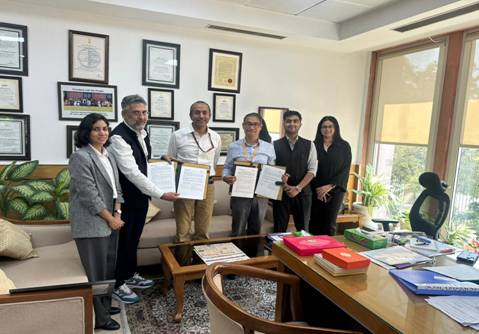
The Department for Promotion of Industry and Internal Trade (DPIIT), Ministry of Commerce and Industry, Government of India, has entered into a strategic partnership with a leading fintech platform, Razorpay, to strengthen India’s startup ecosystem. The collaboration has been formalised through the signing of a Memorandum of Understanding (MoU) aimed at supporting startups, innovators and entrepreneurs across the country.

The partnership seeks to empower startups with access to financial tools, founder enablement programmes and ecosystem support to accelerate growth. It is expected to assist early- and growth-stage startups in scaling efficiently by leveraging digital payment solutions, financial infrastructure and startup support initiatives. The collaboration will also provide incorporation support, mentorship and structured guidance to help startups formalise, build and expand their operations.

As part of this initiative, a dedicated platform, Startup Sahayak, has been launched to support early-stage founders. The platform aims to provide end-to-end assistance, including company incorporation, access to central and state government schemes and programmes, and guidance on funding opportunities, thereby enabling startups to access essential ecosystem support through a structured interface.

Joint Secretary, DPIIT, Shri Sanjiv, stated that the collaboration reflects the Department’s commitment to strengthening India’s startup ecosystem through partnerships with leading fintech players. He emphasised that facilitating seamless access to financial infrastructure and tools will play a crucial role in accelerating the growth of startups.

Chief Executive Officer and Co-founder, Razorpay, Shri Harshil Mathur, highlighted that the partnership is driven by a shared vision to enable innovation and make the entrepreneurial journey more accessible and scalable. He noted that with the increasing emergence of startups across the country, particularly in Tier 2 and Tier 3 cities, there is a growing need for robust infrastructure, mentorship and ecosystem support.

Under the collaboration, DPIIT and Razorpay will conduct regular knowledge sessions on topics such as applied artificial intelligence, marketing, product development and financial management through the Startup India Hub to ensure wider outreach. DPIIT-recognised startups will also be provided incorporation support with zero professional fees (excluding applicable government charges), along with access to credits and incentives across a range of financial and business tools.

Startups will also gain access to mentorship support, pitch deck reviews, application guidance and curated resources to support early-stage growth. Selected startups will be onboarded into curated founder communities to facilitate peer learning, networking and access to additional ecosystem support across domains such as engineering, hiring and marketing.

The collaboration will further explore the organisation of innovation challenges under the Bharat Startup Grand Challenge framework, with a focus on fintech-driven problem statements and digital innovation.

The MoU was signed by Deputy Secretary, DPIIT, Shri T. L. K. Singh and Chief Information Officer, Razorpay, Shri Arif Khan, in the presence of officials from both organisations.
 

Topics

Acts Income Tax
