Loading...

Top
Help
×

By creating an account you can:

Logo TaxTMI
Call Us / Help / Feedback

Contact Us At :

E-mail: [email protected]

Call / WhatsApp at: +91 99117 96707

For more information, Check Contact Us

FAQs :

To know Frequently Asked Questions, Check FAQs

Most Asked Video Tutorials :

For more tutorials, Check Video Tutorials

Submit Feedback/Suggestion :

Email :
Please provide your email address so we can follow up on your feedback.
Category :
Description :
Min 15 characters 0/2000
Make Most of Text Search
  1. Checkout this video tutorial: How to search effectively on TaxTMI.
  2. Put words in double quotes for exact word search, eg: "income tax"
  3. Avoid noise words such as : 'and, of, the, a'
  4. Sort by Relevance to get the most relevant document.
  5. Press Enter to add multiple terms/multiple phrases, and then click on Search to Search.
  6. Text Search
  7. The system will try to fetch results that contains ALL your words.
  8. Once you add keywords, you'll see a new 'Search In' filter that makes your results even more precise.
  9. Text Search
Add to...
You have not created any category. Kindly create one to bookmark this item!
Create New Category
Hide
Title :
Description :
❮❮ Hide
Default View
Expand ❯❯
Close ✕
🔎 News - Adv. Search
TEXT SEARCH:

Press 'Enter' to add multiple search terms. Rules for Better Search

Search In:
Main Text + AI Text
  • Main Text
  • Main Text + AI Text
  • AI Text
Category: ?
Categorized by AI
---- All Categories ----
  • ---- All Categories ----
  • Income Tax
  • GST
  • Customs, DGFT & SEZ
  • FEMA & RBI
  • Corp. Laws, SEBI & IBC
  • PMLA, Black Money & ED
  • Budget
  • News and Press Release
  • PTI News
Month:
---- All Months ----
  • ---- All Months ----
  • January
  • February
  • March
  • April
  • May
  • June
  • July
  • August
  • September
  • October
  • November
  • December
Year:
---- All Years ----
  • ---- All Years ----
  • 2026
  • 2025
  • 2024
  • 2023
  • 2022
  • 2021
  • 2020
  • 2019
  • 2018
  • 2017
  • 2016
  • 2015
  • 2014
  • 2013
  • 2012
  • 2011
Sort By: ?
In Sort By 'Default', exact matches for text search are shown at the top, followed by the remaining results in their regular order.
Relevance Default Date
    Jaishankar reaffirms India's steadfast ties with Russia; calls for removal of non-tariff barriers for USD 100 bn trade goal
    Government has introduced a Model Context Protocol server to facilitate linking of Artificial Intelligence tools with Official Statistical databases
    Ministry of Statistics and Programme Implementation updates and releases the Sustainable Development Goals -National Indicator Framework Progress Repo...
    Ministry of Statistics & Programme Implementation has strengthened the measurement framework of the Consumer Price Index (CPI) through a comprehensive...
    As of January 2026, PAIMANA captures status of 1,702 nationwide projects being implemented by 17 Central Ministries/Departments
    RBI and NABARD’s Key Safeguards Strengthen Governance of Cooperative Banks
    PM Modi says will overcome West Asia crisis like Covid; stresses on dialogue, diplomacy to end conflict
    Unhappy over their 'reluctance', SC asks CBI, ED to conduct fair probe against ADAG firms
    Rupee slumps 50 paise to settle at fresh record low of 94.03 against US dollar
    HC division bench stays single bench order disqualifying SNDP Yogam office-bearers
    Lok Sabha refers Corporate Laws (Amendment) Bill to JPC
    AU Small Finance Bank Strengthens Its Digital Banking with an Enhanced Savings Ecosystem
    Rupee nears 94/USD, down 41 paise to record low of 93.94 in early trade
    Government modifies Mutual Credit Guarantee Scheme to Support MSME Manufacturers and Exporters in line with Budget 2025-26
    Government introduces Credit Guarantee Scheme for Microfinance Institutions-2.0 (CGSMFI-2.0)
    Himachal CM Sukhu presents Rs 54,928-cr budget for FY27 with thrust on rural economy
    Himachal CM Sukhu presents Rs 54,928-cr budget for FY27 with thrust on rural economy
    IBL Finance Ltd has secured a Credit Rating from Acuité Ratings and Research Limited
    How Tripo Balances Speed and Quality in an AI 3D Model Generator
    275 former judges, officials slam US international religious freedom report
❯❯
Maximize Maximize Maximize
0 / 200
Expand Note
Add to Folder

No Folders have been created

+

Are you sure you want to delete "My most important" ?

NOTE:

News
Showing Results for :
Reset Filters
Results Found:
Show All Summaries Hide All Summaries
March 23, 2026
Show AI Summary
Non-tariff barriers and trade liberalisation drive India-Russia efforts to expand bilateral trade and economic partnership.
India and Russia are seeking to deepen their strategic and economic partnership by addressing non-tariff barriers and regulatory impediments, with the stated objective of expanding annual bilateral trade to USD 100 billion by 2030. The stated measures include continued efforts to conclude the India-Eurasian Economic Union free trade agreement, use of the skilled Indian workforce, and coordination within multilateral forums such as BRICS, SCO, G20 and the UN.
March 23, 2026
Show AI Summary
Artificial Intelligence data integration advances with a Model Context Protocol server linking verified official statistical databases.
Government has introduced a Model Context Protocol (MCP) server to link Artificial Intelligence tools and platforms with official statistical databases through the National Statistical Portal e-Sankhyiki. The server enables access to verified Government data and has been expanded from a beta release to cover 21 statistical products, including major datasets such as labour force, price index, industrial production, and national accounts series.
March 23, 2026
Show AI Summary
Sustainable Development Goals reporting framework tracks poverty, gender equality, labour and social protection progress through annual national indicators.
National statistics reporting for the Sustainable Development Goals is updated through the annual release of the SDG-National Indicator Framework Progress Report on National Statistics Day. The framework comprises 284 national indicators in the 2025 report, with the Ministry of Statistics and Programme Implementation responsible for the national indicator framework and States/Union Territories responsible for State Indicator Frameworks. The report draws on data from line ministries and departments, including Periodic Labour Force Survey data, and records progress under poverty, gender equality, labour, wage, employment, and social security indicators.
March 23, 2026
Show AI Summary
Consumer Price Index base revision strengthens measurement through updated baskets, weights, and e-commerce price collection methods.
Consumer Price Index measurement has been strengthened through a comprehensive base revision from 2012=100 to 2024=100, using Household Consumption Expenditure Survey 2023-24 data to update the CPI item basket and weights. The revision expands coverage, introduces methodological refinements, adopts an international classification system, and incorporates administrative and e-commerce data to make the index more robust and representative. Price collection from e-commerce and online platforms is carried out weekly, and monthly average prices from weekly transaction observations are used in CPI compilation.
March 23, 2026
Show AI Summary
Infrastructure project monitoring through PAIMANA and PMG strengthens data-driven oversight, escalation, and delay resolution.
Project monitoring of ongoing Central Sector infrastructure projects costing Rs. 150 crore and above is being undertaken through PAIMANA, a web-based system of the Ministry of Statistics and Programme Implementation. The portal captures project status, expenditure details, and delay tracking for nationwide infrastructure projects, and is integrated with the Integrated Project Monitoring Portal under the principle of "One Data One Entry" to enable automatic data fetching, reduce manual entry, and provide stakeholders with customised dashboards and direct access to project progress information.
March 23, 2026
Show AI Summary
Cooperative bank governance reforms strengthen transparency, depositor protection, fraud control, and supervisory accountability across the sector.
Strengthening governance of cooperative banks through amendments to the Banking Regulation Act and the Multi-State Cooperative Societies Act, 2002 is described as a set of supervisory safeguards intended to improve transparency, accountability and depositor protection. The measures include a maximum of 10 consecutive years for the term of board directors of cooperative banks, excluding the chairperson and whole-time directors, and the creation of a Cooperative Ombudsman to handle complaints and appeals by members concerning deposits, equitable benefits from the society's functioning, and other matters affecting individual rights. The establishment of a Cooperative Election Authority is also identified as a governance reform aimed at ensuring free and fair elections in multi-state cooperative societies.
March 23, 2026
Show AI Summary
Dialogue and diplomacy guide India's response to the West Asia conflict, alongside security preparedness and energy resilience.
India's response to the West Asia conflict is framed around dialogue, diplomacy, de-escalation and protection of civilian life, with emphasis on avoiding attacks on civilians, energy infrastructure and transport infrastructure, and on opposing obstruction of international waterways. The position stresses that commercial shipping routes must remain safe, that attacks on ships and disruption of the Strait of Hormuz are unacceptable, and that sustained diplomatic engagement with regional leaders is being used to seek a peaceful resolution and secure the passage of Indian vessels. The crisis is also presented as a matter of national preparedness and internal security.
March 23, 2026
Show AI Summary
Banking and corporate fraud investigation faces court push for a fair, transparent, time-bound probe into alleged irregularities.
The Supreme Court directed the CBI and the ED to conduct a fair, dispassionate, transparent, and time-bound investigation into alleged banking and corporate fraud involving Anil Dhirubhai Ambani Group firms. It also required all concerned financial institutions to cooperate fully and allowed the agencies to approach the court if any government body failed to extend cooperation. The proceedings concerned allegations of loan fraud, diversion of public funds, fabricated financial statements, forged bank guarantees, and other irregularities across multiple group entities.
March 23, 2026
Show AI Summary
Rupee weakness deepens as crude prices, dollar strength and foreign outflows drive the currency to a record low.
The rupee weakened sharply against the US dollar, falling to a fresh record closing low after breaching the 94-per-dollar level for the first time. The decline was linked to rising global crude prices, sustained foreign fund outflows, a stronger US dollar, and a steep fall in domestic equity markets, with the local currency remaining under pressure throughout the trading session. Market participants noted that worsening global sentiment and geopolitical tensions were weighing on the rupee, while periodic intervention by the Reserve Bank was expected to provide support at lower levels.
March 23, 2026
Show AI Summary
Director disqualification under the Companies Act stayed amid dispute over writ jurisdiction and NCLT control.
A division bench of the Kerala High Court stayed a single bench order that had disqualified the office-bearers and Board of Directors of SNDP Yogam for alleged non-compliance with statutory requirements under the Companies Act, 2013. The controversy concerned writ petitions alleging irregularities in the organisation's functioning and the contention that issues of directors' disqualification and company management fall within the jurisdiction of the National Company Law Tribunal. The bench had earlier directed maintenance of status quo pending a fresh list of directors before later issuing the stay.
March 23, 2026
Show AI Summary
Corporate compliance reform bill aims to decriminalise minor offences, rationalise penalties, and ease business regulation.
The Corporate Laws (Amendment) Bill, 2026 proposes amendments to the Limited Liability Partnership Act, 2008 and the Companies Act to facilitate ease of doing business, ease compliance burdens, rationalise penalties, decriminalise certain minor corporate offences, and convert several procedural lapses from criminal liability to monetary penalties. It also seeks to streamline regulatory processes, reduce litigation, and improve the corporate compliance framework for companies and LLPs, including one person companies, small companies, startups, and producer companies. The Bill was referred to a joint parliamentary committee for detailed examination and recommendations.
March 23, 2026
Show AI Summary
Digital-first savings banking gains focus as AU Small Finance Bank expands a seamless, secure customer journey.
AU Small Finance Bank is strengthening its digital-first savings banking model by refining the customer journey across its Digital Savings Account portfolio. The enhanced ecosystem is designed to provide a seamless, intuitive, secure and mobile-first experience across multiple account segments, with simplified onboarding and clearer day-to-day account management. The approach also emphasizes guided decision-making, transparent communication on savings account essentials, faster access to core services through its mobile app, and an operating framework based on simplicity, accessibility and reliability.
March 23, 2026
Show AI Summary
Rupee depreciation intensifies as crude prices, dollar strength and foreign outflows keep pressure on the currency.
The rupee weakened sharply in early trade and touched a record low against the US dollar amid elevated global crude prices, a strong dollar, foreign fund outflows and weakness in domestic equity markets. Market participants linked the depreciation to heightened dollar demand from oil imports and continued selling by foreign institutional investors. The Reserve Bank of India was reported to be active in the market at various levels, with expectations of possible intervention to curb further depreciation, while the dollar index remained firm and Brent crude continued to trade at elevated levels.
March 23, 2026
Show AI Summary
Mutual credit guarantee for MSMEs expands eligibility, eases upfront costs, and adds stronger support for exporter units.
Mutual Credit Guarantee Scheme for MSMEs has been modified to widen eligibility, reduce upfront burden, and extend guarantee support for credit used to purchase plant, machinery, and equipment. The revised terms include service sector MSMEs, a reduced machinery cost threshold, a 10-year guarantee tenure, and refundable upfront contribution requirements. Special provisions for exporter MSMEs prescribe eligibility conditions, a capped guaranteed loan amount, higher guarantee coverage, and a concessional guarantee fee structure.
March 23, 2026
Show AI Summary
Credit guarantee support for microfinance lending boosts financing to NBFC-MFIs, with capped rates and differentiated coverage.
Credit guarantee support is introduced for lending to NBFC-MFIs and MFIs through the National Credit Guarantee Trustee Company Limited to strengthen financing for on-lending to small borrowers within the Reserve Bank of India's microfinance definition. The scheme extends differentiated guarantee cover of 80% for small, 75% for medium and 70% for large NBFC-MFIs or MFIs, with a guarantee fee of 0.50% per annum and lending caps linked to EBLR or MCLR plus 2% per annum. The scheme remains valid until 30 June 2026 or until loans aggregating to Rs. 20,000 crore are guaranteed.
March 22, 2026
Show AI Summary
Rural economy support and targeted welfare measures shape the Himachal Budget, with higher support prices and fiscal restraint steps.
The Budget for 2026-27 emphasised rural economy support, welfare-linked subsidies, and sector-specific price interventions. It proposed free electricity for identified poor families, monthly assistance for eligible women, housing support for poor households, higher support prices for crops, milk and fish, and reduced royalty on fish caught from reservoirs. The Budget also provided for forest-based livelihood measures, plantation-linked employment, eco-tourism development, and targeted support for shepherd communities, alongside temporary salary deferral measures to address fiscal stress.
March 21, 2026
Show AI Summary
Discontinuation of Revenue Deficit Grant increases fiscal pressure; state enacts salary deferments and targeted welfare measures in budget.
The budget responds to discontinuation of the Revenue Deficit Grant by reducing overall expenditure and imposing temporary salary deferments for listed officeholders and senior officials for six months, while allocating funds to complete pending works. It shifts subsidies to targeted welfare-free electricity for identified low income households, monthly cash transfers to eligible women, housing for selected poor families-and specifies sectoral measures including increased procurement prices for milk, a minimum support price for fish with reduced royalty, formation of a Kisan Aayog and a Women's Tourism Fund, and allocations for eco tourism and forest plantation.
March 21, 2026
Show AI Summary
Credit rating upgrade strengthens NBFC's access to capital and supports strategic funding and growth plans.
IBL Finance Limited, an RBI registered fintech NBFC, has been assigned a long term investment grade rating of BBB with a Stable outlook. The rating is supported by governance, risk management and compliance frameworks, a healthy net worth, comfortable gearing and an elevated CRAR, diversified debt resources and majority promoter commitment. The company's portfolio is largely secured lending to financial institutions with improving gross and net NPA ratios and rapid AUM and net worth growth; forward looking statements are qualified by standard risk disclaimers.
March 21, 2026
Show AI Summary
Balancing speed and production-quality in AI 3D model generation enables rapid conversion of concepts into usable assets.
Tripo Studio unifies rapid text-to-3D and image-to-3D generation with production-grade post-processing-automatic segmentation, automated retopology balancing efficiency and detail, AI PBR texturing with selective refinement, and AI auto-rigging-while offering Smart Mesh for clean low-poly topology and H3.1 for high-density fidelity, and a DCC Bridge for direct export to major 3D tools, enabling faster conversion of concepts into production-ready assets.
March 21, 2026
Show AI Summary
Restrictions recommendation on a socio cultural organization challenged as biased, prompting calls for contributor background checks.
A coalition of 275 retired judges, civil servants and armed forces officers criticised a USCIRF report recommending asset freezes and movement restrictions against the RSS as biased and "highly motivated," urged vetting of report contributors, and stressed that critiques must be grounded in verifiable evidence and contextual understanding rather than broad generalisations.

News

Back

All News

Showing Results for :
Reset Filters
No Records Found

News

Showing Results for : Reset Filters
News and Press Release

Annual Survey of Unincorporated Sector Enterprises (ASUSE) Results for 2025 (Survey period: January 2025 to December 2025)

March 24, 2026

Contents
Summary
Note

Note

-

Bookmark

Print

Print

Snapshot:

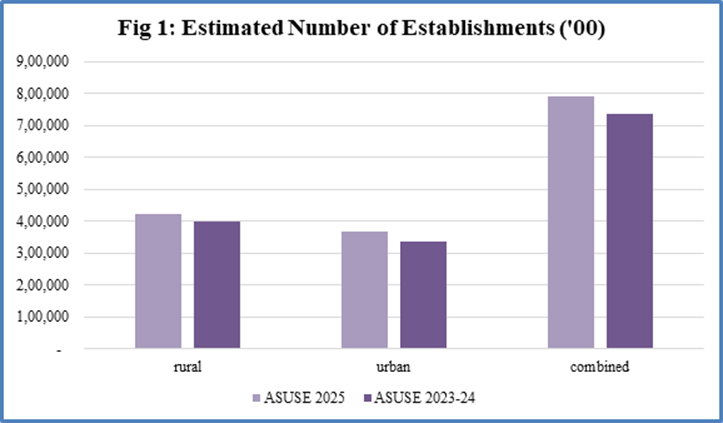
  • The estimated number of establishments increased from 7.34 crore in ASUSE 2023–24 (October 2023–September 2024) to 7.92 crore during in ASUSE 2025 (January–December 2025), reflecting a growth of about 7.97 per cent during the period.
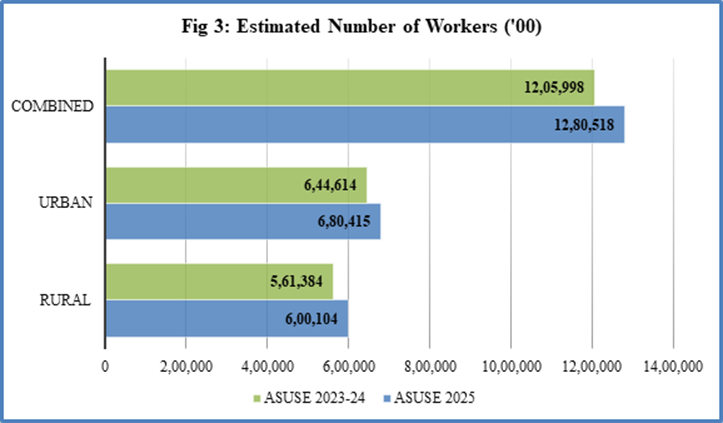
  • Employment in the sector grew by 6.18%, with more than 74.52 lakh new jobs being added during the period.
  • Gross value Added (GVA) also grew by 10.87% (at current price) during this period over ASUSE 2023-24. This growth has been primarily driven by 16.77% growth in trade sector followed by 8.52% growth in manufacturing and 7.36% growth in other services sectors.
  •  The emolument per hired worker increased by 3.88% in 2025 compared to the previous ASUSE 2023-24, signalling improvements in wage levels.
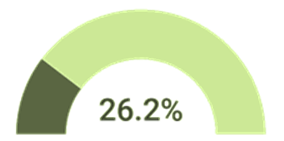
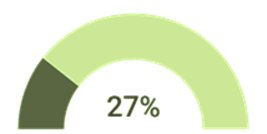
  • Women-owned proprietary establishments remained substantial at 27%, up from 26.2% in the previous round (ASUSE 2023-24).
  • The share of establishments using internet increased significantly from 26.7% in ASUSE 2023–24 to 39.4% in ASUSE 2025, highlighting the growing digital integration of the sector.

The Ministry of Statistics and Programme Implementation (MoSPI) has released the results of Annual Survey of Unincorporated Sector Enterprises (ASUSE) for 2025 for the reference period January, 2025 - December, 2025 referred to as ASUSE 2025 in this press note. A brief overview of the survey in terms of coverage, sampling strategy, data collection mechanism, etc., is provided in the Endnote.

The unincorporated non-agricultural sector is an important pillar of the Indian economy, contributing significantly to employment generation and Gross Domestic Product (GDP). The sector sustains livelihoods for millions of people and supports the production and distribution of goods and services across the country. By complementing the activities of the incorporated sector and strengthening domestic value chains, it plays a crucial role in the overall socio-economic development of the country.

The Annual Survey of Unincorporated Sector Enterprises (ASUSE) is conducted with the primary objective of measuring the economic and operational characteristics of unincorporated non-agricultural establishments engaged in manufacturing, trade and other services sectors (excluding construction). The survey collects information on key economic indicators such as number of workers, Gross Value Added (GVA), emoluments paid, fixed assets owned and outstanding loans, along with operational characteristics such as type of ownership, nature of operation, registration status and use of Information and Communication Technology (ICT).

The survey data serves as an important input for policymaking, supporting compilation of National Accounts Statistics, and meets the information needs of Ministries such as Micro, Small and Medium Enterprises (MSME), Textiles, etc., while enabling stakeholders to make informed decisions.

Key highlights from the ASUSE 2025 results:

The ASUSE 2025 results highlight a steady expansion of the unincorporated non-agricultural sector reflected in growth in establishments, employment, and productivity, indicating the sector's resilience and sustained momentum.

Growth in Establishments, Gross Value Added and Productivity Metrics:

The total number of establishments in the sector increased substantially from 7.34 crore in ASUSE 2023-24 (Oct 23 – Sept 24) to 7.92 crore in ASUSE 2025 (Jan 25 -Dec 25), representing a healthy 7.97% growth. Among the broad sectors covered, the number of establishments in the "Other Services’ sector recorded a robust growth of 10.29% followed by a 6.48% increase witnessed by the Manufacturing sector and 6.18% by Trade sector. This increase reflects broad-based expansion across sectors and highlights the steady growth of the unincorporated non-agricultural sector.
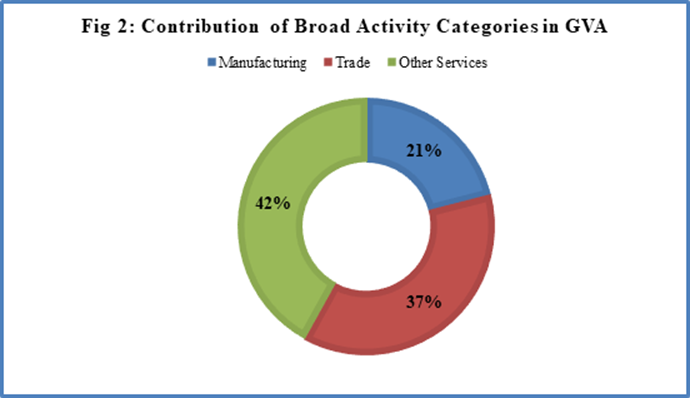
During the same period, the Gross Value Added (GVA) which is a key indicator of economic performance rose by 10.87% driven by 16.77% growth in trade sector followed by 8.52% growth in manufacturing and 7.36% growth in other services sectors. Among the broad sectors, however, other services sector had the highest share in GVA (42%) followed by trade (37%) and manufacturing (21%).
Gross Value Added (GVA) per worker which is a measure of labour productivity of the sector, rose to Rs. 1,56,539 in 2025 from. Rs. 1,49,742 in 2023-24 in current prices showing a 4.54% increase. During the same period, the Gross Value Added (GVA) per establishment also increased from Rs. 2,45,687 to  Rs. 2,52,699.

Strong Labour Market Performance

The sector employed about 12.81 crore workers during January-December 2025, adding more than 74.52 lakh jobs from 2023-24 (Oct 23 – Sept 24) reflecting robust labour market expansion. Among the broad activities, "Other Services" sector showed the highest growth of 7.40% generating about 35 lakh new employment.
Women-Led Enterprises Rise as Worker Earnings Improve

The percentage of female-owned proprietary establishments increased marginally from 26.2 per cent in 2023–24 to 27.0 per cent in ASUSE 2025 pointing to an encouraging trend in women-led enterprises.

The emolument per hired worker increased by 3.88% in 2025 compared to the previous ASUSE 2023-24, signalling improvements in wage levels. The highest increase in this metric was observed in trade sector which recorded a growth of about 8.5%.

Better Digital Penetration

Percentage of establishments using internet has also grown significantly from 26.7% in 2023-24 to 39.4% in ASUSE 2025. This substantial growth reflects a strong trend toward digital adoption among establishments, highlighting the increasing reliance on the internet for business operations.

Fig 4: Key Operational Indicators

Percentage of Establishments using Internet

ASUSE 2023-24

ASUSE 2025

Percentage of Female Owned Proprietary Establishments

ASUSE 2023-24

ASUSE 2025

Annual estimates of key indicators (value figures in current price), of ASUSE 2022-23, ASUSE 2023-24 and ASUSE 2025 are given in Table 1 below. The annual estimates for ASUSE 2025 for the broad activity categories are provided in the factsheet which is available in the website of the Ministry (https://www.mospi.gov.in). Further, interactive tables and visualizations on ASUSE results may be accessed on the Data Catalogue section of https://esankhyiki.mospi.gov.in/. Report of ASUSE 2025 as well as unit level data will be released in April, 2026 with detailed insights from the survey.

Table 1: Key indicators of ASUSE 2022-23, ASUSE 2023-24 and ASUSE 2025

all-India

Indicator

ASUSE 2022-23

(October,2022 – September, 2023)

ASUSE 2023-24

(October,2023 – September, 2024)

ASUSE 2025 (January, 2025 – December, 2025)

(1)

(2)

(3)

(4)

Number of Establishments (in ’00)

6,50,484

7,33,995

7,92,465

Number of Workers (in ’00)

10,96,260

12,05,998

12,80,518

Gross Value Added (Rs. Crore)*

15,42,409

17,97,278

19,92,577

GVA per establishment*(Rs.)

2,38,168

2,45,687

       2,52,699

GVA per worker* (Rs.)

1,41,769

1,49,742

       1,56,539

Emolument per Hired Worker (Rs.)

         1,24,842

1,41,071

       1,46,550

           *pertaining to market establishments

Endnote: A brief about the coverage, sampling scheme, sample size and data collection mechanism in the Annual Survey of Unincorporated Sector Enterprises (ASUSE):

A. Coverage of ASUSE:

A.1. Geographically, ASUSE covers the rural and urban areas of whole of India (except the villages in Andaman and Nicobar Islands, which are difficult to access).

A.2. Sector-wise, this survey captures unincorporated non-agricultural establishments belonging to three sectors viz., Manufacturing, Trade and Other Services.

A.3. Ownership-wise, unincorporated non-agricultural establishments pertaining to proprietorship, partnership (excluding Limited Liability Partnerships), co-operatives, societies/trusts etc. have been covered in ASUSE.

B. Sampling Scheme:

The survey has been conducted following a multi-stage stratified sampling scheme, where first stage units (FSUs) are census villages in rural area (except for rural Kerala, where Panchayat wards have been taken as FSUs) and UFS (Urban Frame Survey) blocks in urban areas.  The ultimate stage units (USUs) are establishments for both the sectors. In the case of large FSUs, one intermediate stage of sampling has been done in the form of hamlet groups in rural and sub-blocks in urban. 

The sampling design of ASUSE 2025 has been revised to enable quarterly selection of sample units. To facilitate this shift, the sample size has been increased by approximately 1.5 times over the previous survey. This improvement also makes it possible to produce quarterly estimates in addition to annual results. By adopting districts within a state as the basic strata, the design also allows participating states to generate annual estimates at the district level.

C. Sample Size:

In ASUSE 2025, data were collected from a total of 6,70,289 establishments (2,94,144 in rural and 3,76,145 in urban) pertaining to 24,153 surveyed FSUs (10,219 in rural and 13,934 in urban).

D. Data Collection Mechanism:

ASUSE 2025 has been conducted based on area frame and establishments have been listed in the selected FSUs of both rural and urban sector. Mostly, data were collected from the selected establishments through oral enquiry pertaining to the ‘monthly’ reference period barring a few big establishments, which had provided annual data from their audited Books of Accounts. The data for the survey were collected in tablet using Computer Assisted Personal Interviewing (CAPI).

E. Know your Survey- ASUSE:

The Factsheet of ASUSE 2025 (January, 2025 – December, 2025) is available on the website of the Ministry (https://www.mospi.gov.in)

Scan QR code to access MoSPI Publications/ Reports


For more detailed understanding of the objectives, coverage, concepts, methodology and data quality practices of ASUSE in a simple, transparent, user-friendly language, one may refer to the Know Your Survey: A User Guide to the Annual Survey of Unincorporated Sector Enterprises (ASUSE) published by NSO, MOSPI and available on the website of the ministry (https://www.mospi.gov.in).

****

Topics

Acts Income Tax