 TaxTMI
 Login
 TaxTMI
Login
Loading...
150 credits · 30 days
Already used our earlier 20-Credit Demo?
You are still eligible for this new 150-Credit Demo.
Press 'Enter' to add multiple search terms. Rules for Better Search

Press 'Enter' after typing page number.
Press 'Enter' after typing page number.


No Folders have been created
Are you sure you want to delete "My most important" ?
NOTE:
Press 'Enter' after typing page number.
Press 'Enter' after typing page number.

All News
Press 'Enter' after typing page number.
All News

Note

Bookmark

Share


Report evaluates effectiveness of Government’s incentive framework in promoting digital payments, strengthening payment infrastructure, and advancing financial inclusion
Digital transactions increase nearly 11 times, with UPI’s share in total digital transactions surging to ~80%, between 2021 to 2025
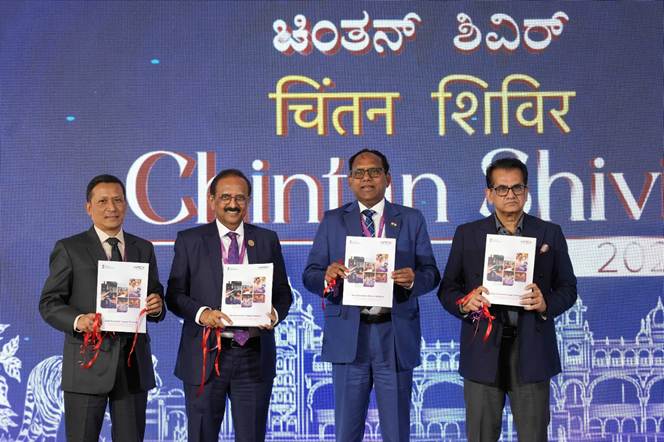
The Department of Financial Services (DFS), Ministry of Finance, released a report titled “Socio-Economic Impact Analysis of the Incentive Scheme for Promotion of RuPay Debit Card and low-value BHIM-UPI (Person-to-Merchant) transactions” during the Chintan Shivir held on 13th–14th February 2026.
The study has been carried out by an independent third-party research agency in consultation with the National Payments Corporation of India (NPCI). The analysis evaluates the effectiveness of the Government’s incentive framework in promoting digital payments, strengthening payment infrastructure, and advancing financial inclusion across the country.
The Incentive Scheme was conceptualised as part of the Government of India’s broader policy objective of accelerating universal adoption of digital payments, reducing dependence on cash, and formalising routine economic activity. Introduced in FY 2021–22 and continued through FY 2024–25, the scheme provided structured budgetary support to acquiring banks and ecosystem participants to ensure that digital payments remained affordable, accessible, and sustainable for citizens and merchants alike.
The socio-economic impact analysis is based on an extensive primary survey covering 10,378 respondents across 15 States, including 6,167 users, 2,199 merchants, and 2,012 service providers, representing the key stakeholders of India’s digital payments ecosystem along with in-depth secondary research. The study adopted a comprehensive sampling framework spanning five geographical zones- North, South, East, West, and North-East- covering urban and semi-urban locations. Fieldwork was conducted between 22nd July and 25th August 2025 using face-to-face Computer Assisted Personal Interviews (CAPI) to ensure accuracy, reliability, and high-quality data collection.
Key Findings
The evaluation indicates a significant and sustained increase in the adoption of digital payments across diverse socio-economic segments. Among surveyed users UPI has emerged as the most preferred mode of transaction, accounting for 57%, surpassing cash transactions at 38%, primarily due to ease of use and instant fund transfer capability.
Digital payments now dominate everyday transaction behaviour, with 65% of UPI users reporting multiple digital transactions per day. Preference for UPI is particularly pronounced among younger users in the 18–25 age group, where adoption stands at 66%, indicating strong behavioural shift toward digital-first financial habits.
The study finds that 90% of users reported increased confidence in digital payments after using UPI and RuPay cards, accompanied by a marked decline in cash usage and ATM withdrawals. Cashback incentives were identified as a key motivation for adoption by 52% of users, while 74% cited speed of payment as the primary advantage.
Among merchants, digital acceptance has reached near universality, with 94% small merchants reporting adoption of UPI. About 72% expressed satisfaction with digital payments, citing faster transactions, improved record-keeping, and operational convenience, while 57% reported an increase in sales following digital adoption.
The report highlights that incentives have played a critical role in reducing cost barriers for merchants and acquiring banks, accelerating merchant onboarding, and building trust in digital payment systems across income groups and geographies. Coordinated efforts of the Government, NPCI, banks, fintech players, and payment service providers have collectively strengthened India’s digital payments ecosystem and advanced the vision of a less-cash, digitally empowered economy.
Significant expansion in digital payments and infrastructure has been observed during the implementation period of the scheme. Digital transactions increased nearly 11 times, with UPI’s share in total digital transactions surging to ~80%, establishing it as the primary payment rail. UPI QR deployment also expanded dramatically from 9.3 crore to ~65.8 crore, enabling widespread merchant acceptance. Reflecting renewed fintech and bank participation, third-party app providers rebounded from 16 to 38, further strengthening the ecosystem. Operational scale-up has been equally notable. The number of banks operational on the UPI platform rose from 216 in March 2021 to 661 by March 2025. The behavioural shift toward digital payments is increasingly evident. The period also witnessed decline in the share of lower-denomination currency notes as well as ATM withdrawals, reflecting growing reliance on low-ticket digital transactions.
The Government’s budgetary support of ₹8,276 crore for the scheme has been significant, with incentive disbursements of ₹1,389 crore in FY 2021–22, ₹2,210 crore in FY 2022–23, ₹3,631 crore in FY 2023–24, and ₹1,046 crore in FY 2024–25. These disbursements supported banks, payment system operators, and app providers in scaling low-value digital transactions across the country.
Beyond transactional growth, the study notes broader socio-economic benefits of digital payments, including increased formalisation of the economy leading to creation of digital footprints, enhanced transparency, improved business efficiency, and stimulus to fintech innovation. Digital payments are enabling greater financial participation while supporting a resilient and competitive digital economy.
Way Forward
While the scheme has delivered strong outcomes in UPI adoption and digital infrastructure expansion, the report identifies the need for targeted interventions to strengthen RuPay debit card usage, particularly in rural and semi-urban areas. Recommendations include focused merchant enablement programmes, promotion of low-value transactions through solutions such as UPI Lite, and continued investment in connectivity, digital literacy, and fraud risk mitigation.
The findings of the Socio-Economic Impact Analysis are expected to add value in future policy design and ensure continuity of support for India’s digital payments ecosystem. The report reinforces the Government’s commitment to building resilient, inclusive, and secure digital public infrastructure that supports economic growth and financial inclusion. Read the full report at
https://financialservices.gov.in/beta/sites/default/files/socio-economic-impact-incentive-scheme.pdf

