 TaxTMI
 Login
 TaxTMI
Login
Loading...
Press 'Enter' to add multiple search terms. Rules for Better Search

Press 'Enter' after typing page number.
Press 'Enter' after typing page number.


No Folders have been created
Are you sure you want to delete "My most important" ?
NOTE:
Press 'Enter' after typing page number.
Press 'Enter' after typing page number.

All News
Press 'Enter' after typing page number.
All News

Note

Bookmark

Share


RBI Bulletin (March 2025): Navigating the Trade Deficit, Exports, and Economic Shifts
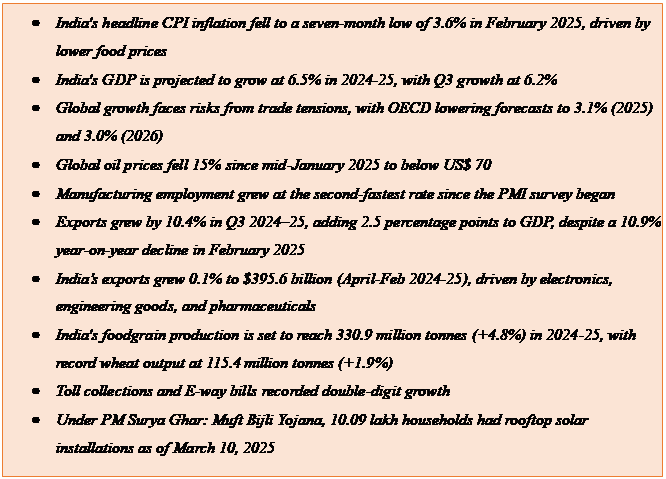
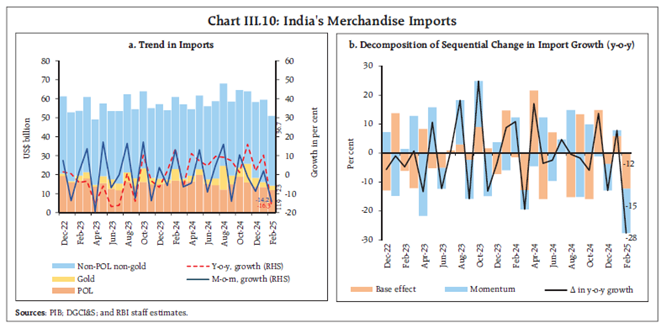
In an era marked by escalating global trade tensions and persistent geopolitical uncertainties, the Indian economy has demonstrated remarkable resilience and robust growth. The above findings are from Reserve Bank of India’s March 2025 bulletin which highlights the state of the economy in the country. The latest data-driven analysis underscores the strength of domestic fundamentals amidst a volatile global backdrop. While global economic uncertainties persist, India's economy shows strong growth, supported by robust consumption and government spending. Inflation has moderated, and policy measures have helped stabilize market liquidity. However, foreign portfolio outflows and currency depreciation remain key risks.
Domestic Economic Developments
Resilient GDP Growth Amidst Global Challenges
Foreign Portfolio Outflows & Currency Risks
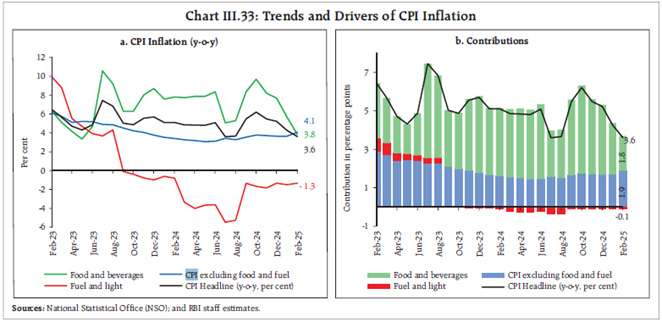
Inflation Trends: Headline Inflation Eases
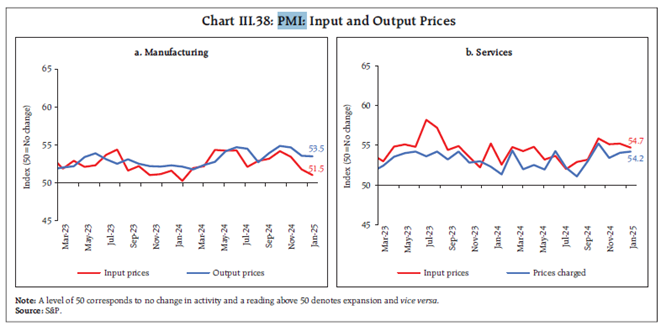
Employment Trends
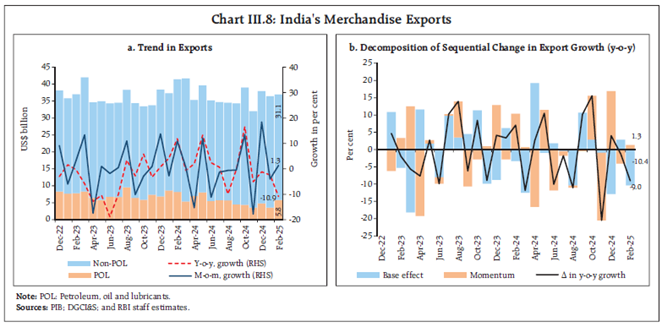
Trade & External Sector
Import and Export Trends
Financial & Monetary Policies
RBI’s Liquidity Management
Sector-Specific Developments
Agriculture Sector
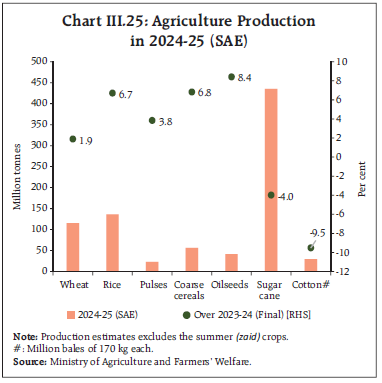
India’s foodgrain production for 2024-25 is estimated at 330.9 million tonnes, marking a 4.8% increase from 2023-24, driven by kharif production up 6.8% and rabi up 2.8%, according to second advance estimates.
Automobile Sector
Infrastructure & Construction
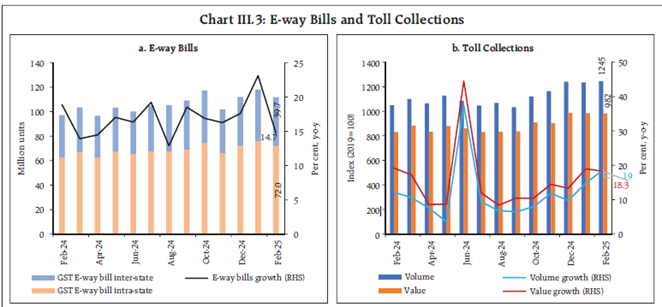
Global Setting
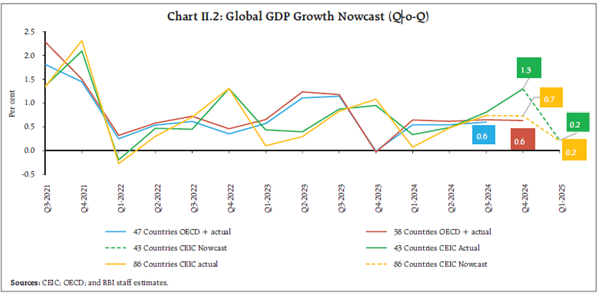
Trade War & Tariffs Impacting Growth
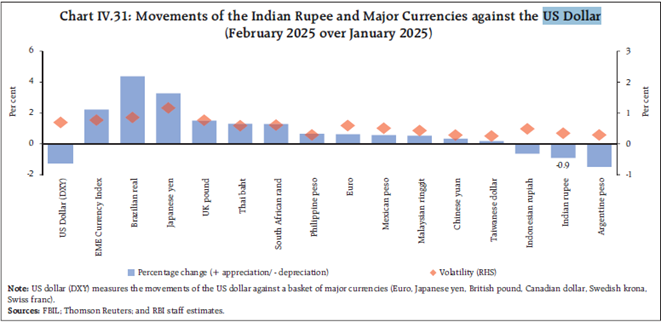
Market Volatility & Currency Fluctuations
Commodity Markets & Inflationary Pressures
Conclusion
Despite global economic headwinds, India’s growth remains stable at 6.5%, supported by strong domestic demand. Inflation is under control, though core inflation remains sticky, necessitating careful monetary management. Trade challenges persist due to weak global demand, but a narrowing trade deficit offers some relief. While foreign investor outflows pose risks, robust domestic investment provides resilience. The RBI’s proactive policies have played a crucial role in stabilizing liquidity and inflation expectations. Overall, India’s economy is well-positioned for growth, but uncertainties in global markets, financial volatility, and trade disruptions remain key risks. Sustained policy support and domestic resilience will be essential in maintaining economic momentum.
References:
https://rbidocs.rbi.org.in/rdocs/Bulletin/PDFs/0BULT19032025F9CCA0AB1F7294130A950E2FD5448B5FC.PDF

