Just a moment...

Top
Help
×

By creating an account you can:

Logo TaxTMI
>
Call Us / Help / Feedback

Contact Us At :

E-mail: [email protected]

Call / WhatsApp at: +91 99117 96707

For more information, Check Contact Us

FAQs :

To know Frequently Asked Questions, Check FAQs

Most Asked Video Tutorials :

For more tutorials, Check Video Tutorials

Submit Feedback/Suggestion :

Email :
Please provide your email address so we can follow up on your feedback.
Category :
Description :
Min 15 characters0/2000
Add to...
You have not created any category. Kindly create one to bookmark this item!
Create New Category
Hide
Title :
Description :
❮❮ Hide
Default View
Expand ❯❯
Close ✕
🔎 News - Adv. Search
TEXT SEARCH:

Press 'Enter' to add multiple search terms. Rules for Better Search

Search In:
Main Text + AI Text
  • Main Text
  • Main Text + AI Text
  • AI Text
Category: ?
Categorized by AI
---- All Categories ----
  • ---- All Categories ----
  • Income Tax
  • GST
  • Customs, DGFT & SEZ
  • FEMA & RBI
  • Corp. Laws, SEBI & IBC
  • PMLA, Black Money & ED
  • Budget
  • News and Press Release
  • PTI News
Month:
---- All Months ----
  • ---- All Months ----
  • January
  • February
  • March
  • April
  • May
  • June
  • July
  • August
  • September
  • October
  • November
  • December
Year:
---- All Years ----
  • ---- All Years ----
  • 2026
  • 2025
  • 2024
  • 2023
  • 2022
  • 2021
  • 2020
  • 2019
  • 2018
  • 2017
  • 2016
  • 2015
  • 2014
  • 2013
  • 2012
  • 2011
Sort By: ?
In Sort By 'Default', exact matches for text search are shown at the top, followed by the remaining results in their regular order.
RelevanceDefaultDate
    Rajya Sabha passes bill to tackle payment delays faced by MSMEs amid Opposition protests
    MPC's 3-day meeting begins amid expectations of status quo on interest rates
    Trane Technologies Reports Strong Second Quarter Results; Raises Full-Year Revenue and EPS Guidance
    CBN dismantles inter-state counterfeit drug network in Bihar under Operation Vajra; mastermind arrested
    DRI seizes quantities of gold; drugs, e-cigarettes and other contraband in pan-India Ops; 20 persons, including 5 foreign nationals, arrested
    Union Government releases tax devolution of ₹1,09,019 crore to State Governments, as one advance instalment to accelerate their capital and deve...
    Raymond Lifestyle Limited Delivered a stable Q1 FY27 Performance
    Rupee rises 31 paise to 95.12 against US dollar in early trade
    Customs seizes 8 kg gold worth over Rs 11 cr at Kerala airports in one week
    Drill, Baby, Drill: India to fund Rs 650 cr per well for 60 deepsea wells to break its oil import habit
    Punjab GST revenue rises 20 pc to Rs 10,447 crore in April-July: Cheema
    India-China trade through Shipli La resumes after six years
    Odisha's export can reach USD 50 billion by FY 2029-30: Study
    Andhra records 21 per cent growth in net GST collections till July
    J&K crime branch chargesheets accused in separate bank, insurance fraud cases
    MCD-facilitated PM Vishwakarma Scheme enrols over 41,000 artisans in Delhi
    Gross GST mop-up grows 15.4 pc to over Rs 2.11 lakh cr in July on higher imports, sales
    Gross and Net GST revenue collections for the month of July, 2026
    India and Rwanda Hold First Joint Trade Committee Meeting to Deepen Bilateral Trade and Investment Cooperation
    West Bengal GST collection rises 2 pc in July to Rs 5,564 crore
❯❯
MaximizeMaximizeMaximize
0 / 200
Expand Note
Add to Folder

No Folders have been created

    +

    Are you sure you want to delete "My most important" ?

    NOTE:

    News
    Showing Results for :
    Reset Filters
    Results Found:
    Show All SummariesHide All Summaries
    August 3, 2026
    Show AI Summary
    MSME delayed-payment reforms strengthen award recovery, faster dispute adjudication, invoice discounting, and interim supplier payment protection.
    MSME delayed-payment reforms seek faster adjudication, strengthened recovery and improved liquidity for enterprise suppliers. Courts may direct payment of at least half of an awarded amount where a setting-aside application remains pending beyond six months. Mediated settlements and arbitral awards may be recovered as arrears of land revenue and recognised as legally enforceable debts under the insolvency framework. The measures also provide graded penalties, voluntary digital registration, invoice settlement through the Trade Receivables Discounting System, and additional Facilitation Councils.
    August 3, 2026
    Show AI Summary
    Monetary policy rate setting remains cautious as inflation, liquidity, growth and global uncertainty shape the policy stance.
    Monetary policy rate setting is expected to remain cautious amid global uncertainty, rising inflation risks and steady domestic growth. The inflation outlook is affected by energy-price pass-through, higher input costs, and seasonal and monsoon-related food-price pressures. Policy decisions are expected to remain data-dependent, guided primarily by domestic inflation, liquidity conditions and economic growth. A cautious or neutral stance is identified as preferable while external risks and inflation developments persist.
    August 3, 2026
    Show AI Summary
    Forward-looking financial disclosure raises revenue and earnings guidance while describing non-GAAP measures, capital allocation, and material business risks.
    Financial performance reporting identifies increased bookings, revenue growth, continuing earnings, and backlog, with segment-level operating and margin measures. The release addresses cash flow, capital allocation through dividends, acquisitions and share repurchases, and increased full-year revenue and earnings guidance. Forward-looking statements concerning financial performance, operations, demand, liquidity and capital deployment are subject to identified risks and uncertainties. Non-GAAP measures are presented as supplemental to GAAP measures, with definitions and reconciliations stated to be available in accompanying materials.
    August 3, 2026
    Show AI Summary
    Counterfeit drug enforcement targets illicit manufacture, storage and trafficking networks, with coordinated seizures and referral of non-narcotic stock.
    Counterfeit-drug enforcement under Operation Vajra addressed an inter-state network involved in the illicit manufacture, storage and distribution of narcotic drugs, psychotropic substances and spurious pharmaceutical products. Searches of unregistered godowns recovered narcotic products, unauthorisedly manufactured Buprenorphine injection ampoules, and counterfeit non-NDPS medicines. A farmhouse-based illicit manufacturing facility was dismantled, with machinery, chemicals and related materials seized under the NDPS Act, 1985.
    August 3, 2026
    Show AI Summary
    Anti-smuggling enforcement targets concealed gold, narcotics, protected products, prohibited e-cigarettes and restricted imports through coordinated intelligence operations.
    Intelligence-led anti-smuggling operations resulted in seizures of foreign-origin gold, narcotic drugs, hydroponic weed, protected wildlife and forest products, prohibited electronic cigarettes, and restricted poppy seeds and areca nuts. The operations identified concealment through fabricated baggage cavities, false cargo declarations, misdeclaration of origin, forged documentation, and concealment in transport vehicles. Poppy seeds are restricted under the Foreign Trade Policy and may be imported only subject to conditions concerning legally cultivated produce from designated countries and registration of import contracts with the Narcotics Commissioner.
    August 3, 2026
    Show AI Summary
    Tax devolution advance instalment strengthens State finances for accelerated capital and developmental expenditure through distribution of Union tax proceeds.
    Tax devolution was released to State Governments as an additional advance instalment alongside the normal monthly devolution schedule. The fiscal transfer shares net proceeds of Union taxes and duties with States, with the stated purpose of strengthening State finances and supporting accelerated capital and developmental expenditure. The release includes a State-wise distribution of tax-devolution proceeds.
    August 3, 2026
    Show AI Summary
    Financial performance reporting highlights revenue and EBITDA growth, garmenting recovery, retail optimisation, ESG commitments, and forward-looking risk disclosures.
    Financial performance reflects growth in total income and EBITDA, with improved margin, reduced net working-capital days, and a net-cash position. Branded textiles and high-value cotton shirting reported lower revenue due to the prior-year base effect, while branded apparel grew but faced lower margin from channel mix. Garmenting improved through order-book execution, tariff rationalisation, and new global clients. ESG priorities include female representation, waste-management initiatives, renewable energy, emissions reduction, and workplace safety. Forward-looking statements remain subject to regulatory, political, economic, and technological risks.
    August 3, 2026
    Show AI Summary
    Foreign exchange market support strengthens the rupee as lower crude prices, portfolio inflows and reserve growth improve sentiment.
    Foreign exchange market conditions supported an early appreciation of the rupee against the US dollar, attributed to lower global crude oil prices, a weaker dollar, sustained foreign portfolio inflows, higher foreign exchange reserves, and Reserve Bank of India presence in the foreign exchange market. Domestic equity market gains and net foreign institutional equity purchases were also identified as supporting factors.
    August 2, 2026
    Show AI Summary
    Gold smuggling detection targets sophisticated concealment methods through strengthened passenger profiling, intelligence gathering and coordinated investigations into organised networks.
    Gold smuggling detection at Kerala airports led to multiple seizures, registration of cases and arrests in alleged smuggling attempts. Organised networks reportedly use gold in paste or compound forms concealed in clothing, body cavities, aircraft seats and other unconventional locations. Enforcement measures include strengthened passenger profiling, intelligence gathering and inter-agency coordination, while investigations continue to identify associated syndicates and financiers.
    August 2, 2026
    Show AI Summary
    Offshore exploration funding supports deepwater drilling, shared infrastructure and seismic data to strengthen domestic hydrocarbon production potential.
    The Samudra Manthan National Offshore Exploration Scheme provides direct budgetary support for high-risk deepwater and ultra-deepwater exploratory drilling, subject to cost-sharing and per-well limits. Support is available to eligible operators holding or securing exploration acreage. The scheme also funds offshore data acquisition and shared subsea, receipt and processing infrastructure through a Common Hub Infrastructure model. It is intended to promote risk exploration, improve commercialisation of offshore discoveries and strengthen domestic hydrocarbon production potential within the existing exploration and licensing framework.
    August 1, 2026
    Show AI Summary
    GST compliance enforcement combines taxpayer refunds, analytics-based fraud detection, cancellation of fake registrations, and recovery of outstanding VAT arrears.
    Punjab attributed increased GST collections to voluntary compliance, intelligence-based enforcement and technology-driven tax administration, while facilitating compliant taxpayers through timely GST refunds. Data analytics, risk profiling and field verification were used to identify tax evasion, bogus billing, fake input tax credit networks and misuse of the GST registration framework. Measures included penalties, cancellation of fraudulent registrations and recovery of long-pending VAT arrears through attachment and auction of defaulters' properties.
    August 1, 2026
    Show AI Summary
    Cross-border barter trade resumes through Shipki La, subject to permitted goods, time limits, and import-export compliance requirements.
    Cross-border barter trade through Shipki La between India and Tibet resumed after a six-year interruption. Traders may exchange specified goods under a barter arrangement and must return within 72 hours. Traders are required to comply strictly with import-export regulations prescribed by the Union Ministry of Commerce, emphasising transparency and regulatory compliance. Expansion of permitted goods may be pursued through prescribed governmental and external-affairs channels.
    August 1, 2026
    Show AI Summary
    Export growth projections outline pathways for Odisha to expand merchandise trade through export diversification, MSME support and financing initiatives.
    Export growth projections for Odisha set out base, optimistic and ambitious scenarios through FY 2029-30, based respectively on historical growth, envisaged national export growth, and a larger share of national exports. Odisha's export basket remains concentrated in metals and minerals, led by aluminium products, with China as the principal export destination. Odisha Vision 2047 identifies exports, including MSME contributions, as an economic transformation driver, while export-financing and risk-mitigation initiatives aim to address financing gaps for exporters and MSMEs.
    August 1, 2026
    Show AI Summary
    GST compliance enforcement through AI analytics supported sustained net GST collection growth despite rate rationalisation reforms and reduced compliance costs.
    GST revenue mobilisation in Andhra Pradesh showed year-on-year growth in net GST and total commercial tax collections through July 2026, despite rate-rationalisation reforms. Revenue growth was attributed to AI-based scrutiny and analytics, machine-learning risk scoring, AI-driven IGST reversals, UPI-based enforcement analytics, data sharing, predictive analytics, registration verification, and Aadhaar-integrated expansion of the professional-tax base. These measures were stated to strengthen compliance, curb wrongful input tax credit claims, broaden taxpayer coverage, and improve revenue mobilisation.
    August 1, 2026
    Show AI Summary
    Economic-offences fraud chargesheets address alleged fictitious loans, forged insurance surrender papers, and diversion of bank and policy funds.
    Economic-offences chargesheets were filed in separate alleged bank and insurance fraud matters. The bank investigation alleged fictitious loan sanctions and overdrafts beyond delegated authority, involving cheating, forgery, use of forged documents and criminal conspiracy. The insurance investigation alleged that duplicate policy records and forged surrender documents were used to open a fraudulent account in a policyholder's name and divert policy proceeds. Records, witness statements, documentary evidence and forensic examination were cited in support of the allegations.
    August 1, 2026
    Show AI Summary
    PM Vishwakarma Scheme implementation expands artisan enrolment, skills, credit, e-commerce access and export facilitation while addressing documentation barriers.
    PM Vishwakarma Scheme implementation in Delhi facilitated artisan enrolment, application processing, skill training, toolkit distribution, loan access, e-commerce onboarding and export-related support. Awareness workshops and tele-calling campaigns were used to promote participation and follow up on benefits. Key implementation challenges concerned outreach to informal clusters, digital literacy, delays in Aadhaar and IEC documentation, and additional support for Divyang artisans. Planned action includes expanding workshops, scaling e-commerce onboarding, strengthening export facilitation and coordination with implementing agencies.
    August 1, 2026
    Show AI Summary
    Goods and Services Tax collections rise on domestic consumption and imports, while elevated import revenue prompts assessment of underlying drivers.
    Goods and Services Tax collections for July increased over the corresponding prior-year period, supported by domestic sales and imports. Gross receipts included Central GST, State GST and Integrated GST, with net GST revenue calculated after adjusting refunds. For the April-July period, gross and net collections also increased. Commentary linked domestic GST growth to consumption, formalisation and industrial activity, while identifying elevated import GST collections as an area requiring assessment of import composition, currency effects and volumes.
    August 1, 2026
    Show AI Summary
    GST revenue collections show provisional gross, refund and net revenue trends, with State-wise settlement and domestic collection data.
    GST revenue collections for July 2026 are reported provisionally through gross domestic and import revenue, domestic and export-related refunds, and net GST revenue after refunds. The data also sets out SGST collections and the SGST share of IGST settled to States and Union Territories, both monthly and cumulatively. State-wise domestic GST growth excludes GST on imported goods, while jurisdiction-wise data allocates collections between central and State formations and identifies CGST, SGST and IGST components.
    August 1, 2026
    Show AI Summary
    Bilateral trade cooperation expands through a Joint Trade Committee covering investment, critical minerals, healthcare, digital technologies and market access.
    Bilateral trade and investment cooperation between India and Rwanda is to be advanced through a structured Joint Trade Committee mechanism for reviewing commerce, diversifying trade, promoting investment, facilitating business engagement and addressing market-access and logistical issues. Priority cooperation includes critical minerals, pharmaceuticals and healthcare, agriculture and agro-processing, standards harmonisation, digital public infrastructure, fintech, cybersecurity, green mobility and renewable energy. Investment focal points will support engagement, while capacity-building assistance and close monitoring of the Agreed Minutes are intended to support time-bound implementation.
    August 1, 2026
    Show AI Summary
    GST collection growth in West Bengal continued year-on-year in July but remained below the national growth trend.
    West Bengal's July GST collection increased year-on-year and over the preceding month, marking a second consecutive month of annual growth. Official data also indicated that the State's annual growth rate was below the national trend, while gross domestic GST revenue excluding imports and overall gross GST collections including import-related taxes rose nationally during July.

    News

    Back

    All News

    Showing Results for :
    Reset Filters
      No Records Found

      News

      Back

      All News

      whatsappJoin Channel
      Showing Results for : Reset Filters

      IIM Udaipur Leads the Conversation on 'Beyond AI' at the Second Edition of D'Future: India Digital Conclave

      January 20, 2025

      Contents
      Summary
      Note

      Note

      -

      Bookmark

      Print

      Print

      MUMBAI, India, Jan. 20, 2025 /PRNewswire/ -- The Indian Institute of Management, Udaipur (IIMU), successfully hosted the second edition of the D'Future: India Digital Conclave at the Jio World Convention Centre, Mumbai on January 17, 2025. This landmark event brought together policymakers, researchers, practitioners, business leaders, entrepreneurs and changemakers to delve into the theme: 'Beyond AI: The Next Frontier in Digital Transformation.' The one-day conclave served as a dynamic platform to explore cutting-edge insights into innovation and technology, offering a glimpse into how digital transformation is reshaping industries such as Manufacturing, Logistics, Finance, Aviation, Healthcare, Media, Entertainment, Sports and beyond. With engaging panel discussions, thought-provoking keynote addresses, and impactful networking opportunities, IDC-2025 reinforced its commitment to driving meaningful conversations around the future of technology.

      The conclave marks yet another significant milestone in IIM Udaipur's dedication to fostering collaboration and thought leadership in the rapidly evolving digital landscape.

      The event commenced with an address by Prof. Ashok Banerjee, Director, IIM Udaipur. In his inaugural speech, Prof. Ashok Banerjee, Director of IIM Udaipur, emphasised the institute's pioneering efforts in fostering sustainability, innovation, and digital transformation. He highlighted IIM Udaipur's leadership in renewable energy, with 20% of its energy sourced from renewables, projected to reach 45% by year-end, and its goal of achieving carbon neutrality by 2030. Prof. Banerjee also spoke about the institute's Digital Enterprise Management (DEM) program, which integrates academic rigour with real-world industry interactions to prepare students for emerging trends. Concluding his address, Prof. Banerjee reiterated IIM Udaipur's commitment to leading India's digital and sustainable transformation journey by leveraging innovative education, impactful research, and strategic partnerships.

      In his keynote address, P. Vasudevan, Executive Director at the Reserve Bank of India (RBI), highlighted the multifaceted challenges and opportunities in integrating AI into everyday life. He emphasised the critical role of transparency in AI decision-making to ensure financial inclusion and cautioned against the risks of financial exclusion if AI models lack accountability. Mr. Vasudevan discussed concerns such as deepfakes, false simulations, and the gap between AI ideation and execution, using fraud detection and speech-to-text AI as examples. Concluding his address, Mr. Vasudevan spotlighted India's potential in the global AI landscape, supported by initiatives like AIRAWAT, a sophisticated AI research and cloud platform, and the DPDP Act, which will play a pivotal role in shaping the future of digital governance. He urged stakeholders to focus on solving challenges in AI integration rather than discarding solutions that don't initially work, reiterating the importance of collaboration through PPP models for self-reliance and sustainable progress.

      For the session 'Research at the Intersection of AI and Human Beings', international researcher Prof. Mohan Kankanhalli, in his insightful session on "Harnessing AI for Societal Good," explored how AI can address both grand and emerging challenges. He outlined guiding principles for mission-driven research, emphasising real-world impact, measurable improvements, and deployment pathways beyond academic papers. Prof. Kankanhalli also addressed smaller, critical challenges like detecting harmful social media content and creating safe large language models (LLMs). Sharing his research, he delved into advancing multimodal LLMs, ensuring fairness in AI, and exploring innovative concepts like machine unlearning and anti-sample creation to counter biases. The speaker concluded by highlighting AI's immense potential for societal good, tempered by the need to mitigate its downsides in areas like facial forging and ensuring ethical development.

      In his session on 'Frontiers Between Language and Reasoning,' Prof. Soumen Chakrabarti discussed the fascinating relationship between AI and the human brain. He emphasised that the human brain's strength lies in the dynamic retrieval and linkage of information, which is essential for reasoning. Prof. Chakrabarti highlighted the importance of training AI to mirror these processes, particularly through graphical and logical understanding, enabling AI systems to form meaningful connections between queries, passages, and complex data representations like HTML tables. He also delved into the intricacies of training large language models (LLMs), showcasing detailed examples of how knowledge graphs and formal logic can enhance AI's reasoning capabilities. According to Prof. Chakrabarti, AI needs to go beyond natural language for reasoning tasks, relying on graphs and tables to communicate complex reasoning steps effectively. His talk emphasised that integrating graph matching and sub-graph retrieval would be critical in advancing AI systems for tasks requiring sophisticated reasoning.

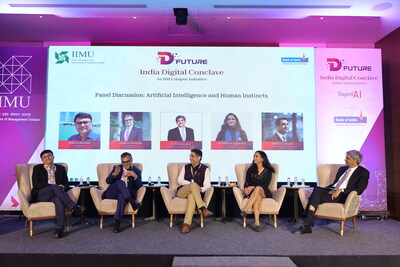
      In the engaging panel discussion, 'Artificial Intelligence and Human Instincts,' moderated by Shiv Shivakumar, Chairman at MTPL, an Advent Company, panellists shared their perspectives on the evolving role of AI across industries. The esteemed panelists included Apurva Mankad, Founder of WebXpress, Jayanta Banerjee, Group and Global CIO at Tata Steel Limited, Khushboo Aggarwal, Founder of Zyla Health, and Neetan Chopra, Chief Digital & Information Officer at Indigo Airlines. The discussion began with a lighthearted exploration of how ChatGPT would introduce each panellist, leading to a lively debate about AI's capabilities to provide personal touches. The panellists further discussed the practical aspects of introducing AI within organisations, focusing on starting small, building awareness, and establishing business cases for AI adoption. They also shared insights from their industries on AI's impact on skills, job roles, and employee productivity, focusing on Manufacturing, Aviation, Logistics, and Healthcare, where AI helps reduce burnout among caregivers. The conversation also covered key topics such as cloud investments, data security, and AI compliance, emphasising building a sustainable and secure AI ecosystem.

      In a compelling session on Corporate Success Stories, Amitav Sinha, Director General of the Central Board of Direct Taxes, shared insights into transformative projects that have revolutionised the income tax system in India. Reflecting on his journey with the core team of business process re-engineering, he highlighted how technology has come a long way to being leveraged to tackle underreporting and non-reporting of income. Initiatives such as mismatch detection systems, enabling taxpayers to update discrepancies with minimal charges voluntarily, have significantly enhanced compliance. Mr. Sinha detailed key milestones like establishing Centralized Processing Centers (CPCs), enabling seamless integration of filing and processing systems, and achieving a remarkable processing rate of 9,600+ ITRs per minute. He also discussed the role of AI/ML in reducing litigation by assisting officers with uniform decision-making, predicting advanced taxes, and ensuring faceless assessments. These innovations have not only streamlined operations but also set a roadmap for enhancing transparency and efficiency in tax administration.

      In the second session on Corporate Success Stories, Kanchan Bhonde, Product Strategy Head at Makers Lab and Assistant Vice President at Tech Mahindra, showcased groundbreaking projects that bridge the divide between technology creators and users. She shared an inspiring story of overcoming language barriers to empower innovative solutions for malnutrition in India, emphasising the critical role of AI-driven tools in breaking barriers to progress. Ms. Bhonde discussed transformative initiatives like Antmanirbhar Krishi, which leverages large language models (LLMs) to empower farmers with self-reliance. Highlighting challenges unique to India, such as underrepresented dialects, her team developed a model with 1.2 billion parameters that supports 37 Hindi dialects. Despite limited data—40% of which was unusable—they achieved remarkable results with a sustainable, cost-effective model. Additionally, she introduced Project Indus, showcasing real-time applications of generative AI on edge, tested in multi-agent scenarios and open-sourced for broader impact.

      As part of this transformative event, the Startup Show offered a dynamic platform for discussing AI's potential to revolutionise industries. Moderated by Bikram Mahajan, Partner at Unicorn India Ventures, the session featured Abhay Pandey, Venture Capitalist at A91 Partners, alongside startup leaders Abhilash Chakraverty (Larkai), Amit Srivastava (Constems AI), Aniruddha Banerjee (SwitchOn), and Samyak Jain (Zeko AI). Together, they shared their perspectives on AI's current and future role in reshaping industries like manufacturing, healthcare, and digital marketing.

      Discussions highlighted AI's ROI potential, acknowledging that while some sectors need more time to fully realise returns, industries like healthcare and legal services are on the cusp of breakthroughs. Computer vision was identified as a game-changer in manufacturing, enabling defect-free production and contextual analysis of supply chains. Panelists also discussed India's strength in data warehousing and application development, emphasising the nation's growing investment in AI infrastructure and its capability to train models cost-effectively.

      Challenges like privacy regulations, clean data usage, and the rising infrastructure cost were addressed, along with strategies for balancing volume and value in scaling AI solutions globally. Panelists also explored digital twins in the U.S. market, showcasing zero-defect models as the starting point for AI innovation in manufacturing. This session underscored the significance of social responsibility, standardisation in large models, and leveraging AI as a co-pilot for progress, ensuring a sustainable and inclusive future in the AI era.

      Opening the session on AI in Sports and Entertainment Mr. Prateek Garg, Managing Director at Marigold Park Capital, highlighted India's diverse streaming ecosystem and the democratisation of the value chain, emphasising AI's role in delivering hyper-personalized content (n=1 experiences) and its potential to position media as a major contributor to GDP. He encouraged professionals to embrace AI rather than fear it, noting the shift from video as a profit centre to fandom as the ultimate goal. The speaker highlighted that by focusing on audience preferences and leveraging AI to lower production costs, increase efficiency, and shorten turnaround times, the industry can unlock unprecedented opportunities to capture consumer attention and reduce risks. Mr. Garg spotlighted monetisation as a key area of disruption, with hyperlocal targeting and contextual ad placements offering significant potential. He explained that AI also enables predictive tools to detect subscriber churn and empowers faster experimentation with new concepts. The speaker emphasised the importance of cultivating new talent pools capable of embracing AI and structuring teams to foster innovation, adaptability, and risk-taking. This approach, he argued, is crucial to staying ahead in the evolving AI-driven entertainment landscape.

      Mr. Ramakrishnan Subramanian (Ramky S), Founder of Sportsmechanics, delivered a compelling talk on how AI is revolutionising the world of sports and entertainment. Drawing from his dual passion for sports and technology, Mr. Subramanian illustrated how AI reshapes athlete development, fan engagement, and operational efficiency. He highlighted the challenge of bridging the gap between 20 million aspiring cricketers in India and only 3,000 traditional coaches. AI is unlocking untapped potential by offering virtual coaching tools where players can upload videos and receive personalised guidance to accelerate skill development.

      On the entertainment side, the speaker showcased how AI-driven analytical tools are not only empowering teams but also enhancing fan engagement. He pointed out that with 1.2 billion cricket followers globally, 90% of them in India, the potential for hyper-personalized fan experiences is immense. Mr. Subramanian stressed the importance of building smart, self-owned community platforms that give fans control over their content preferences, boosting viewership and revenue opportunities.

      About IIM Udaipur IIM Udaipur is well on its way to becoming a globally recognised B-School. It has broken new ground by focusing on world-class research and transforming students into tomorrow's managers and leaders. The Institute arrived on the global education stage by securing accreditation from the AACSB (Association to Advance Collegiate Schools of Business) in merely eight years of its establishment. With this accreditation, IIM Udaipur is counted in the same league of global institutes, such as Harvard Business School, Wharton School at the University of Pennsylvania, and the MIT Sloan School. IIMU has been listed on the Financial Times (FT) Global MIM Ranking 2024 for the 6th consecutive year, making it the only IIM to have achieved this feat. In the QS Global MIM Ranking 2025, IIM Udaipur stands as the 6th highest-ranked IIM and continues to maintain its listing for the 6th year in a row, reinforcing its global standing. Notably, it is also the youngest B-School in the world to be featured in both rankings. Additionally, IIM Udaipur ranks 4th in India for research in management, according to the UT Dallas methodology, which tracks publications in leading global journals, showcasing its excellence in academic research.

      Photo: Embedded Media Logo: Embedded Media (Disclaimer: The above press release comes to you under an arrangement with PRNewswire and PTI takes no editorial responsibility for the same.). PTI PWR PWR

      Topics

      ActsIncome Tax