Loading...

Top
Help
×

By creating an account you can:

Logo TaxTMI
Call Us / Help / Feedback

Contact Us At :

E-mail: [email protected]

Call / WhatsApp at: +91 99117 96707

For more information, Check Contact Us

FAQs :

To know Frequently Asked Questions, Check FAQs

Most Asked Video Tutorials :

For more tutorials, Check Video Tutorials

Submit Feedback/Suggestion :

Email :
Please provide your email address so we can follow up on your feedback.
Category :
Description :
Min 15 characters 0/2000
Make Most of Text Search
  1. Checkout this video tutorial: How to search effectively on TaxTMI.
  2. Put words in double quotes for exact word search, eg: "income tax"
  3. Avoid noise words such as : 'and, of, the, a'
  4. Sort by Relevance to get the most relevant document.
  5. Press Enter to add multiple terms/multiple phrases, and then click on Search to Search.
  6. Text Search
  7. The system will try to fetch results that contains ALL your words.
  8. Once you add keywords, you'll see a new 'Search In' filter that makes your results even more precise.
  9. Text Search
Add to...
You have not created any category. Kindly create one to bookmark this item!
Create New Category
Hide
Title :
Description :
❮❮ Hide
Default View
Expand ❯❯
Close ✕
🔎 News - Adv. Search
TEXT SEARCH:

Press 'Enter' to add multiple search terms. Rules for Better Search

Search In:
Main Text + AI Text
  • Main Text
  • Main Text + AI Text
  • AI Text
Category: ?
Categorized by AI
---- All Categories ----
  • ---- All Categories ----
  • Income Tax
  • GST
  • Customs, DGFT & SEZ
  • FEMA & RBI
  • Corp. Laws, SEBI & IBC
  • PMLA, Black Money & ED
  • Budget
  • News and Press Release
  • PTI News
Month:
---- All Months ----
  • ---- All Months ----
  • January
  • February
  • March
  • April
  • May
  • June
  • July
  • August
  • September
  • October
  • November
  • December
Year:
---- All Years ----
  • ---- All Years ----
  • 2026
  • 2025
  • 2024
  • 2023
  • 2022
  • 2021
  • 2020
  • 2019
  • 2018
  • 2017
  • 2016
  • 2015
  • 2014
  • 2013
  • 2012
  • 2011
Sort By: ?
In Sort By 'Default', exact matches for text search are shown at the top, followed by the remaining results in their regular order.
Relevance Default Date
    Rupee rises 22 paise to close at 94.51 against US dollar
    Electrifying India's vehicles can cut its import bill by USD 125 billion by 2050: Study
    Loans to go beyond SHGs, women to get access to credit to expand livelihoods: Union minister Chouhan
    MIDC's role not just selling plots, but creation of conducive environment for development: CEO
    Decentro Wins Three Industry Honours for Fintech Infrastructure Innovation and Leadership in 2026
    Marching ahead with Responsibility and Growth - Keynote Address[Contributions by RBI colleague Shri Mohammed Majidullah, General Manager] delivered by...
    CCI directs Trustees’ Association of India, IDBI Trusteeship Services Ltd, Axis Trustee Services and SBI CAP Trustee Company to cease and desist fro...
    The Digital Textile Printer Revolution: How Konica Minolta NASSENGER is Preparing India for the Next Global Textile Opportunity
    Union minister Goyal hails 7.8 pc GDP growth; lauds Modi, takes dig at Oppn
    SC disposes of SEBI's pleas against NSE after Rs 1500-crore settlement
    India-US trade pact to be finalised once US offers preferential rate: Goyal
    Business Nextgen Finance Raises Rs 215 Crore in Equity to Accelerate MSME Lending
    Drugs: ED raids in 4 states; over 2 dozen offenders, foreign links under scanner
    Razorpay Launches a Conversational AI Account Manager 'RAY' on WhatsApp For Businesses, in Partnership with IndusInd Bank
    AssetPlus Launches Portfolio Management Services to Help MFD Partners Grow and Retain High-Net-Worth Clients
    APEDA Facilitates Flag-Off of 18 MT of NPOP-Certified Ethnic Rice from Tripura for Export to Austria and the Netherlands
    VR LIVIN’s ‘THE FIRST’ Records Sale of 20 Villas Within Two Days of Launch
    IAAPI Calls for GST Rationalisation to Support Growth and Consumer Demand in India’s Amusement Industry
    ED raids multiple locations in Keralam in hybrid ganja smuggling money laundering case
    Rupee jumps 47 paise to 94.26 against US dollar in early trade
❯❯
Maximize Maximize Maximize
0 / 200
Expand Note
Add to Folder

No Folders have been created

+

Are you sure you want to delete "My most important" ?

NOTE:

News
Showing Results for :
Reset Filters
Results Found:
Show All Summaries Hide All Summaries
September 3, 2026
Show AI Summary
FCNR(B) deposits strengthen foreign-exchange liquidity and support rupee appreciation alongside foreign portfolio inflows into government securities.
Foreign-currency inflows through FCNR(B) deposits, overseas foreign-currency borrowings and external commercial borrowings strengthened foreign-exchange liquidity and supported appreciation of the rupee against the US dollar. Foreign portfolio investment in government securities was linked to the abolition of withholding tax and long-term capital gains tax on such investment. Currency-market conditions were also influenced by foreign institutional equity purchases, global risk appetite, crude-oil prices and geopolitical tensions.
September 3, 2026
Show AI Summary
Electric vehicle adoption can reduce transport import dependence while domestic battery manufacturing increases projected long-term savings.
Electric-vehicle adoption across road-transport segments is projected to reduce dependence on imported petrol and diesel, notwithstanding continuing battery imports. Accelerated electrification could reduce vehicle-related import expenditure substantially by 2050 because reduced oil imports are expected to exceed battery-import costs. Domestic cell-manufacturing capacity may further increase savings by combining rapid vehicle electrification with battery localisation.
September 3, 2026
Show AI Summary
Women's livelihood credit access will extend beyond self-help groups through standardised loan formalities and coordinated banking support.
Women's access to credit for livelihood expansion is to extend beyond Self-Help Groups to individual women members. Loan accessibility concerns include distance from bank branches, repeated visits to complete formalities, and inconsistent banking procedures. Regular State Rural Livelihood Mission meetings, bank participation, training, helplines, process improvements and coordination with bankers are intended to reduce barriers. Loan formalities are to be standardised across banks through a uniform process involving RBI and NABARD.
September 3, 2026
Show AI Summary
Industrial development facilitation prioritises infrastructure, services, policy utilisation, and dry-port trade connectivity for businesses and agro-based farmers.
Industrial development facilitation extends beyond allocation of industrial plots to infrastructure development, services, and a favourable business environment. Industry-support policies seek to encourage participation by entrepreneurs, promote growth across sectors, and improve investment conditions without distinction between small and large enterprises. Dry-port infrastructure strengthens national and international trade connectivity, supporting import and export expansion for industrial and agro-based businesses.
September 3, 2026
Show AI Summary
Regulated fintech infrastructure recognition highlights integrated payment, identity and collections capabilities across embedded financial product delivery.
Decentro operates an integrated fintech infrastructure platform combining payment acceptance, identity verification, banking and AI-led collections through a unified integration layer. It holds Payment Aggregator authorisations for online and physical payments, a Payment Service Provider licence through its GIFT City entity, and certification for offline identity-verification workflows. These capabilities support embedded financial products, payment acceptance, lending collections and related financial workflows for enterprise users.
September 3, 2026
Show AI Summary
Responsible NBFC and HFC growth requires technology-enabled inclusion, proportionate regulation, sound governance, liquidity discipline, customer protection and cyber resilience.
NBFCs and HFCs can complement bank-led credit delivery through last-mile reach, sector-specific expertise, digital infrastructure, consent-based data sharing and cash-flow-based underwriting. Sustainable growth requires strong liquidity risk management, governance, compliance culture, diversified funding, stress testing, early-warning systems, dynamic provisioning and sound underwriting standards. Proportionate scale-based regulation, digital lending standards and a substance-over-form approach seek to support innovation while preserving financial stability. Customer protection, responsible lending, grievance redressal, fair recovery conduct, cyber resilience and protection of customer data remain essential.
September 3, 2026
Show AI Summary
Debenture trusteeship fee fixing constitutes cartelisation by constraining independent pricing and restricting service availability in the market.
Collective minimum-fee fixing for debenture trusteeship services prevented trustees from making independent commercial pricing decisions and constituted cartelisation. Prescription of a benchmark fee limited and controlled the supply or market for such services by directing association members and non-members not to serve debenture issuers below that fee. The conduct contravened Section 3(3)(a) and Section 3(3)(b) read with Section 3(1) of the Competition Act, 2002.
September 3, 2026
Show AI Summary
Digital textile printing enables flexible industrial production, shorter lead times, reduced screen dependency and sustainability-focused manufacturing for export markets.
Digital textile printing is presented as an industrial alternative to conventional screen printing, allowing direct production from digital design files with faster design changes, shorter lead times and flexibility across varying order quantities. Single-pass systems support high-volume production through fixed printing units and continuous fabric movement, while multipass platforms provide flexible production across natural, synthetic and specialised textiles. Digital production is associated with printing closer to demand, eliminating physical screens, reducing unnecessary production, and addressing wastewater reduction, chemical compliance, traceability and responsible manufacturing expectations.
September 3, 2026
Show AI Summary
Economic growth and infrastructure investment were presented as supporting exports, skilled employment, connectivity, and long-term development.
Economic growth, export expansion and infrastructure investment are presented as interconnected drivers of India's development, global standing and employment opportunities. Infrastructure expenditure, railway expansion and improved transport connectivity are identified as measures intended to facilitate movement, simplify transportation, support trade and exports, and strengthen industrial and commercial activity. These measures are associated with the objective of a developed India by 2047 and enhanced employment, business and growth opportunities.
September 3, 2026
Show AI Summary
Co-location and dark fibre settlement addressed allegations of preferential market-data access and speed advantages in trading.
SEBI's co-location and dark fibre matters involving NSE concerned allegations that certain stockbrokers obtained unfair preferential speed advantages to access market data and execute trades ahead of other investors. NSE pursued settlement applications covering both matters, and revised settlement terms increased the cumulative amount. Payments made by NSE together completed the agreed settlement amount.
September 3, 2026
Show AI Summary
Preferential tariff treatment remains the condition for finalising the bilateral trade agreement and improving Indian export competitiveness.
Finalisation of the India-US Bilateral Trade Agreement is contingent on the United States extending preferential tariff treatment to India relative to competing supplier countries. Further negotiations are required following changes in the United States tariff environment. A comparative tariff advantage is intended to improve the price competitiveness of Indian goods in the United States market, particularly against competitors benefiting from lower duties under least-developed-country preferences or trade agreements.
September 3, 2026
Show AI Summary
MSME secured lending equity capital, subject to regulatory approval, supports expansion without management-control change in operations.
Business Nextgen Finance Private Limited, a non-deposit taking non-banking financial company registered with the Reserve Bank of India, has raised Rs 215 crore in equity capital to expand secured credit for micro, small and medium enterprises. The transaction received prior Reserve Bank of India approval. The capital base will support secured lending scale-up, geographic expansion, technology investment and wider access to formal credit in underserved markets. The investment does not involve a change in management or day-to-day control.
September 3, 2026
Show AI Summary
Money-laundering probes into narcotics trafficking rely on predicate police and narcotics cases and examine cross-border linkages.
Money-laundering investigation under the Prevention of Money Laundering Act involves coordinated searches in connection with multiple narcotics-trafficking matters. The investigation is founded on police and Narcotics Control Bureau FIRs and linked chargesheets concerning separate drug-trafficking allegations, including alleged trafficking in methamphetamine, marijuana and MDMA with suspected cross-border linkages.
September 3, 2026
Show AI Summary
Conversational AI account management enables businesses to access payment information, settlement support, refunds, and payment links through WhatsApp.
RAY is a conversational AI account manager on WhatsApp that enables businesses to access payment information, support, and operational actions through messages or voice notes. It can provide payment summaries, analyse payment activity, monitor settlement status, generate payment links, and issue refunds. The AI assistant is designed to proactively identify payment-health issues, flag settlement events, recommend actions, and use merchant-specific context to support payment management without dashboard navigation.
September 3, 2026
Show AI Summary
Portfolio management services distribution enables certified mutual fund distributors to digitally onboard and report for eligible high-net-worth clients through AssetPlus.
AssetPlus has launched Portfolio Management Services for certified Mutual Fund Distributor partners to digitally onboard, track, manage and report PMS investments for eligible high-net-worth clients. PMS distribution requires NISM Series-XXI-A certification and operates within the APRN distributor-registration framework. PMS comprises individually managed portfolios run by SEBI-registered Portfolio Managers and held in clients' demat accounts. The minimum investment is Rs. 50 lakh, and offerings are governed by the SEBI (Portfolio Managers) Regulations, 2020. The platform provides daily reconciliation of holdings, performance and valuations.
September 3, 2026
Show AI Summary
NPOP-certified ethnic rice exports strengthen organic producer access to international markets through certification, traceability, and organised export production.
NPOP-certified ethnic rice exports from Tripura to Austria and the Netherlands connect local farmers and Farmer Producer Companies with international markets through organised, export-oriented production. The initiative emphasises certification, traceability, food safety and quality as requirements for access to markets for certified organic products. Buyer-seller linkages support export opportunities, while coordinated organic value-chain engagement strengthens certification and quality systems and supports producers in meeting international standards.
September 3, 2026
Show AI Summary
Gated residential community launch combines smart-home villas, extensive lifestyle amenities and planned expansion into future residential developments.
VR LIVIN Ventures LLP launched 'THE FIRST', an 83-villa gated residential community in Madhavaram, North Chennai, which recorded sales of 20 villas during its first two launch days. The development includes smart-home villas and more than 50 lifestyle amenities, with access to nearby metro connectivity and social infrastructure. It forms part of the company's intended expansion of residential projects in Chennai and other South Indian locations.
September 3, 2026
Show AI Summary
GST rationalisation for amusement park admissions could lower ticket prices, stimulate consumer demand, and support investment without input tax credit.
GST rationalisation for amusement park, water park and indoor entertainment admission tickets is sought through a flat 5% GST rate without Input Tax Credit. The proposed rate is intended to reduce ticket prices, improve affordability and increase customer demand in a capital-intensive tourism and entertainment sector. Many smaller and mid-sized operators report limited ability to offset GST liability through ITC. Lower taxation is projected to support facility expansion, revenue growth, new investment, employment and reinvestment in recreational services.
September 3, 2026
Show AI Summary
Money laundering linked to hybrid ganja smuggling involves alleged illicit cross-border transfers and foreign-exchange violations.
Enforcement Directorate searches form part of a money-laundering investigation into alleged hybrid ganja smuggling from Thailand. A case under the Prevention of Money Laundering Act concerns suspected laundering of drug-trafficking proceeds and transfer of funds to Thailand through illegal channels. The inquiry also examines possible foreign-exchange violations and an alleged arrangement involving carriers, visas and funds for transporting narcotic substances.
September 3, 2026
Show AI Summary
Foreign-currency deposit mobilisation supports currency appreciation while creating surplus-liquidity sterilisation pressures through deposit swaps in domestic banking markets.
Foreign-currency deposit mobilisation strengthened foreign-exchange liquidity and supported rupee appreciation. FCNR(B) deposits, together with overseas foreign-currency borrowings and external commercial borrowings, increased aggregate foreign-currency resources. Bank swaps of such deposits with the central bank may create surplus banking-system liquidity and a sterilisation challenge, while oil prices, global yields, dollar movements and foreign equity inflows remain relevant currency-market factors.

News

Back

All News

Showing Results for :
Reset Filters
No Records Found

News

Showing Results for : Reset Filters

Strengthening Free Enterprise in India (Dr. Raghuram G. Rajan, Governor - February 4, 2016 - 13th Nani A. Palkhivala Memorial Lecture, Mumbai)

February 5, 2016

Contents
Summary
Note

Note

-

Bookmark

Print

Print

I did not have the privilege of meeting Nani Palkhivala, but every citizen of India has been affected in some way by his life’s work, and owes him a debt of gratitude. Born in 1920, Mr. Palkhivala was not only a jurist of the highest caliber, he was also a tireless champion of constitutional liberties, of human rights and individual freedom, and of economic freedom. Nani Palkhivala fought the Kesavananda Bharati case that established the principle that the Indian Parliament cannot alter the basic structure of the constitution. This, by itself, would be enough to enshrine him as a founder of modern India. But he did much more. He stood up to the Emergency, one of the few voices raised against authoritarianism, when the very character of India’s democracy was in question. And recognizing that political and economic freedom go hand in hand, in his regular post budget speech, he enthralled thousands with his views on the economic policies of the country.

Mr. Palkhivala was a lonely voice against the socialism practiced in India then, arguing that it was a fraud – transferring wealth from the honest rich to the dishonest rich. Instead, he championed free enterprise. It bears remembering that he was chairman of TCS, one of the brightest stars of the Indian economy today. No wonder Rajaji once called him “God’s own gift to India”.

Towards the end of his life, Nani Palkhivala soured on the Indian experience. In a speech in Australia, dejected by the leak of the IIT entrance exam papers, reflecting the weakening of yet another once-sacrosanct institution, he said, “I do not think India, in its entire history of 5000 years, has ever reached a lower level of degradation than it has reached now.” But in that speech, he also said that India always seemed to find a way of coming out of the morass. I will argue in my talk today that Palkhivala’s optimism about India eventually finding the way was probably more warranted than his pessimism. Yes, we have our weaknesses and our excesses, but our democracy is self-correcting, and even while some institutions weaken, others come to the fore. India’s is a dynamic society, ever changing, ever rejuvenating. Indeed, the possibilities for free enterprise in India today are probably better than ever before in its history.

Conditions for free enterprise to flourish have historically thought to be two:

  1. Level playing field with easy entry and exit, and
  2. Protection of property rights.

Let me first discuss these conditions, then I will add two more that I think important for free enterprise to be politically viable.

  1. Broadening access to capabilities, and
  2. A basic safety net.

a) Level playing field with easy entry and exit.

  • Competition leads to efficient outcomes when anyone can enter, set up a firm, and compete. The best entity wins leading to economy wide efficiency.
  • Free enterprise and competition combats prejudice and social biases.
    • Dalit entrepreneurs
    • Direct benefit transfers
  • Government and regulators are needed to set the rules of the game and enforce behavior. Biased government/regulation distorts the playing field. Not that there should be no handicaps but not unequal handicaps.
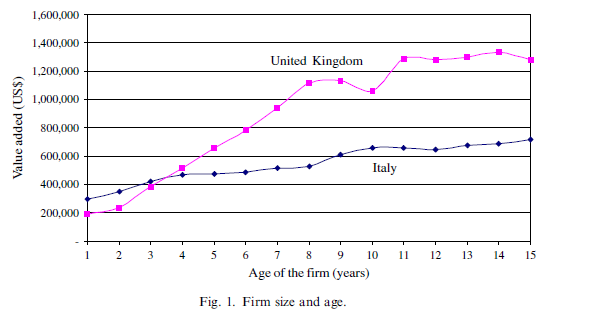
    • Work I did on entry regulation: Italian firms small. But low entry. Why? Work I did Rajan, Laeven and Klapper (2006). Italian firms need greater size to overcome fixed costs of entry but grow more slowly. Slower economic growth.
  • In India
    • License-Permit Raj: Remedy: Liberalization of the 1990s.
      • Entry of 23 new banks
    • Resources Raj: Privileged access to mines, spectrum, etc. Remedy: Auctions and transparency.
    • Inspector Raj: Remedy: Start up India, reducing red tape, entry barriers.
      • Continuing clean-up of laws gives hope, especially as states compete for simplifying regulations.
      • RBI master directions.
  • Some continuing infirmities that especially hurt new firms:
    • Infrastructure plus logistics: Weighted against the small.
      • Roads, ports, airports, power, internet marketplaces
    • Land: Weighted against the new.
      • Competition between states
    • Finance: Weighted against new and untried. Changing with technology and new institutions.
      • Small firms and small banks -- evidence: Small finance banks
      • Unique ID: Government
      • TReDS
      • Start-ups – liberalizing
  • Still uneven playing field on distress.
    • Resolving large firms very difficult: Workers as pawns.
      • Courts focus on revival rather than resolution
      • Promoter benefited
      • Hard for debt to recover money
      • Laws become more draconian to give creditors powers
    • Laws applied more quickly to small firms, sometimes with a bias to creditors.
    • Operational and speedy bankruptcy code will level the playing field.
      • Negotiating in the shadow of bankruptcy
  • Issues of excessive market power and predation.
    • Competition Commission showing its mettle
    • Need to ensure awards survive appeals
  • Why greater concern now on issues of competition and entry?
    • The jobs agenda: Job is the best form of inclusion.
    • Growing small firms as job creation

b) Protection of property rights

  • Private property protection needed to incentivize activity: I eat what I kill.
    • Broadly protected in India
    • Is it too well protected – land for infrastructure
  • Moderate and predictable taxes and estate duties – Government has delivered.
    • Administrative steps to rein in unnecessary tax demands
    • Automation of significant parts of the tax process
  • Retrospective taxation: Clear government statement. However, base erosion and profit shifting – worldwide issue that large corporations need to answer – equal requirement of transparency on corporate side: Need for global agreements.

c) Broadening access to capabilities

  • Aam aadmi attaches no value to free enterprise if he cannot participate.
  • Increasingly, enterprises of the future require employees to have decent education and health.
  • Malnutrition curses an individual for life, as does poor early education.
  • Effective delivery of social programs so that everyone has the ability to compete is absolutely necessary.
  • Capitalism starts at age 21!

d) A Basic Safety Net

  • Competition can be ruinous despite one’s best efforts.
  • Need a basic safety net, not focused on firms but on individuals:
    • Unemployment insurance, basic healthcare, old age pensions
  • Should not be prohibitively costly for government.
    • Cost entitlements and incorporate into budget liability projections
    • Charge reasonable premiums for the insurance
    • Recognize that if insurance is not explicit, it will be implicit in a democratic society.
  • Safety net can also encourage people to take risks they would shy away from otherwise.

In conclusion

  • India has come a long way in encouraging free enterprise.
  • From tiny shops to large internet start-ups, the spirit of entrepreneurship is alive.
  • Graduates increasingly want to start businesses or work for start-ups rather than go to an established consultancy or bank.
  • Doing business is more reputable, as is getting rich.
  • But a lot more work is needed to improve the environment so that everyone has a chance. Rather than looking for special dispensations, business has to push for improving the business environment for everyone. Glad business associations are increasingly doing this.
  • As Palkhivala said, India always seems to find the way, perhaps not quickly and not linearly, but in due course.

Topics

Acts Income Tax

