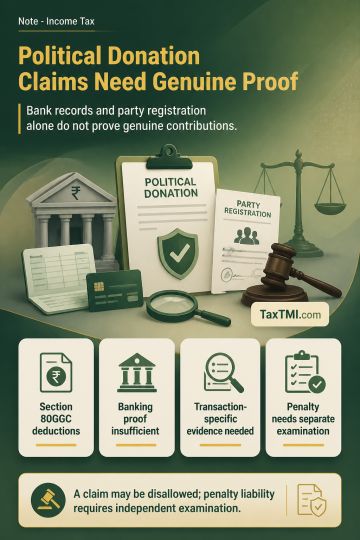
Political contribution deductions require genuine transactions; banking records and party registration alone cannot defeat evidence of accommodation e...
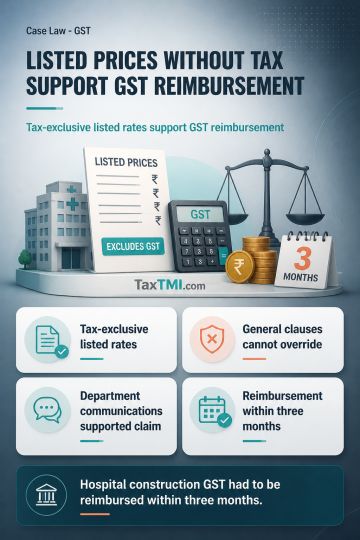
Post-death GST liability permits fresh proceedings against legal representatives, while discontinued-business recovery remains limited to the inherite...
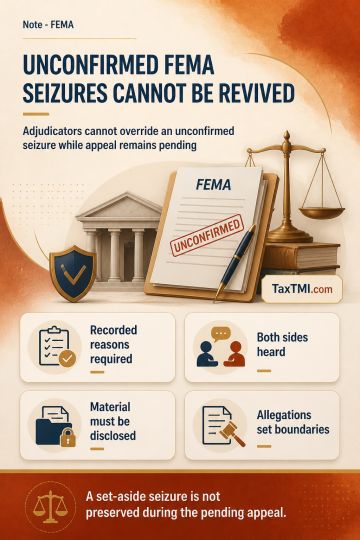
Non-confirmation of FEMA seizure prevents adjudicators from overriding pending appellate findings on recorded reasons and suspected foreign asset hold...
The article addresses discharge jurisdiction in criminal proceedings and holds that at the discharge stage the court must assess only whether a prima facie case or strong suspicion exists to warrant trial, not conduct a mini-trial; applying this test, the Special Court correctly refused discharge of the petitioner where admissible statements under the Customs Act, approver confessions, and other particularised particulars in the final report furnished sufficient material to proceed. The piece further explains that voluntariness, corroboration, and the probative weight of approver statements, extra judicial confessions and CCTV visuals are factual matters for trial and do not mandate discharge on the present record.
The article addresses discharge jurisdiction in criminal proceedings and holds that at the discharge stage the court must assess only whether a prima facie case or strong suspicion exists to warrant trial, not conduct a mini-trial; applying this test, the Special Court correctly refused discharge of the petitioner where admissible statements under the Customs Act, approver confessions, and other particularised particulars in the final report furnished sufficient material to proceed. The piece further explains that voluntariness, corroboration, and the probative weight of approver statements, extra judicial confessions and CCTV visuals are factual matters for trial and do not mandate discharge on the present record.
Note: It is a system-generated summary and is for quick reference only.
 TaxTMI
  TaxTMI