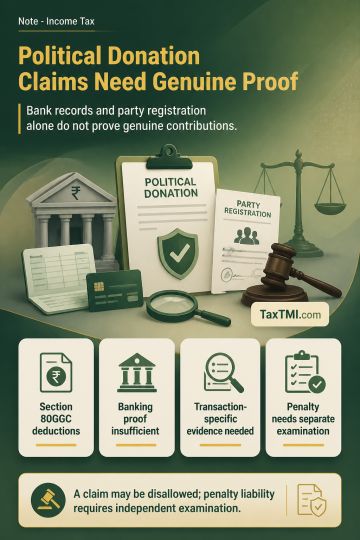
Political contribution deductions require genuine transactions; banking records and party registration alone cannot defeat evidence of accommodation e...
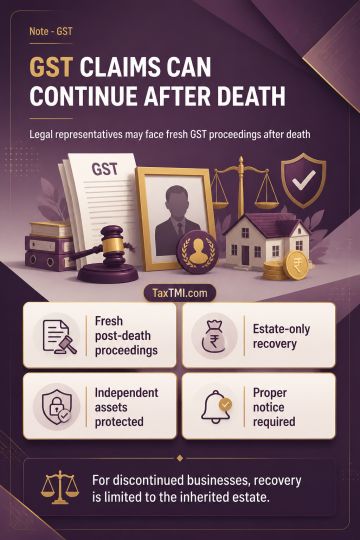
Post-death GST liability permits fresh proceedings against legal representatives, while discontinued-business recovery remains limited to the inherite...
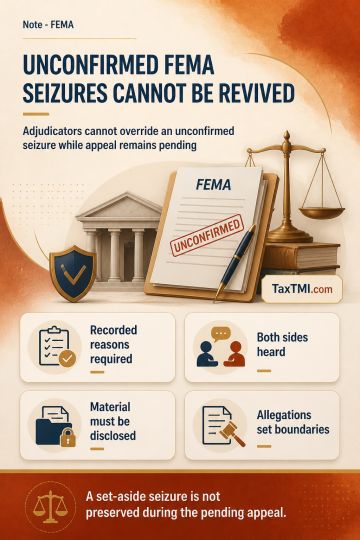
Non-confirmation of FEMA seizure prevents adjudicators from overriding pending appellate findings on recorded reasons and suspected foreign asset hold...
Cognizance of offences under Companies Act ss. 448 and 451 on a private complaint was held impermissible because s. 448 is an offence "covered under" s. 447, attracting the second proviso to s. 212(6), which mandates that cognizance can be taken only on a written complaint by the SFIO Director or a duly authorised Central Government officer; consequently, cognizance of "repeated default" under s. 451 also failed, and proceedings under ss. 448 and 451 were quashed. Quashing of Companies Act offences did not warrant quashing IPC offences because s. 436(2) permits the Special Court to try IPC offences only while trying Companies Act offences; hence the IPC complaint was to be transferred to the competent territorial court for trial. - SC
Cognizance of offences under Companies Act ss. 448 and 451 on a private complaint was held impermissible because s. 448 is an offence "covered under" s. 447, attracting the second proviso to s. 212(6), which mandates that cognizance can be taken only on a written complaint by the SFIO Director or a duly authorised Central Government officer; consequently, cognizance of "repeated default" under s. 451 also failed, and proceedings under ss. 448 and 451 were quashed. Quashing of Companies Act offences did not warrant quashing IPC offences because s. 436(2) permits the Special Court to try IPC offences only while trying Companies Act offences; hence the IPC complaint was to be transferred to the competent territorial court for trial. - SC
Note: It is a system-generated summary and is for quick reference only.
 TaxTMI
  TaxTMI