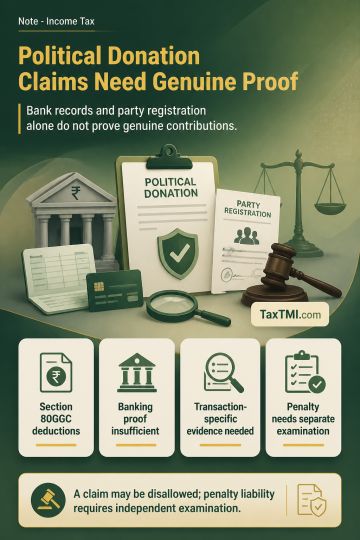
Political contribution deductions require genuine transactions; banking records and party registration alone cannot defeat evidence of accommodation e...
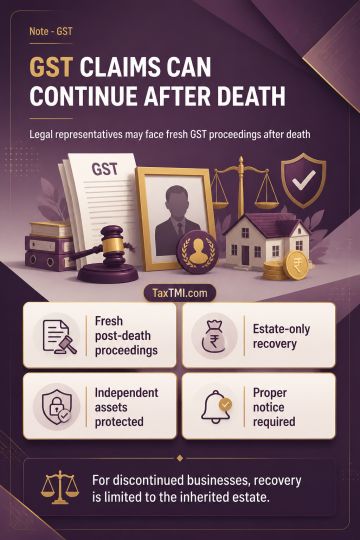
Post-death GST liability permits fresh proceedings against legal representatives, while discontinued-business recovery remains limited to the inherite...
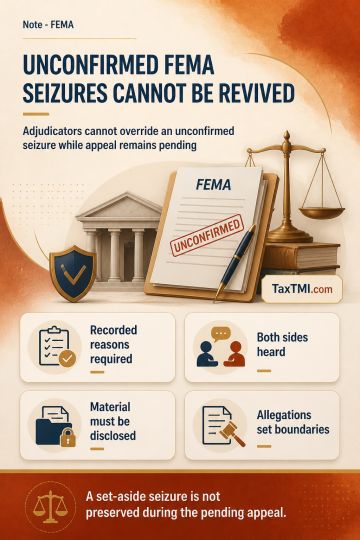
Non-confirmation of FEMA seizure prevents adjudicators from overriding pending appellate findings on recorded reasons and suspected foreign asset hold...
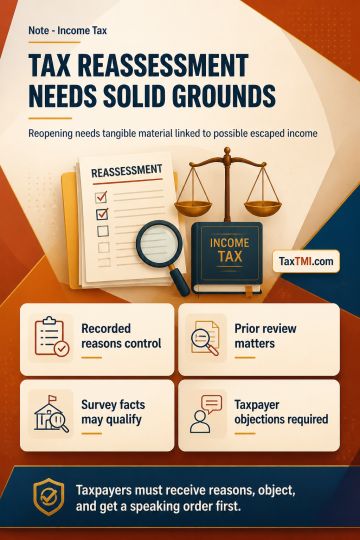
HC held that invocation of section 153C requires concurrent satisfaction by the AOs of the searched person and the non-searched person that seized property or documents relate to a person other than the searched person; no such satisfaction was recorded. The impugned assessment did not rest on incriminating material found against the petitioner during search/seizure, but on information from the investigation unit and evidence collected during and after search proceedings. Consequently, the assessment under section 147 was proper and invocation of sections 153A/153C was unwarranted. The petitioner's challenge to framing proceedings under section 153C was rejected and the assessment under section 147 upheld.
HC held that invocation of section 153C requires concurrent satisfaction by the AOs of the searched person and the non-searched person that seized property or documents relate to a person other than the searched person; no such satisfaction was recorded. The impugned assessment did not rest on incriminating material found against the petitioner during search/seizure, but on information from the investigation unit and evidence collected during and after search proceedings. Consequently, the assessment under section 147 was proper and invocation of sections 153A/153C was unwarranted. The petitioner's challenge to framing proceedings under section 153C was rejected and the assessment under section 147 upheld.
Note: It is a system-generated summary and is for quick reference only.
 TaxTMI
  TaxTMI