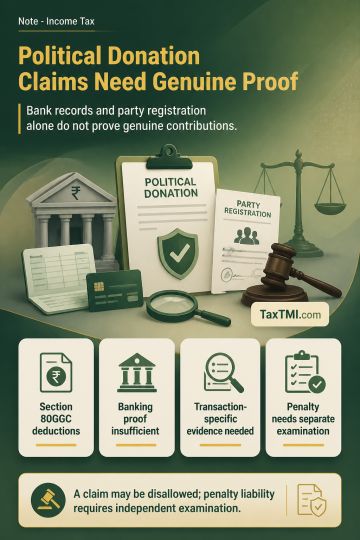
Political contribution deductions require genuine transactions; banking records and party registration alone cannot defeat evidence of accommodation e...
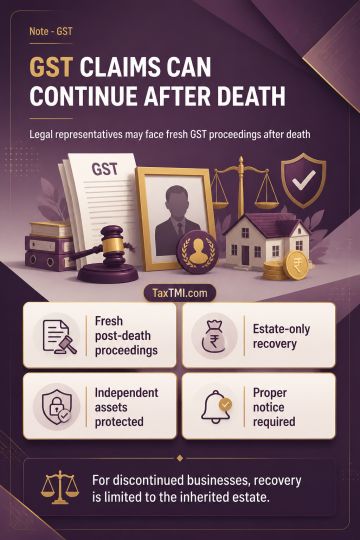
Post-death GST liability permits fresh proceedings against legal representatives, while discontinued-business recovery remains limited to the inherite...
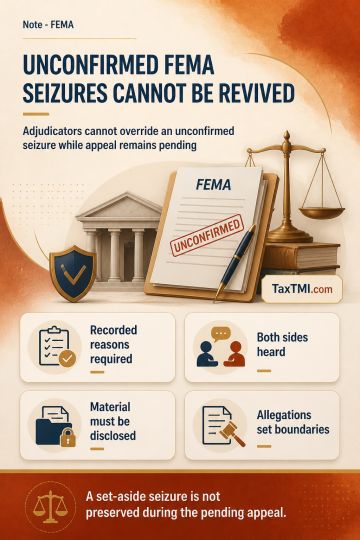
Non-confirmation of FEMA seizure prevents adjudicators from overriding pending appellate findings on recorded reasons and suspected foreign asset hold...
The CESTAT, by majority, allowed the appeals, set aside the impugned orders and remitted the matter to the Division Bench for consequential orders. The Tribunal held that the Revenue failed to satisfy statutory conditions of s.36B CEA, 1944 for admissibility of computer-derived evidence: laptops and pen-drives were opened years after seizure, computer printouts were uncertified, and the Director's signatures did not constitute the required certification. Physical and digital evidence must independently meet ss.36A/36B; here the digital material, on which the demand predominantly rested, lacked evidentiary value. Insufficient corroborative evidence and failure to counter production-capacity assertions proved fatal to the Revenue's case.
The CESTAT, by majority, allowed the appeals, set aside the impugned orders and remitted the matter to the Division Bench for consequential orders. The Tribunal held that the Revenue failed to satisfy statutory conditions of s.36B CEA, 1944 for admissibility of computer-derived evidence: laptops and pen-drives were opened years after seizure, computer printouts were uncertified, and the Director's signatures did not constitute the required certification. Physical and digital evidence must independently meet ss.36A/36B; here the digital material, on which the demand predominantly rested, lacked evidentiary value. Insufficient corroborative evidence and failure to counter production-capacity assertions proved fatal to the Revenue's case.
Note: It is a system-generated summary and is for quick reference only.
 TaxTMI
  TaxTMI