Political contribution deductions require genuine transactions; banking records and party registration alone cannot defeat evidence of accommodation e...
Post-death GST liability permits fresh proceedings against legal representatives, while discontinued-business recovery remains limited to the inherite...
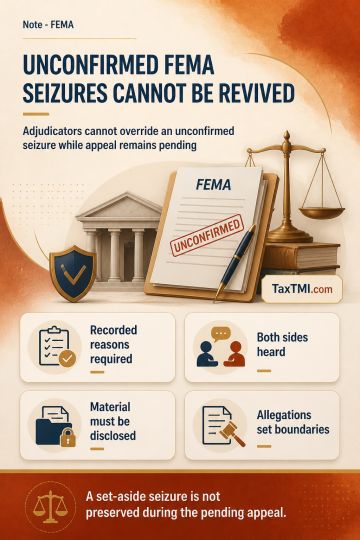
Non-confirmation of FEMA seizure prevents adjudicators from overriding pending appellate findings on recorded reasons and suspected foreign asset hold...
ITAT allowed the appeal and set aside the PCIT's revisionary order under section 263. The Tribunal held that jurisdiction under section 263 requires both a demonstrable error in the AO's order and that the order be prejudicial to Revenue; absent either, revision cannot be validly exercised. PCIT conceded there was no error in the assessment concerning the assessee's claim of deduction under section 80G read with section 115BAA, and the AO had reached a plausible, lawful view after considering the assessee's submissions. Consequently, no error or prejudice was established and the impugned section 263 order was unsustainable in law.
ITAT allowed the appeal and set aside the PCIT's revisionary order under section 263. The Tribunal held that jurisdiction under section 263 requires both a demonstrable error in the AO's order and that the order be prejudicial to Revenue; absent either, revision cannot be validly exercised. PCIT conceded there was no error in the assessment concerning the assessee's claim of deduction under section 80G read with section 115BAA, and the AO had reached a plausible, lawful view after considering the assessee's submissions. Consequently, no error or prejudice was established and the impugned section 263 order was unsustainable in law.
Note: It is a system-generated summary and is for quick reference only.
 TaxTMI
  TaxTMI