Political contribution deductions require genuine transactions; banking records and party registration alone cannot defeat evidence of accommodation e...
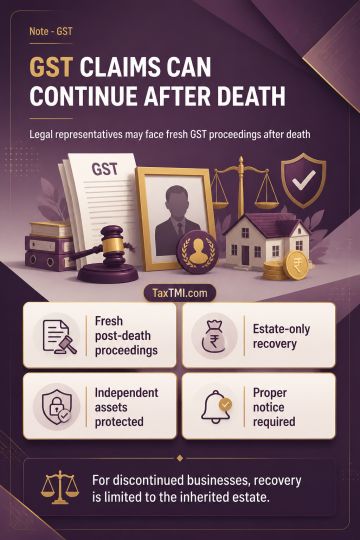
Post-death GST liability permits fresh proceedings against legal representatives, while discontinued-business recovery remains limited to the inherite...
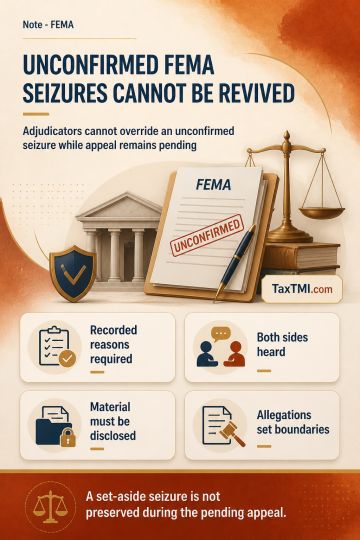
Non-confirmation of FEMA seizure prevents adjudicators from overriding pending appellate findings on recorded reasons and suspected foreign asset hold...
The HC held that NCLT approval of a resolution plan constitutes a judicial determination extinguishing all liabilities of the corporate debtor not preserved in the plan, including contingent criminal liabilities, and that Section 32A IBC confers immunity on a successful resolution applicant who satisfies statutory preconditions. The court found that permitting a prosecuting agency to relitigate such extinguished liabilities undermines the finality of insolvency proceedings and may amount to double jeopardy. The petition was disposed with directions that the successful resolution applicant shall appear before the trial court, produce the NCLT order and the Section 32A immunity grant, and the trial court shall consider those submissions and pass a reasoned order on whether the applicant is to be arrayed as an accused.
The HC held that NCLT approval of a resolution plan constitutes a judicial determination extinguishing all liabilities of the corporate debtor not preserved in the plan, including contingent criminal liabilities, and that Section 32A IBC confers immunity on a successful resolution applicant who satisfies statutory preconditions. The court found that permitting a prosecuting agency to relitigate such extinguished liabilities undermines the finality of insolvency proceedings and may amount to double jeopardy. The petition was disposed with directions that the successful resolution applicant shall appear before the trial court, produce the NCLT order and the Section 32A immunity grant, and the trial court shall consider those submissions and pass a reasoned order on whether the applicant is to be arrayed as an accused.
Note: It is a system-generated summary and is for quick reference only.
 TaxTMI
  TaxTMI