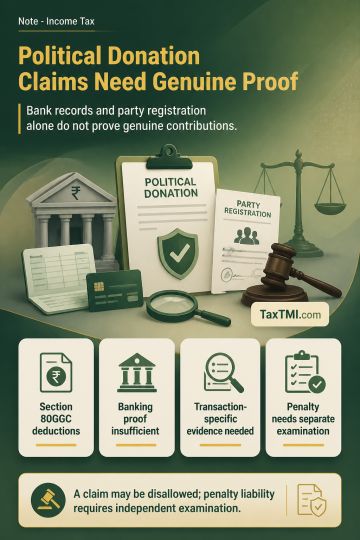
Political contribution deductions require genuine transactions; banking records and party registration alone cannot defeat evidence of accommodation e...
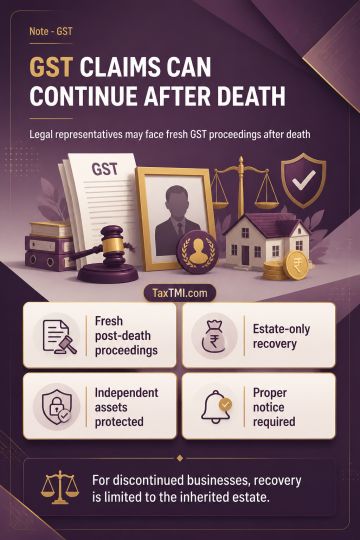
Post-death GST liability permits fresh proceedings against legal representatives, while discontinued-business recovery remains limited to the inherite...
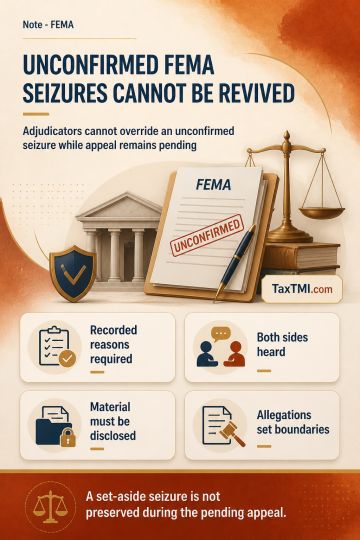
Non-confirmation of FEMA seizure prevents adjudicators from overriding pending appellate findings on recorded reasons and suspected foreign asset hold...
SC held that appeals by the Revenue were partly allowed. The Court construed s.138C(4) of the Act, 1962 to require certification for computer-generated documents read into evidence, but recognised that compliance may be established by the record of proceedings and statements recorded under s.108 where such materials and signatures appear on the record; a formal certificate in the strict sense is not invariably necessary. The Court applied principles of admissibility under ss.65A/65B of the Indian Evidence Act and noted that definitions in the IT Act govern terms like "electronic record" and "certifying authority." As the s.108 statements were not retracted and not disputed, they satisfied s.138C(4) for present proceedings; evidentiary weight in other fora depends on compliance with s.138B.
SC held that appeals by the Revenue were partly allowed. The Court construed s.138C(4) of the Act, 1962 to require certification for computer-generated documents read into evidence, but recognised that compliance may be established by the record of proceedings and statements recorded under s.108 where such materials and signatures appear on the record; a formal certificate in the strict sense is not invariably necessary. The Court applied principles of admissibility under ss.65A/65B of the Indian Evidence Act and noted that definitions in the IT Act govern terms like "electronic record" and "certifying authority." As the s.108 statements were not retracted and not disputed, they satisfied s.138C(4) for present proceedings; evidentiary weight in other fora depends on compliance with s.138B.
Note: It is a system-generated summary and is for quick reference only.
 TaxTMI
  TaxTMI