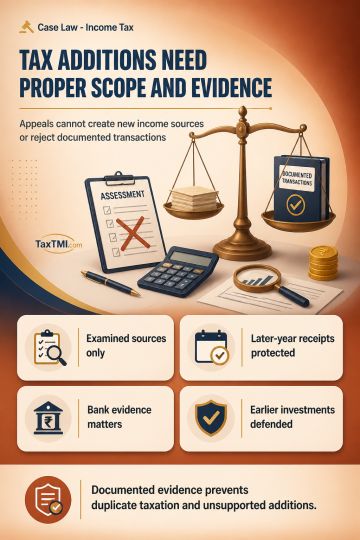
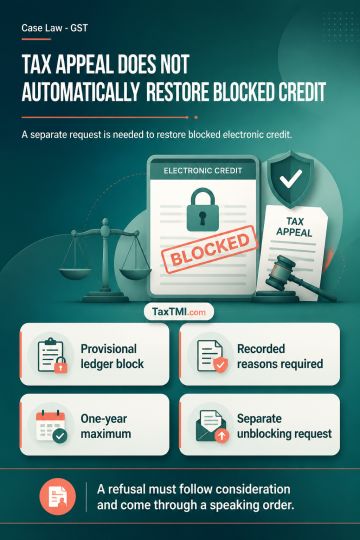
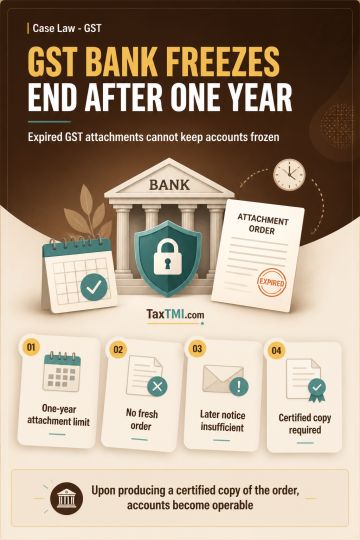
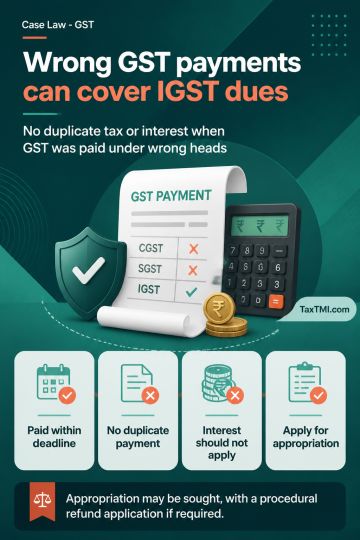
Appellate enhancement limits protect against new income sources, while documented credits and prior-year investments resist unexplained-income additio...
Capital-gains exemption for charitable trusts extends to qualifying fixed deposits, while unrecoverable TDS write-offs may constitute income applicati...
Page of 4868
Press 'Enter' after typing page number.
1 to 20 of 97344 Results
❮
❯
❯❯
0 / 200
Expand Note
Add to Folder
No Folders have been created
+
Are you sure you want to delete "My most important" ?
The HC dismissed the writ petition challenging levy of penalties under section 129(1)(a) and 129(1)(b) of the GST Act, upholding the proper officer's decision based on his reasonable belief that the consignor's documents did not substantiate legitimacy of the goods in transit. The court accepted evidentiary inconsistencies, including the driver's statement regarding loading time and place and absence of payment particulars, and declined to resolve ownership genuineness on writ jurisdiction. The petitioner remains entitled to seek immediate release of goods under section 129(1)(b) by application to the proper officer (to be decided within two working days) and to pursue available appellate remedies.
The HC dismissed the writ petition challenging levy of penalties under section 129(1)(a) and 129(1)(b) of the GST Act, upholding the proper officer's decision based on his reasonable belief that the consignor's documents did not substantiate legitimacy of the goods in transit. The court accepted evidentiary inconsistencies, including the driver's statement regarding loading time and place and absence of payment particulars, and declined to resolve ownership genuineness on writ jurisdiction. The petitioner remains entitled to seek immediate release of goods under section 129(1)(b) by application to the proper officer (to be decided within two working days) and to pursue available appellate remedies.
Note: It is a system-generated summary and is for quick reference only.
 TaxTMI
  TaxTMI