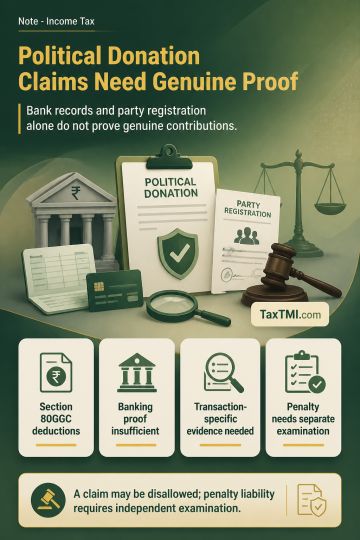
Political contribution deductions require genuine transactions; banking records and party registration alone cannot defeat evidence of accommodation e...
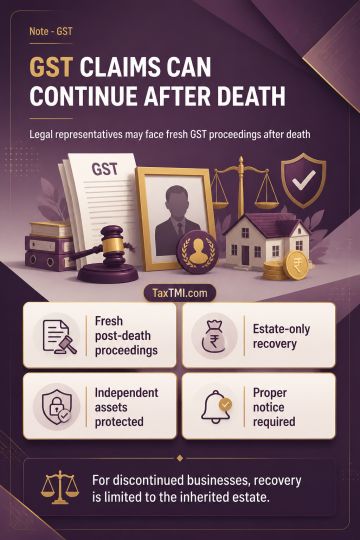
Post-death GST liability permits fresh proceedings against legal representatives, while discontinued-business recovery remains limited to the inherite...
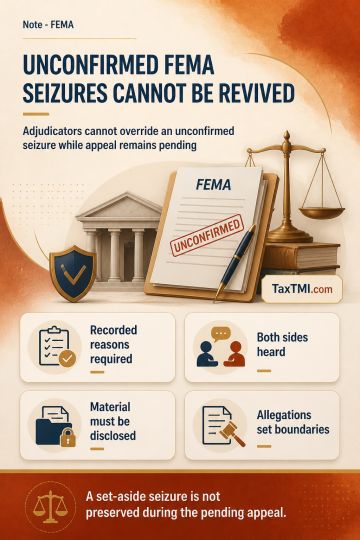
Non-confirmation of FEMA seizure prevents adjudicators from overriding pending appellate findings on recorded reasons and suspected foreign asset hold...
The SC affirmed that under Section 11(6A) of the Arbitration and Conciliation Act, 1996, the jurisdiction of courts in arbitrability disputes, including allegations of serious fraud or criminality, is strictly limited to examining the existence of an arbitration agreement. The Court reiterated the principle of separability, confirming that the arbitral tribunal, not the court, is empowered to decide on its own jurisdiction and competence. The referral court's scope of inquiry cannot extend to the merits of the underlying dispute or allegations of fraud. Consequently, the appeal challenging the appointment of an arbitrator on grounds of serious fraud was dismissed, emphasizing adherence to the statutory framework that confines judicial scrutiny to the arbitration agreement's validity alone.
The SC affirmed that under Section 11(6A) of the Arbitration and Conciliation Act, 1996, the jurisdiction of courts in arbitrability disputes, including allegations of serious fraud or criminality, is strictly limited to examining the existence of an arbitration agreement. The Court reiterated the principle of separability, confirming that the arbitral tribunal, not the court, is empowered to decide on its own jurisdiction and competence. The referral court's scope of inquiry cannot extend to the merits of the underlying dispute or allegations of fraud. Consequently, the appeal challenging the appointment of an arbitrator on grounds of serious fraud was dismissed, emphasizing adherence to the statutory framework that confines judicial scrutiny to the arbitration agreement's validity alone.
Note: It is a system-generated summary and is for quick reference only.
 TaxTMI
  TaxTMI