Political contribution deductions require genuine transactions; banking records and party registration alone cannot defeat evidence of accommodation e...
Post-death GST liability permits fresh proceedings against legal representatives, while discontinued-business recovery remains limited to the inherite...
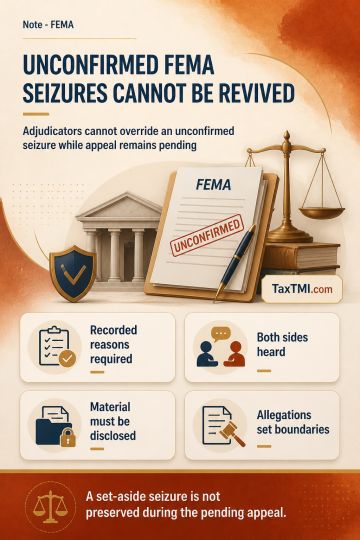
Non-confirmation of FEMA seizure prevents adjudicators from overriding pending appellate findings on recorded reasons and suspected foreign asset hold...
The HC upheld the conviction of the petitioner under Section 138 of the NI Act for dishonor of cheque due to insufficient funds, affirming the findings of the trial and appellate courts regarding the existence of a legally enforceable debt. The Court declined to interfere with the conviction, citing absence of illegality or irregularity. However, the HC modified the sentence, setting aside the substantive imprisonment of one month and instead directing the petitioner to undergo imprisonment only until the rising of the court. The petitioner was ordered to pay a fine of Rs. 4,00,000 in each case, with default imprisonment of one month per case. Payment of the fine would be disbursed to the complainant under Section 357(1) Cr.P.C. The Criminal Revision Petition was allowed in part, confirming conviction but altering the sentence to balance punitive and remedial considerations.
The HC upheld the conviction of the petitioner under Section 138 of the NI Act for dishonor of cheque due to insufficient funds, affirming the findings of the trial and appellate courts regarding the existence of a legally enforceable debt. The Court declined to interfere with the conviction, citing absence of illegality or irregularity. However, the HC modified the sentence, setting aside the substantive imprisonment of one month and instead directing the petitioner to undergo imprisonment only until the rising of the court. The petitioner was ordered to pay a fine of Rs. 4,00,000 in each case, with default imprisonment of one month per case. Payment of the fine would be disbursed to the complainant under Section 357(1) Cr.P.C. The Criminal Revision Petition was allowed in part, confirming conviction but altering the sentence to balance punitive and remedial considerations.
Note: It is a system-generated summary and is for quick reference only.
 TaxTMI
  TaxTMI