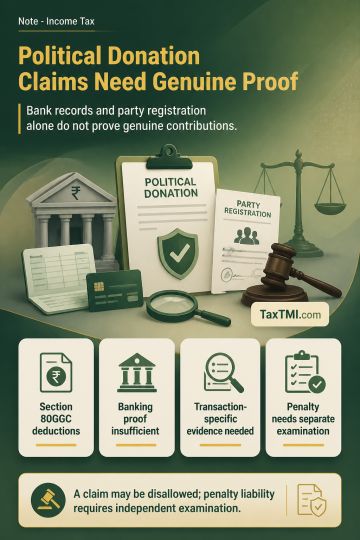
Political contribution deductions require genuine transactions; banking records and party registration alone cannot defeat evidence of accommodation e...
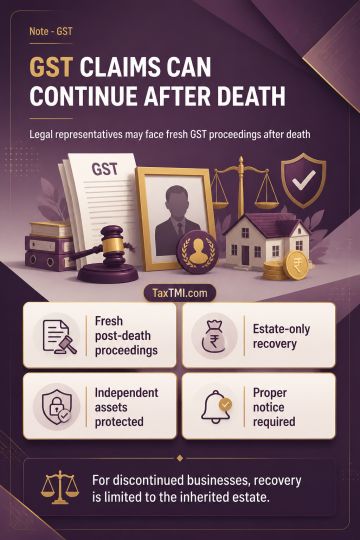
Post-death GST liability permits fresh proceedings against legal representatives, while discontinued-business recovery remains limited to the inherite...
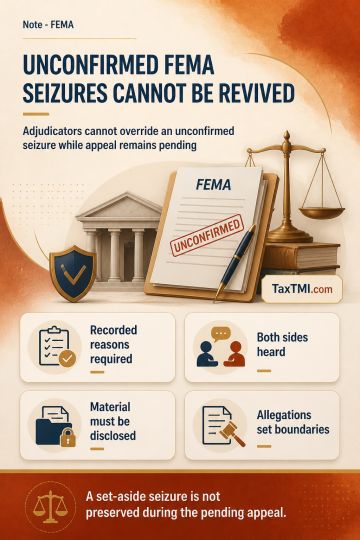
Non-confirmation of FEMA seizure prevents adjudicators from overriding pending appellate findings on recorded reasons and suspected foreign asset hold...
The HC upheld the dismissal of the appellant's writ petition, affirming that a compounding application cannot be entertained after the adjudicating authority has passed its order. Compounding requires a prior voluntary admission of contravention, which becomes redundant once guilt is adjudicated. The appellant's second compounding application, filed post-adjudication and lacking mandatory disclosure of the adjudicating authority, was rightly rejected. The Court emphasized that allowing compounding after final adjudication would undermine the statutory scheme designed to ensure timely penalty recovery under the Act. The appellant's contention regarding uncertainty about the proper authority before adjudication was dismissed as unfounded. Consequently, the appeal failed and was dismissed, confirming that compounding is only permissible prior to the conclusion of the adjudication process.
The HC upheld the dismissal of the appellant's writ petition, affirming that a compounding application cannot be entertained after the adjudicating authority has passed its order. Compounding requires a prior voluntary admission of contravention, which becomes redundant once guilt is adjudicated. The appellant's second compounding application, filed post-adjudication and lacking mandatory disclosure of the adjudicating authority, was rightly rejected. The Court emphasized that allowing compounding after final adjudication would undermine the statutory scheme designed to ensure timely penalty recovery under the Act. The appellant's contention regarding uncertainty about the proper authority before adjudication was dismissed as unfounded. Consequently, the appeal failed and was dismissed, confirming that compounding is only permissible prior to the conclusion of the adjudication process.
Note: It is a system-generated summary and is for quick reference only.
 TaxTMI
  TaxTMI